
Installing the best smoke and carbon monoxide detectors eliminates the clutter of mounting separate safety devices in living spaces. The primary fork involves deciding between hardwired communication and self-contained sealed batteries. Property owners upgrading residential setups will find specific models tailored to their existing wiring.

Pros
- Sealed 10-year lithium battery eliminates replacements
- Photoelectric smoke and electrochemical CO dual sensors
- Certified to UL 217 and UL 2034 safety standards
- Wall or ceiling mounting hardware included
Cons
- No wireless interconnection between units
- Lacks Wi-Fi and base station connectivity

Pros
- Sealed 10-year lithium battery prevents replacements
- Dual photoelectric and electrochemical sensors
- LCD displays real-time CO PPM and battery level
- Certified to UL 217 and UL 2034 standards
Cons
- No wireless interconnection between alarms
- Lacks Wi-Fi and base station compatibility

Pros
- Dual-beam photoelectric sensor minimizes nuisance cooking alarms
- Certified to UL 217 10th and UL 2034 5th standards
- Sealed 10-year lithium battery eliminates annual swaps
- Combines photoelectric smoke and carbon monoxide detection
Cons
- No wireless interconnection between separate units
- Sealed battery cannot be replaced after expiration

Pros
- Sealed 10-year lithium battery needs no replacements
- Bilingual English and French 85dB voice alerts
- Dual-wave sensing reduces kitchen false alarms
- Certified to UL 217 and UL 2034 standards
Cons
- Standalone design lacks multi-room interconnectivity
- Permanently sealed battery cannot be replaced
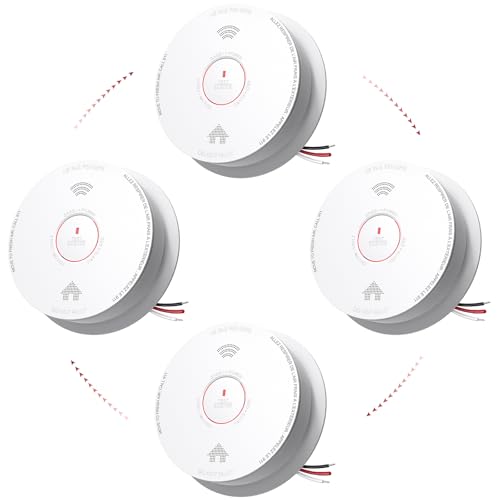
Pros
- Photoelectric dual-wave sensor reduces cooking false alarms
- Bilingual voice alerts for smoke and carbon monoxide
- Hardwired interconnection links up to 18 detectors
- Sealed 10-year backup battery avoids annual replacements
- UL 217 and UL 2034 certified
Cons
- Requires hardwired electrical connections for installation
- Hardwired interconnect only, lacks wireless linking

Pros
- Dual-beam photoelectric smoke and CO sensing
- Certified to UL 217 10th and UL 2034 standards
- Sealed ten-year lithium battery power
- Loud 85 dB siren with visual flashing LED
Cons
- Non-replaceable battery requires full unit disposal
- No wireless or hardwired interconnect capability
Hardwired Versus Battery Power Architecture
Residential wiring configurations dictate your power source before any hardware leaves the carton. Hardwired alarms connect to existing 120-volt circuits and use physical signal lines to sound alarms across distant rooms simultaneously. Older dwellings lacking pre-existing cable runs benefit from standalone models that run entirely on self-contained lithium cells.
| Power Format | Network Method | Primary Setting |
|---|---|---|
| Hardwired 120V | Interconnected line | Multilevel residences |
| Sealed 10-Year | Standalone operation | Retrofits and rentals |
| Wired with Backup | Hardwired signal run | Renovated properties |
Ten-year sealed lithium packs eliminate the annual ritual of replacing alkaline batteries. This continuous internal power prevents accidental disconnection by residents frustrated by nuisance chirps. If your property coordinates protection alongside wider home safety and detection equipment, verify whether regional mandates demand synchronized warnings between sleeping quarters.
Sensor Technology and Kitchen Nuisance Resistance
Sensing fire threats requires different mechanisms than tracking odorless carbon monoxide. Quality combination alarms combine dual-wave photoelectric chambers for smoldering fires with electrochemical sensors for toxic gases. The Consumer Product Safety Commission highlights that electrochemical components provide reliable CO warnings well before symptoms manifest.
Cooking Clearance: Mount alarms at least ten feet away from kitchen cooktops to minimize false alerts triggered by normal pan searing.
Dual-wave photoelectric detection differentiates between dense smoke from real fires and lighter moisture particles generated by cooking or steam. This design significantly curtails nuisance triggers in central hallways near kitchens and bathrooms. Property owners wanting broader perimeter defense often coordinate these units alongside monitored home security systems to protect unoccupied properties.
Expert Examined
From Jenna Castellano

The mistake I see most often is people disabling an alarm after a false cooking alert and forgetting to reattach it. I keep dual-wave photoelectric units placed outside immediate kitchen airflow to eliminate nuisance triggers while maintaining reliable detection.
Read more about Jenna CastellanoRegulatory Compliance and Placement Locations
Placement determines whether an alarm detects poisonous gases before they reach breathing zones. The National Fire Protection Association advises installing alarms outside each separate sleeping area, inside every bedroom, and on every habitable level of the residence. Because carbon monoxide mixes uniformly with ambient air, units can safely sit on ceiling surfaces or high wall locations alongside smoke sensors.
Code Compliance Trap: Never replace an existing interconnected hardwired alarm with a standalone battery model without confirming local building codes. Jurisdictions in California, Florida, and New York enforce strict mandates regarding interconnected wiring, recent UL revisions, and sealed power supplies.
Recent revisions to safety codes, including UL 217 8th and 10th editions alongside UL 2034 5th edition, demand advanced resistance to polyurethane foam fires and everyday cooking smoke. Property owners securing properties alongside comprehensive residential security setups should ensure replacement devices carry modern listings. Staying aligned with state regulations avoids costly compliance failures during municipal inspections.
Matching the Alarm to Your Living Space
For residences with pre-existing electrical junction boxes, I would point you to the Siterlink Hardwired Smoke Detector and Carbon. Its hardwired interconnect system links up to 18 alarms so an incident downstairs alerts every bedroom, while bilingual voice alerts clearly distinguish fire from carbon monoxide. A sealed ten-year lithium backup keeps the system running during outages.
If you need bulk standalone coverage without running new cables, I suggest the X-Sense Smoke Detector Carbon Monoxide Detector. The front LCD screen shows real-time carbon monoxide levels in parts per million and indicates remaining battery capacity. Its ten-year sealed lithium cell provides dependable monitoring across large properties without recurring maintenance.
For bedrooms and living spaces demanding adherence to modern standards, I recommend the Heiman Smoke and Carbon Monoxide Detector 10-Year. It meets UL 217 10th edition requirements, holds CSFM approval, and includes a smart memory function that flashes the red LED every twenty seconds if an alarm occurred while you were out.
The Bottom Line
The most frequent error homeowners make is assuming every combination detector shares identical interconnect capability. Installing a standalone battery alarm in place of a hardwired network breaks the communication chain that alerts sleeping family members to remote hazards.
Before ordering replacements, remove one existing ceiling fixture to verify whether a wiring harness is present behind the mounting plate. Matching your replacement purchase to your home electrical infrastructure guarantees compliant protection without unnecessary electrical labor.
FAQs
Where should combination smoke and carbon monoxide alarms be installed?
Install detectors on every level of your home, inside each bedroom, and directly outside sleeping quarters. Keep them at least ten feet away from cooking appliances to reduce nuisance alarms, and mount them either on the ceiling or high on the wall according to manufacturer instructions.
How often do smoke and carbon monoxide detectors need to be replaced?
Most combination detectors must be completely replaced every ten years from their manufacturing date. The internal electrochemical carbon monoxide sensor degrades over time, losing sensitivity. Ten-year sealed battery models sound an automated end-of-life signal when it is time to replace the entire fixture.
What is the difference between ionization and photoelectric smoke detection?
Photoelectric sensors respond faster to slow, smoldering fires that produce substantial smoke before bursting into flame. Ionization sensors detect fast-flaming fires quicker but trigger frequent false alarms from cooking steam. Modern dual-wave photoelectric sensors effectively eliminate kitchen false alerts while providing rapid fire warnings.
Can I replace a hardwired detector with a battery-only model?
In most jurisdictions, building codes prohibit downgrading hardwired interconnected alarms to standalone battery units. If your home was constructed with interconnected wiring, replacing one with a battery-only unit breaks the network loop. Always verify regional residential codes before removing hardwired detectors.
Sources
- National Fire Protection Association www.nfpa.org
- U.S. Consumer Product Safety Commission www.cpsc.gov
- UL Solutions Standards www.ul.com