
Choosing among the best smart water leak detectors is mainly about deciding whether you need an alert, automatic water shutoff, or both. Renters, homeowners, and vacation-property owners each need a different balance of placement, connectivity, and maintenance.

Pros
- WiFi, Bluetooth, Zigbee, and Matter connectivity
- Compatible with Alexa, Google Home, and HomeKit
- Extendable cable detects small water leaks
- Battery-operated for vacation-property monitoring
Cons
- Requires app or smart-home setup for remote alerts
- IP44 rating limits protection from water exposure

Pros
- One-second rapid leak detection
- Top-and-bottom sensing probes
- Adjustable 90 dB built-in alarm
- Up to three-year battery life
Cons
- Requires a Tapo Hub
- Two AAA batteries need replacement

Pros
- Automatic closure with water immersion sensor
- Remote control through Smart Life app
- Alexa and Google Home compatible
- Manual clutch for outage operation
Cons
- Requires 2.4GHz WiFi
- Leak response requires a separate immersion sensor

Pros
- Wi-Fi, Bluetooth, Zigbee, and Matter support
- IP67-rated design for water-prone placement
- Rain Detection mode enables smart automations
- Pairs with a valve for automatic shutoff
Cons
- Automatic shutoff requires a compatible smart valve
- Battery-powered sensor needs eventual battery replacement
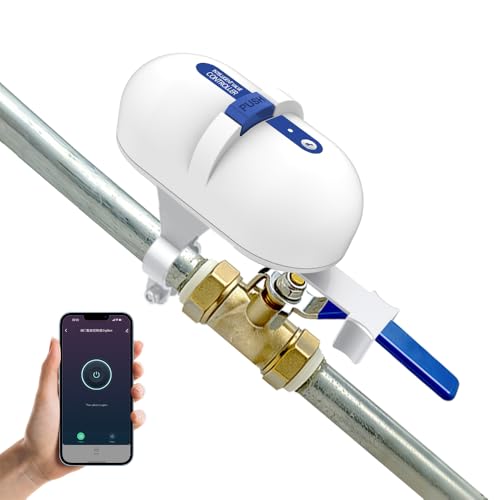
Pros
- No hub required
- Remote control through Smart Life or Tuya
- Alexa and Google voice control
- Fits 1/2-, 3/4-, and 1-inch valves
Cons
- Requires 2.4 GHz WiFi
- App setup needed for remote features

Pros
- Detects leaks and freezing conditions
- Freeze alert at 37°F or rapid drops
- WiFi smartphone and family notifications
- Alexa and Google Home compatible
Cons
- Requires two AA battery replacements
- One-year warranty covers the alarm only
Match the Sensor to the Risk
A water sensor belongs where a small leak can stay hidden, including beneath a dishwasher, washing machine, refrigerator, sink, water heater, toilet, or along a basement pipe. A low-profile unit is useful in tight spaces, while a cable sensor can extend coverage beyond the main device.
Standalone detectors notify you after water appears. A valve controller takes a different approach by controlling the supply pipe, so it can be useful for vacation properties, irrigation lines, or a household that needs remote shutoff. The SENCKIT controller can link with an immersion sensor for automatic valve closure, while the Blindsmart controller works directly over 2.4GHz WiFi without a hub.
For additional placement ideas, review where water leaks start in a house before deciding how many sensing points your home needs.
Pro Tip: Place a detector on a hard, level surface with its sensing contacts exposed. Keep the alarm reachable so you can silence or inspect it after an alert.
Connectivity, Alerts, and Shutoff
Hub requirements can change the installation more than the sensor itself. The Tapo detector requires a Tapo hub, while the Shelly models support WiFi, Bluetooth, Zigbee, and Matter. Kidde sends leak and freeze notifications through its app and works with Alexa and Google Home.
Audible alerts matter when your phone is out of reach. Tapo specifies an adjustable 90 dB alarm and can also trigger its hub alarm. Remote notifications are more useful when you are away, but an alert alone does not stop water flow, so a compatible valve is needed for automatic shutoff.
| Device type | Main distinction | Useful location |
|---|---|---|
| Leak sensor | Detects water presence | Under appliances |
| Cable sensor | Extends sensing area | Along pipes or edges |
| Valve controller | Stops water supply | Main or irrigation pipe |
Read how water sensors shut the water off if you are deciding whether a detector and valve should work together.
Battery Life and Environmental Protection
Battery format and service life affect how often you need to revisit a sensor. Tapo uses two replaceable AAA batteries and specifies up to three years under laboratory conditions. Kidde includes two AA batteries and also detects freezing conditions at 37 degrees Fahrenheit or after a rapid temperature drop.
Water resistance ratings are not interchangeable with placement advice. Tapo lists IP67, while Shelly Flood S Gen4 lists IP67 and supports rain detection outdoors. The Shelly Gen4 lists IP44, so its placement should reflect that lower stated protection level.
Before You Mount It: A leak detector cannot protect a room it cannot reach, and a sensor does not automatically close a pipe unless it is paired with a compatible valve system. Keep a manual shutoff accessible and learn how to shut off the water main before an emergency.
Expert Examined
From Ray Okafor

I keep sensors near appliances with hidden supply connections rather than only beside visible floor drains. The mistake I see is treating a phone alert as the entire response plan, so I prefer a reachable manual valve or a compatible automatic controller as well.
Read more about Ray OkaforWhich Device Fits Your Home
I would point you to water leak detectors that match the room instead of buying the same style for every location. For a basement, garage, or appliance with a broad detection area, I would choose the Shelly Gen4 Smart Flood Sensor, WiFi, Bluetooth because its extendable cable is designed to detect small amounts of water across a wider area. Its battery operation and Economic Alarm Mode also suit a seasonal property.
For a humid or dusty area where a loud local alarm matters, I would choose the Tapo Smart Water Leak Detector, Requires Tapo Hub. Its dual-side sensing, adjustable 90 dB alarm, IP67 rating, and stated battery life make it a practical choice when you already use the Tapo hub. For a home where stopping the supply is the priority, I would choose the Smart Water Valve: WiFi Gas Shut Off Valve, especially when pairing it with an immersion sensor and Smart Life scene. Its manual clutch provides a fallback if power is unavailable.
The Bottom Line
The biggest mistake buyers make is treating every water device as a leak detector. A sensor reports water, a freeze alarm adds temperature monitoring, and a valve controller manages the pipe, so the right setup may require two devices.
If you only do one thing first, identify the appliance, pipe, or room most likely to leak and choose the sensing method that can physically reach it. Then confirm the hub, WiFi, battery, and valve requirements before mounting anything.
FAQs
A leak sensor alerts you when water reaches its contacts. A smart valve controls the supply and may close it automatically when linked with an immersion sensor, so homes needing automatic response may use both. Place it beneath or beside likely leak sources such as dishwashers, washing machines, refrigerators, sinks, water heaters, toilets, pipes, drains, or basement corners. Keep the sensing surface exposed and reachable for inspection. It depends on the model and conditions. Tapo specifies up to three years with two AAA batteries, while Kidde uses two AA batteries, so check app alerts and replace batteries when the device reports low power. IP67 is the protection rating listed by Tapo and Shelly Flood S Gen4 against water and dust. It does not mean every installation is suitable, so follow the product’s placement limitations and keep contacts accessible.Should I buy a leak sensor or a smart water valve?
Where should a smart water leak detector be placed?
How often do smart leak detector batteries need replacement?
What does an IP67 rating mean for a water sensor?
Sources
- UL Solutions and water safety standards. www.ul.com
- US Consumer Product Safety Commission and home safety guidance. www.cpsc.gov