
Shopping for the best smart thermostats for mobile home starts with identifying the heating or cooling equipment, because a central HVAC thermostat is not interchangeable with a ductless AC controller. Your key choice is between wired HVAC control, no-C-wire heating control, and a battery-powered or infrared option.

Pros
- No C wire required
- Mobile app and voice control
- Programmable heating schedules
- Vibrant LCD color screen
Cons
- Remote control depends on WiFi
- No stated safety certification

Pros
- 7-day scheduling for Home, Sleep, and Away
- Phone app control from anywhere
- Family members can share control
- Capacitive touchscreen controls
- Supports electric baseboard, boiler, and heat pump
Cons
- IP20 rating limits environmental protection
- No battery details listed

Pros
- Conventional and heat-pump compatibility
- Matter certified for smart-home integration
- Flexible seven-day scheduling options
- Auto-away and filter reminders
- Indoor humidity display option
Cons
- Requires a 24 VAC C-wire
- Not compatible with 120 to 240V baseboard heat
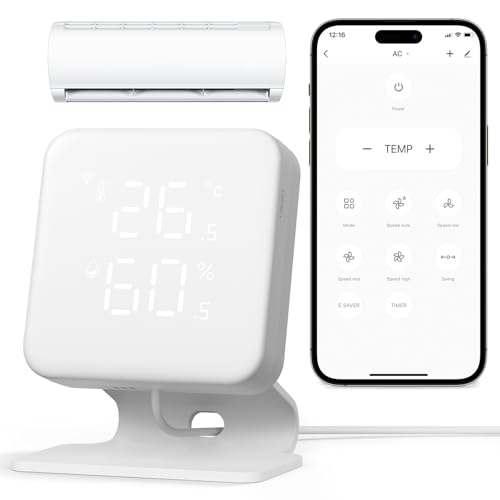
Pros
- Works with 300+ AC brands
- Built-in temperature and humidity display
- Alexa and Google Home control
- 7-day schedules and geofencing
Cons
- 2.4GHz WiFi only, no 5GHz
- Requires IR line of sight

Pros
- No C-wire installation
- 95-240VAC, 50-60Hz operation
- App and voice control
- TFT color touchscreen display
Cons
- 5-35°C temperature calibration range
- IP20 protection rating

Pros
- Battery-powered installation, no separate AC wiring
- Smart Life/Tuya app remote control
- Voice assistant compatibility
- 5+2, 6+1, or 7-day scheduling
Cons
- Battery-dependent rather than AC-powered
- Requires Zigbee-compatible smart-home setup
Match the thermostat to your equipment
Mobile homes may use central forced air, heat pumps, electric baseboard systems, boilers, underfloor heating, or ductless air conditioners. The Honeywell Home X2S supports conventional and heat pump arrangements, hot water heat, and forced air, but it does not work with electric baseboard heat rated at 120 to 240 volts.
The WOOX Smart AC Controller is a different category. It sends infrared signals to compatible mini-split, window, and portable air conditioners, plus heat pumps. It is not intended for central HVAC, ducted, or wired systems, so confirm that your existing unit responds to an infrared remote.
For floor heating and broader electrical applications, the Hamwesh Smart Thermostat and Asixxsix Smart Thermostat offer no-C-wire positioning in their listed features. Asixxsix specifically supports water floor heating, electric systems, AC units, wall-mounted boilers, and water heating, while Hamwesh highlights floor heating control.
smart energy and climate controls
Power and connection requirements matter
A C-wire requirement can decide the purchase before app features matter. Honeywell Home X2S requires a 24 VAC C-wire and supports 2.4 or 5GHz WiFi, while WOOX uses a plug-in adapter and works with 2.4GHz WiFi only. The no-C-wire products may suit a home where adding wiring is impractical, but you still need to follow the supplied installation instructions.
Before You Mount It: Do not connect a thermostat to equipment outside its stated compatibility. In particular, avoid using the WOOX controller with central or wired HVAC, and do not assume the Honeywell Home X2S supports electric baseboard heat.
ChicBosom Smart Thermostat for Tuya Zigbee uses batteries and does not need a separate AC power supply. It offers app control through Smart Life or Tuya, voice control, and weekly schedules, but its Zigbee connection may require the compatible smart-home setup expected by the household.
| Device type | Key power detail | Suitable application |
|---|---|---|
| Wired HVAC thermostat | 24 VAC C-wire | Conventional or heat pump |
| No-C-wire thermostat | Wireless installation | Floor or electric heating |
| Infrared AC controller | 2.4GHz WiFi | Ductless or portable AC |
For broader smart-home context, the Zigbee device considerations are useful when deciding whether a Zigbee product fits your existing system. The U.S. Consumer Product Safety Commission is also a sensible authority for general household product safety information.
Schedules, sensors, and app control
Programmability is especially useful when the home is empty during part of the day. Yechiry 7 Days Programmable Touchscreen supports Home, Sleep, and Away schedules for each day, app control from anywhere, and family control sharing. ChicBosom offers 5+2, 6+1, and 7-day programming, giving you several ways to match changing routines.
Honeywell Home X2S adds flexible schedule formats, auto-away, filter reminders, indoor humidity monitoring, and display settings. WOOX adds temperature and humidity history, geofencing, hourly schedules, and voice control through Alexa and Google Home, but those features apply to the connected AC equipment rather than a central HVAC system.
Pro Tip: Before ordering, write down the existing system type, voltage information, available wiring, and WiFi band. That short checklist prevents choosing a feature-rich controller that cannot operate your equipment.
Expert Examined
From Dana Whitfield

I keep seeing thermostat problems begin with an assumed compatibility match rather than an app issue. The safer approach is to identify the equipment and power arrangement first, then choose scheduling and voice features from the models that fit.
Read more about Dana Whitfieldsmart thermostat category
Which thermostat fits your mobile home
I would point you to Honeywell Home X2S Smart Wi-Fi Thermostat, White when your mobile home has compatible conventional or heat pump equipment and a 24 VAC C-wire. Its Matter certification, app control, flexible weekly schedules, auto-away feature, humidity option, and filter reminders make it the most suitable choice for a connected central HVAC setup.
For a home using underfloor or other electric heating where adding a C-wire is undesirable, I would choose Asixxsix Smart Thermostat. Its listed compatibility includes water floor heating, electric systems, AC units, wall-mounted boilers, and water heating, along with app and voice control and a color touchscreen.
If the mobile home relies on a mini-split, window AC, portable AC, or compatible ductless heat pump, I would choose WOOX Smart AC Controller. It can copy an existing infrared remote, supports many IR-controlled brands, displays temperature and humidity, and adds schedules and geofencing without a hub. For a battery-powered Zigbee installation, ChicBosom Smart Thermostat for Tuya Zigbee is the more fitting alternative.
The Bottom Line
The biggest mistake is treating every smart thermostat as a universal replacement. A C-wire requirement, electric baseboard limitation, infrared-only design, Zigbee connection, or system voltage can matter more than the display or voice assistant.
If you do only one thing first, identify the equipment type and power arrangement at the existing thermostat. Then select the matching model and confirm its WiFi, app, or Zigbee requirements before planning the installation.
FAQs
A mobile home can use a conventional HVAC thermostat, a floor-heating controller, a battery-powered Zigbee thermostat, or an infrared AC controller depending on the installed equipment. Check the system type and power requirements before choosing a model. Some listed models specifically support no-C-wire or wireless installation, including Hamwesh and Asixxsix. Honeywell Home X2S requires a 24 VAC C-wire, so it is not the right choice when that connection is unavailable. Confirm the heating or cooling system, voltage, wiring, and wireless connection requirements. Also verify whether the device controls central HVAC directly or communicates with a ductless unit through infrared signals. Matter is a communications standard designed to help compatible smart devices work across supported smart-home platforms. Honeywell Home X2S is Matter Certified and also lists compatibility with Alexa, Google Assistant, and Apple HomeKit.Which thermostat type works with a mobile home?
Can I use a smart thermostat without a C-wire?
What should I check before installing one?
What does Matter certification mean on a thermostat?
Sources
- U.S. Consumer Product Safety Commission www.cpsc.gov
- UL Solutions www.ul.com