
Shopping for the best smart thermostats for Apple HomeKit starts with identifying your heating system, not choosing a screen. The key split is between 120-240V electric heat and low-voltage HVAC, so this selection suits homeowners who want Apple Home control without a compatibility surprise.

Pros
- Works with 120V to 240V electric heating
- Humidity sensor and touchscreen
- Scheduling and geofencing support
- Apple Home, Alexa, and Google compatible
Cons
- Requires a neutral or second live wire
- Limited to electric baseboards and fan-forced heaters

Pros
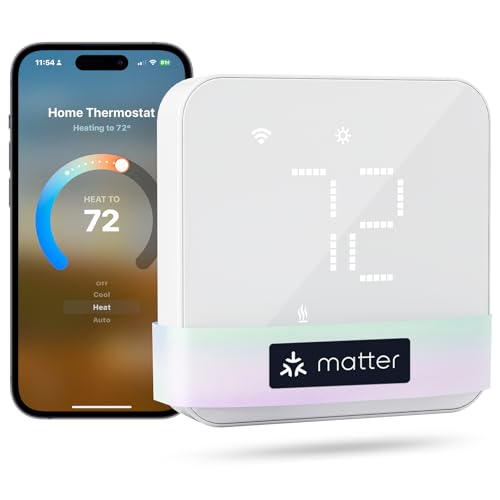
- Matter support across major smart-home platforms
- Flexible 24/7 heating and cooling schedules
- Remote app and voice control
- Alerts for filters and system malfunctions
Cons
- C-wire required for some wiring configurations
- Not compatible with electric baseboard heaters
- Compatibility check required before purchase

Pros
- Matter support across major smart-home platforms
- No new app or account required
- Local and remote control through existing app
- Supports conventional and heat-pump systems
Cons
- Matter controller required for outside-home connectivity
- Not compatible with 120V or 240V systems
Pros
- Matter support for major smart-home platforms
- Flexible 24/7 heating and cooling schedules
- Remote app and voice control
- Smart alerts for filters and malfunctions
Cons
- C-wire may be required and is not included
- Not compatible with electric baseboard heaters

Pros
- ENERGY STAR certified
- Customizable 4.3-inch touchscreen
- Humidity monitoring for indoor air quality
- Works with Alexa, Matter, Apple Home, Google
Cons
- C-wire required for installation
- Not compatible with 120-240V electric baseboard heat
Pros
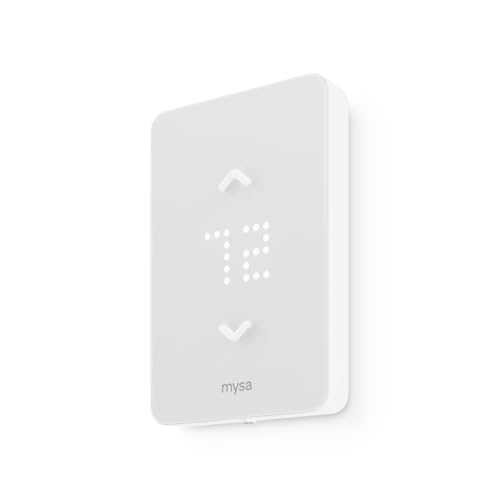
- Supports 120V and 240V electric heating
- 7-day scheduling with no subscription
- HomeKit, Alexa, and Google compatibility
- Remote control, geofencing, and vacation mode
Cons
- Requires four wires, including neutral or second live
- Not compatible with 24V furnaces or heat pumps
Match the thermostat to your wiring
Electric baseboards, fan-forced heaters, wall heaters, convectors, and radiant ceiling heat need a line-voltage model. The Mysa options support 120V or 240V systems, but they require four wires, including a neutral or second live wire. They are not intended for 24V furnaces or central heat pumps.
Conventional HVAC and heat-pump systems need a different type of thermostat. The meross models support many furnaces, boilers, air conditioners, heat pumps, humidifiers, and dehumidifiers, while LUX supports several conventional, heat-pump, PTAC, and fan-coil configurations. Both meross models exclude electric baseboards and two-wire systems.
Before You Wire: Do not assume a similar-looking wall thermostat uses the same voltage. Turn power off at the breaker, verify the system type, and use an electrician where local code or high-voltage wiring requires it.
Apple Home, Matter, and everyday control
Apple Home compatibility can mean different setup experiences. The meross thermostats use Matter and integrate locally with Apple Home, Alexa, Google Home, Home Assistant, and SmartThings. LUX also uses Matter, with configuration handled at the device and through an existing smart-home app rather than a separate thermostat account.
Mysa provides control through its Android or iOS app, along with Apple Home, Alexa, and Google support. Its feature set includes scheduling, remote adjustment, and geofencing. The Mysa LITE also includes away and vacation modes, while the X7B adds a customizable display and humidity monitoring.
| System type | Wiring requirement | Suitable models |
|---|---|---|
| Line-voltage electric | Neutral or second live wire | Mysa models |
| Conventional HVAC | C-wire may be required | meross, LUX, Honeywell |
| Heat pump systems | Verify system stages | meross, LUX, Honeywell |
For broader smart-home planning, the Smart Energy & Climate Control category places thermostats alongside related home automation equipment. Matter can reduce app switching, but a LUX installation still requires a Matter controller or smart speaker for connectivity outside the home.
Displays, schedules, and indoor comfort
A thermostat with a screen works well when people regularly adjust the temperature at the wall. Honeywell Home X7B uses a 4.3-inch customizable display and monitors humidity, while Mysa V2 combines a touchscreen with a humidity sensor. The meross models use a sleek glass panel and add filter-life, malfunction, and long-term operation alerts.
Scheduling matters if your household follows predictable home, away, and sleep patterns. Meross offers flexible 24/7 plans, Mysa includes scheduling and geofencing, and Honeywell Home X7B supports programmable control with ENERGY STAR certification. Check the wiring before focusing on display style or app features.
Pro Tip: Photograph the existing wiring and record the current thermostat terminals before removing anything. Compare those details with the manufacturer compatibility information, especially if you cannot identify the system voltage.
I keep the wiring label and breaker information together whenever a thermostat is replaced. The mistake I see most often is treating a line-voltage baseboard thermostat like a low-voltage HVAC control, so confirm voltage before choosing a model.
Expert Examined
From Ray Okafor

I pay close attention to the system label before recommending a smart thermostat because the wrong voltage can make an otherwise attractive model unusable. A careful wire check is more useful than choosing by display size alone.
Read more about Ray OkaforThe U.S. Department of Energy also explains how programmable temperature control can support energy-conscious heating routines. That advice is most useful after the thermostat is confirmed compatible with the home’s equipment.
Which thermostat fits your home
I would put the Mysa Smart Thermostat V2 for Electric Baseboard on the shortlist for a home with 120-240V electric baseboards or fan-forced heaters and the required neutral or second live wire. Its touchscreen, humidity sensor, scheduling, geofencing, and remote app control make it the more feature-focused Mysa choice.
For a lower-cost conventional HVAC setup, I would point you to the meross Matter Smart Thermostats for Home with the exact ASIN shown in the comparison box. It suits many furnaces, boilers, air conditioners, heat pumps, humidifiers, and dehumidifiers, but you must verify the C-wire configuration and exclude line-voltage heat.
I would choose the Honeywell Home X7B Smart Wi-Fi Programmable when a larger customizable display, humidity monitoring, and ENERGY STAR certification matter. It supports several conventional and heat-pump arrangements, includes a C-wire adapter voucher, and does not work with 120-240V electric baseboard heat.
The Bottom Line
The biggest mistake buyers make with Apple Home thermostats is treating HomeKit support as proof of universal compatibility. A Matter or Apple Home badge cannot overcome a mismatch between line-voltage electric heat, low-voltage HVAC, wiring, and system stages.
First, identify whether your home uses 120-240V electric heat or a conventional HVAC system, then check the required wires and compatibility limits. Only after that should you compare Matter integration, humidity monitoring, display design, scheduling, and geofencing.
FAQs
Mysa Smart Thermostat V2 for Electric Baseboard and Mysa Smart Thermostat LITE for Electric Baseboard are designed for 120V or 240V electric baseboards and related electric heaters. They require a neutral or second live wire and are not for 24V furnaces or central heat pumps. Some models and wiring configurations require one. The meross thermostats identify C-wire requirements before purchase, LUX lists a C-wire adapter as sold separately, and Honeywell Home X7B includes a voucher for an adapter if the system lacks one. Matter is a smart-home connectivity protocol used by the meross and LUX models in this selection. It allows integration with platforms such as Apple Home, Alexa, Google Home, Home Assistant, and SmartThings, although LUX requires a Matter controller or smart speaker for outside-home connectivity. Only the two Mysa models listed for electric baseboard heaters support 120V or 240V line-voltage systems. The meross models, LUX TQ1, and Honeywell Home X7B specifically exclude 120-240V electric baseboard heat.Which thermostat type works with electric baseboard heat?
Do Apple Home thermostats require a C-wire?
What does Matter mean on a smart thermostat?
Can these thermostats control a 120-240V baseboard heater?
Sources
- U.S. Department of Energy, Thermostats. www.energy.gov
- UL Solutions, Smart Home and Connected Product Safety. www.ul.com