
Choosing the best smart plugs for dehumidifier means checking more than app support: the plug must match the appliance’s power demand and your home’s smart platform. This selection is for households that want scheduled control, remote shutoff, or a simpler way to manage a dehumidifier without adding another complicated device.

Pros
- Matter support across major smart home platforms
- Compact design helps preserve nearby outlet access
- UL certified flame-retardant design
- Scheduling, timers, app, and voice control
Cons
- 2.4 GHz Wi-Fi only
- Limited to 15A/1800W maximum
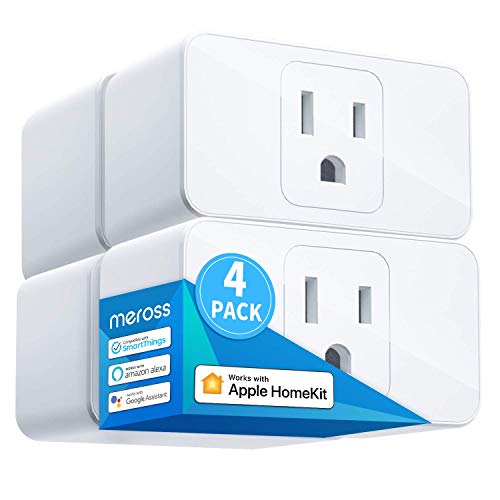
Pros
- Apple HomeKit, Alexa, Google Assistant compatible
- 15A capacity for appliances up to 1800W
- Compact design leaves room for two plugs
- Scheduling supports sunrise and sunset settings
Cons
- HomeKit remote control needs an online bridge
- Requires a 2.4GHz Wi-Fi network

Pros
- Apple HomeKit and Siri support
- Works with Alexa, Google Assistant, SmartThings
- Compact design preserves the adjacent outlet
- UL certified flame-retardant design
Cons
- 2.4GHz Wi-Fi only
- HomeKit remote control needs an Apple device

Pros
- Matter support for Apple Home, Alexa, Google Home
- Energy monitoring tracks usage over time
- Compact design helps preserve adjacent outlet space
- UL-certified flame-retardant design and 2-year warranty
Cons
- Requires 2.4GHz Wi-Fi
- 15A/1800W maximum load

Pros
- Matter support across major smart-home platforms
- 15A/1800W capacity for household electronics
- Remote control, timers, and scheduling
- FCC certified with overload protection
Cons
- Hub required for most listed platforms
- 2.4GHz Wi-Fi and IPv6 network only

Pros
- Matter support for major smart home platforms
- 15A/1800W capacity
- Remote app control from anywhere
- Voice control with Siri and Alexa
- Timers and schedules for automation
Cons
- Requires 2.4GHz Wi-Fi and IPv6
- Hub required for most Matter platforms
Start With Electrical Capacity
Every product in this selection is rated for appliances up to 15A and 1800W, but that does not mean every dehumidifier should be connected automatically. Check the appliance label or manual first, then keep the plug’s maximum rating above the dehumidifier’s stated demand. A compact form also helps preserve access to the neighboring outlet.
Scheduling is useful when you want the appliance to run at planned times, while remote app control can let you switch it off without walking to the room. The Tapo and Linkind models specifically describe timer or scheduling functions for humidifiers and similar appliances.
Check the Appliance Label: Do not exceed the smart plug’s 15A/1800W limit, and do not use a plug simply because its connector fits. Confirm the dehumidifier’s electrical requirements before setup.
Matter or Traditional App Control
Matter is the main dividing line among these choices. Matter models can work with certified platforms including Apple Home, Alexa, Google Home, and Samsung SmartThings, while local-network control can continue between Matter devices when the internet is offline.
Hub requirements still matter. Linkind states that Apple Home, Alexa, Google Home, and SmartThings control requires a Matter-certified hub or controller, although its AiDot app can be used without one. Apple HomeKit remote control for the meross and non-Matter Tapo models also requires an additional networked Apple device.
For broader platform flexibility, smart sensors and home automation options can help you plan how the plug fits with other devices instead of treating it as an isolated outlet.
| Control type | Key requirement | Suitable setup |
|---|---|---|
| Matter | Certified hub or controller | Multi-platform home |
| Apple HomeKit | Networked Apple device | Apple-centered home |
| App control | Compatible 2.4GHz Wi-Fi | Simple remote access |
Energy Visibility and Everyday Placement
The Kasa Matter Smart Plug with Energy Monitoring is the only option here that explicitly tracks energy usage over time. That makes it the clearest fit if you want consumption information alongside scheduling and platform compatibility.
For a straightforward room setup, compact designs from Tapo, meross, Kasa Smart, and Linkind are intended to avoid blocking additional outlets. The meross model also states that two mini plugs can be stacked in one outlet, which may help when both receptacles are needed.
Safety markings are useful signals, but they do not replace correct appliance selection. Tapo and Kasa Smart identify UL certification, while meross and Linkind identify ETL certification. UL Solutions explains its role in product safety standards and certification, so its name on a box should be read as part of the safety information rather than as permission to exceed the device rating.
Pro Tip: Keep the plug accessible after installation so you can disconnect the dehumidifier quickly, and leave ventilation around both devices.
Expert Examined
From Jenna Castellano

I keep the smart plug visible rather than hiding it behind furniture. The mistake I see is choosing a tiny outlet device and then making it difficult to reach, so I prefer an accessible placement with the cord free from pinching.
Read more about Jenna CastellanoWhich Plug Fits Your Home
I would point Apple Home households toward HomeKit-compatible smart-home planning and the Tapo Apple HomeKit Smart Plug Mini, 15A when Siri control and simple setup are the priority. It supports Apple HomeKit, Alexa, Google Home, and Samsung SmartThings, while its compact UL-certified design and Bluetooth onboarding keep the setup focused.
I would choose the Kasa Matter Smart Plug with Energy Monitoring for a household that wants Matter compatibility plus a record of energy use. Its compact design, 15A/1800W rating, scheduling, and LAN control make it a useful fit where several platforms share one home.
For a smaller Matter installation, I would put Linkind Matter Smart Plug, Works with Apple Home on the shortlist. It offers a two-pack, remote app control, scheduling, offline-ready LAN behavior, and a compact 15A/1800W design, but you should confirm that your network supports its 2.4GHz Wi-Fi and IPv6 requirements.
The Bottom Line
The mistake most buyers make is treating a smart plug as a universal adapter for any dehumidifier. Platform compatibility is secondary to confirming the appliance’s electrical demand, then choosing a model that does not obstruct the outlet or become hard to reach.
If you do only one thing first, read the dehumidifier’s power information and compare it with the plug’s 15A/1800W limit. After that, select Matter, Apple HomeKit, or app control according to the system already used in your home.
FAQs
A smart plug should only be used when the dehumidifier’s electrical requirements stay within the plug’s 15A/1800W rating. Check the appliance label or manual before connecting it, and keep the plug accessible after installation. The listed Tapo, meross, Kasa Smart, and Linkind options include Apple Home or HomeKit support. Some Apple Home remote-control features require a networked Apple device, while Matter models may require a Matter-certified hub or controller. Matter models describe local-network communication between Matter-certified devices when the internet is unavailable. Remote control from outside the home may still depend on the required platform, controller, or app connection. UL and ETL identify safety and quality certification information from recognized certification organizations. Certification does not increase the plug’s power limit, so you still need to follow the stated 15A/1800W rating and the appliance instructions.Can I use a smart plug with any dehumidifier?
Which smart plug works with Apple Home?
Do these smart plugs work if Wi-Fi goes offline?
What does UL or ETL certification mean on a smart plug?
Sources
- UL Solutions and Product Safety Certification. www.ul.com
- US Consumer Product Safety Commission and Home Electrical Safety. www.cpsc.gov