
Shoppers seeking the best smart locks with handle usually face one decisive choice: direct Wi-Fi access or a broader mix of fingerprint, keypad, and smart-home methods. Your door measurements, battery preferences, and preferred ecosystem should determine the match.

Pros
- Fingerprint handle opens in 0.3 seconds
- Five entry methods, including app and key
- Built-in 2.4GHz Wi-Fi, no hub required
- Up to 100 PIN codes with access logs
Cons
- Requires eight AA alkaline batteries
- Requires specific door hole and clearance

Pros
- Built-in WiFi for anywhere access
- Touchscreen keypad enables keyless entry
- Customizable alarm for forced entry attempts
- BHMA-certified security, durability, and finish
Cons
- Remote features require a home WiFi connection
- App control adds setup and management

Pros
- Apple Home Key with iPhone or Apple Watch
- Fingerprint recognition in under 0.3 seconds
- Matter over Thread supports multiple ecosystems
- Up to 10 months on four AA batteries
Cons
- Alkaline batteries required for stable operation
- Thread-enabled Matter controller required for platforms
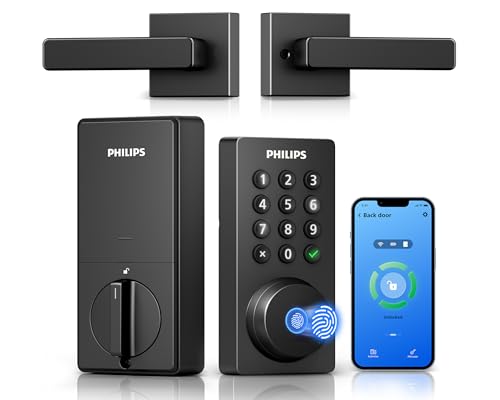
Pros
- Built-in WiFi, no hub required
- Fingerprint entry in 0.3 seconds
- One-time and recurring PIN codes
- Matching handle set included
Cons
- Requires 2.4GHz WiFi within 33 feet
- Batteries not included, alkaline only
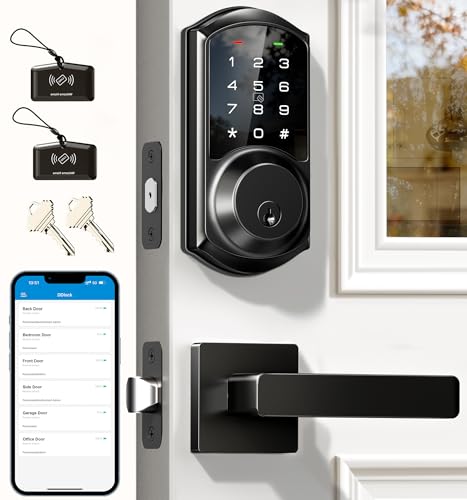
Pros
- App and web control with no subscription fee
- Stores 250+ flexible access codes
- IP54 weatherproof, BHMA/ANSI Grade 3
- IC card capacity exceeds 1,000 cards
Cons
- Remote features require separate G2 gateway
- Two-year warranty requires product registration

Pros
- Fingerprint, PIN, app, and keyfob entry
- Supports Apple Home Key and Matter
- Remote access and smart activity alerts
- Six AA batteries included
Cons
- Wi-Fi supports 2.4 GHz networks only
- Requires compatible Matter controller and Thread router
Start With Door Fit and Handle Style
A handle lock replaces compatible door hardware, so measurements matter before features. Check the bore hole, backset, door thickness, and clearance around the existing handle. The Philips Upgraded Wi-Fi Smart Lock with Handle requires a 2-1/8-inch door hole, 4.53 inches of clearance between the deadbolt and handle set, and a door between 1-3/8 and 2 inches thick.
The ULTRALOQ Latch 5 Pro WiFi Smart Lever Lock is designed for lever-style doors with a 2-1/8-inch bore hole, a 2-3/8 or 2-3/4-inch backset, and doors 1-3/8 to 1-3/4 inches thick. Veise lists compatibility with 1-3/8 to 2-inch doors and either a 1-1/2 or 2-1/8-inch hole.
Before You Mount It: Do not assume a replacement handle fits because the exterior shape looks similar. Measure the existing hardware and compare every listed requirement, especially clearance and backset.
Match Entry Methods to Daily Use
Fingerprint handles suit households that want quick entry without reaching for a phone. Philips provides fingerprint access directly on the handle and stores up to 50 fingerprints, while the Aqara Smart Lock with Handle U300, Apple Home Key stores up to 25. Keypads remain useful for guests, rentals, and scheduled access.
Connectivity changes the experience after installation. The Schlage Encode Smart WiFi Lock, Lever Handle connects directly to home Wi-Fi for app control and monitoring from anywhere. Philips models also use built-in 2.4GHz Wi-Fi without a hub, while Veise requires its G2 gateway for remote access and voice-control features.
If Apple Home matters, Aqara and ULTRALOQ support Apple Home Key, but their listed Apple or Matter features require compatible Thread equipment. For broader platform flexibility, Matter over Thread can connect with multiple ecosystems when the required controller and border router are available. Learn more about what a smart lock bridge does before buying extra hardware.
| Entry style | Key requirement | Suitable situation |
|---|---|---|
| Fingerprint handle | Stored fingerprints | Fast household entry |
| Built-in Wi-Fi | 2.4GHz network | Remote app control |
| Matter over Thread | Compatible controller | Multi-platform homes |
Plan for Batteries and Security Details
Battery needs differ enough to affect maintenance. Aqara uses four AA alkaline batteries and lists up to 10 months of operation, with USB-C emergency power. ULTRALOQ uses six AA batteries, includes them, and lists up to one year with alkaline batteries or up to 1.5 years with lithium under Matter over Thread.
Other models require batteries that are not included, so confirm the format before installation. Philips specifies standard alkaline batteries for its Wi-Fi deadbolt and lists up to six months of daily performance. Auto-lock timing also varies, from short delays to longer adjustable periods, so choose a setting that fits your routine without trapping someone outside.
Expert Examined
From Jenna Castellano

I keep seeing handle locks selected for app features before anyone checks the door opening. The mistake I see is discovering that the bore or clearance prevents installation, so I would measure the existing hardware first and save the connectivity decision for second.
Read more about Jenna CastellanoSecurity labels need context rather than guesswork. Veise identifies its lock as BHMA/ANSI Grade 3 and says data is encrypted locally, while Schlage highlights a certified residential security, durability, and finish rating by BHMA experts. For background on digital risks, read whether a smart lock can be hacked, and review information from UL Solutions when a certification claim affects your decision.
Which Handle Lock Fits Your Home
I would point you to the Schlage Encode Smart WiFi Lock, Lever Handle if direct Wi-Fi access, app monitoring, Alexa, Google, Ring, or Airbnb compatibility are central to your routine. Its built-in alarm, fingerprint-resistant touchscreen, and adjustable auto-lock add useful control for a primary entry door.
For a household that wants the fastest physical entry, I would choose the Philips Upgraded Wi-Fi Smart Lock with Handle. The fingerprint-reading handle, five entry methods, up to 100 passcodes, activity logs, and no-hub 2.4GHz Wi-Fi suit busy families, tenants, or guest access.
I would reserve the Veise VE06-L Smart Deadbolt Lock with 2 Lever for buyers who need extensive code and card management. It supports 250 or more codes, IC cards, scheduled and one-time access, local encryption, and a web portal without a subscription fee, but remote smart-home control requires the separate G2 gateway.
The Bottom Line
The biggest mistake is treating every handle lock as a universal replacement. A mismatch in bore size, backset, clearance, or door thickness can matter more than fingerprint speed or app compatibility.
If you only do one thing first, measure your door and existing hardware precisely. Then select the entry method and connection type that match how your household actually enters, shares access, and maintains batteries.
FAQs
Fingerprint handles can provide quick entry without a phone or PIN, while keypads are easier for guests, tenants, and scheduled access. The better choice depends on whether household convenience or flexible code sharing matters more. Check door thickness, bore hole diameter, backset, and clearance around the existing handle. Requirements differ by model, so compare those measurements with the product specifications before removing current hardware. Battery life depends on the model, battery type, connection method, and use. Several listed models provide low-battery alerts or stated operating estimates, but you should keep the specified alkaline batteries available when replacements are needed. A BHMA or ANSI rating indicates that a product is associated with a defined hardware performance classification. The exact grade and claim still matter, so read the rating stated for the specific lock rather than assuming every smart handle has the same certification.Are fingerprint handle locks better than keypad locks?
What measurements should I check before buying?
How often do smart lock batteries need replacement?
What does a BHMA or ANSI rating mean?
Sources
- UL Solutions www.ul.com
- National Fire Protection Association www.nfpa.org
- US Consumer Product Safety Commission www.cpsc.gov