
Shopping for the best smart locks with camera means choosing between familiar deadbolt-style installation and feature-rich mortise hardware. The key split is whether your door can accept the lock body and power setup, so renters, families, and homeowners should check fit before prioritizing biometrics.

Pros
- 2K camera with f/1.6 lens
- Fast fingerprint recognition
- Built-in Wi-Fi and 8GB storage
- BHMA Grade 3, IP65 weather resistance
Cons
- Rechargeable battery requires periodic charging
- Compatible accessories sold separately

Pros
- Fast palm vein recognition in 0.6 seconds
- BHMA Grade 1 deadbolt certification
- 2K HD camera with 150-degree view
- 16GB built-in local storage
Cons
- Camera streams unavailable through Matter
- Not compatible with HomeBase 2

Pros
- Nine access methods for family and guests
- 3D face recognition for touchless entry
- HD camera with night vision and alerts
- Tuya app control and video intercom
Cons
- Difficult mortise installation, possible screw cutting
- Not waterproof, indoor installation only

Pros
- Palm-vein and fingerprint recognition
- 0.17-second access, 99% stated accuracy
- 2K camera with 180° panoramic view
- 8GB local storage, no monthly fee
Cons
- 3.66-pound hardware may feel heavy
- Large 11 x 4.4 x 3.5-inch footprint
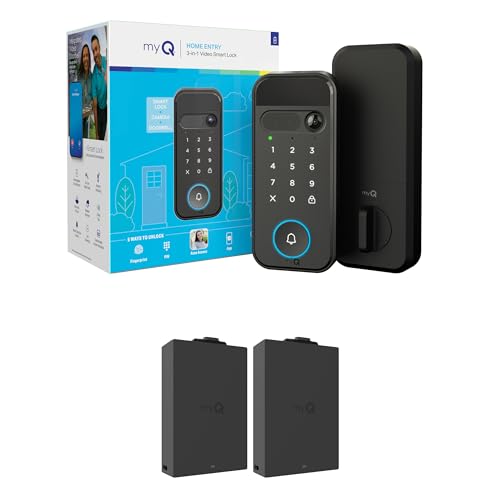
Pros
- 2K HDR camera with color night vision
- Five entry methods, including face and fingerprint
- Remote control and alerts through myQ app
- Extra battery included
Cons
- Face and fingerprint access unavailable in Illinois and Texas
- Recognition features unavailable outside the U.S. and Canada

Pros
- 3D face, palm vein, and fingerprint entry
- Eight access options for family and guests
- 4-inch indoor screen with night vision
- IP67 dust and water protection
Cons
- Larger mortise, drilling may be needed
- Remote features depend on Tuya or Smart Life app
Start With the Door, Not the Camera
Several products combine a camera, doorbell, and electronic lock, but they do not all replace the same kind of hardware. The eufy Security Video Smart Lock E331 is designed around standard US deadbolt setups and says installation takes about 15 minutes with no drilling on most compatible doors. By contrast, the Smart Door Lock with 3D Face Recognition & Camera uses a mortise design and warns that installation can be difficult.
YINTIN 3D Face Recognition Smart Lock with Camera also uses a larger mortise design, so compare door thickness, lock-body openings, and hole positions before ordering. If your door needs drilling or mortising, factor in the hardware work rather than assuming every keyless lock is a simple deadbolt replacement.
Before You Mount It: Do not place a product described as not waterproof outdoors. The Smart Door Lock with 3D Face Recognition & Camera specifically carries that warning, while other models list weather or dust-and-water protection in their specifications.
For more context on the hardware behind a lock installation, review what a strike plate does before removing the existing parts.
Match Biometrics to Daily Entry
Fingerprint access is a practical choice for everyday family entry, while palm vein recognition provides contactless access on selected models. The Lockin Veno Plus Smart Lock with Camera combines palm vein and fingerprint recognition, and its camera, doorbell, and Wi-Fi gateway are built into one unit.
The eufy Security Video Smart Lock FamiLock S3 Max adds palm vein unlocking, a rear lock video screen, and local storage for biometric data. That screen may suit households where children or older adults need to check the front door without opening a phone app. Face recognition offers another hands-free route on the Smart Door Lock with 3D Face Recognition & Camera, YINTIN, and myQ models.
| Access style | Camera feature | Best fit |
|---|---|---|
| Fingerprint | Visitor video | Everyday family entry |
| Palm vein | Local video storage | Contactless access |
| Face recognition | Indoor viewing | Hands-full arrivals |
Expert Examined
From Ray Okafor

I keep seeing buyers focus on the number of entry methods and overlook who will use them every day. Give family members a dependable primary method, then confirm that the physical key or emergency power option remains available before installation.
Read more about Ray OkaforCheck Storage, Alerts, and Backup Power
Video features are more useful when you know where clips and notifications go. The eufy Security Video Smart Lock E331 includes 8GB of built-in storage and real-time activity notifications, while the FamiLock S3 Max includes 16GB of built-in storage. Lockin lists 8GB local storage with no monthly fee.
Battery planning matters because these devices combine a lock with a camera. E331 uses a rechargeable 10,000mAh battery, FamiLock S3 Max lists up to four months of full functionality plus four AAA batteries for emergency use, and myQ Secure View 3-in-1 Smart Lock Deadbolt includes an extra battery in the product name. YINTIN and the generic mortise model list rechargeable power with USB-C emergency power input.
Pro Tip: Before fitting the lock, confirm the charging method, emergency power connection, and physical-key backup. Add recurring battery checks to the same routine as other entry hardware.
Remote access also depends on the product ecosystem. E331 works with selected eufy devices, FamiLock S3 Max supports Matter and several smart-home platforms but does not support camera streams through Matter, and the Tuya-compatible models use Tuya or Smart Life controls. Learn more about smart lock bridges and connected access before mixing devices.
Read the Security Claims Carefully
Certifications and protection ratings describe specific parts of the product, not every possible installation condition. E331 lists BHMA Grade 3 and IP65 weather resistance, while FamiLock S3 Max lists BHMA Grade 1. YINTIN lists IP67 protection, but its larger mortise still requires a door-fit check.
A rating does not remove the need to secure the surrounding door hardware. For broader context about electronic access risks, the smart lock security discussion covers why account control, backup entry, and physical fit deserve attention alongside biometrics.
For standards information, consult UL Solutions and confirm which claim applies to the exact model and installation. Also note that myQ says face and fingerprint recognition are unavailable in Illinois, Texas, and outside the US and Canada.
Which Lock Fits Your Front Door
I would point homeowners with a standard compatible deadbolt toward eufy Security Video Smart Lock E331. Its fingerprint entry, keypad, app, voice-assistant support, physical keys, built-in Wi-Fi, camera, and rechargeable battery create a broad set of access choices. The listed BHMA Grade 3 and IP65 ratings also give it a clearer fit for everyday exterior use than the model specifically marked not waterproof.
I would choose eufy Security Video Smart Lock FamiLock S3 Max for a household that values palm vein entry, local biometric storage, and an indoor rear-lock screen. Its emergency AAA battery setup is useful for buyers who want another power fallback. For a no-subscription local-storage approach, Lockin Veno Plus Smart Lock with Camera is the option I would point to, especially when palm vein and fingerprint entry suit the household.
The Bottom Line
The biggest mistake is treating every camera lock as a drop-in deadbolt replacement. Mortise models can require different openings, drilling, or cutting, while even compatible deadbolt models need the right door preparation and power access.
If you do only one thing first, measure the door and existing lock body against the installation requirements. Then choose the biometric method, camera view, storage approach, and backup power system that match the people using the entrance.
FAQs
Fingerprint access is familiar and included on several models, while palm vein recognition offers contactless entry. Face recognition can help when your hands are full, but availability and compatibility vary by product and location. No. Some products are designed for standard US deadbolt setups, while mortise models may need different openings, drilling, or cutting. Check door thickness, hole positions, and the lock-body space before buying. Backup options vary. Products in this comparison list physical keys, emergency USB-C power, AAA battery backup, rechargeable batteries, or an extra battery. Confirm the specific method before installation and keep the required backup available. BHMA ratings identify a lock-grade claim listed by the manufacturer, while IP ratings describe resistance to dust or water. They do not guarantee that every door, installation, or outdoor location is suitable.Which biometric method is best for a smart lock with a camera?
Can every camera smart lock fit a standard front door?
What happens if the smart lock battery runs low?
What do BHMA and IP ratings tell me?
Sources
- UL Solutions www.ul.com
- US Consumer Product Safety Commission www.cpsc.gov