
Shopping for the best smart door locks without handle makes sense when your existing knob or lever still works and only the deadbolt needs upgrading. The real split is whether you want simple keypad access, fingerprint entry, or hands-free phone access, so the right choice depends on your door hardware and daily routine.

Pros
- Fingerprint access in under one second
- Built-in Wi-Fi, no bridge required
- Up to eight months with eight AA batteries
- BHMA Grade 3 certification
Cons
- Requires eight AA batteries
- IP53 protection, not fully waterproof

Pros
- Built-in WiFi, remote control from anywhere
- Stores up to 100 access codes
- Works with Alexa and Google Home
- Forced-entry alarm and encrypted connection
Cons
- Requires Schlage Home app for smart features
- Four AA batteries last up to six months

Pros
- Multiple entry methods, including fingerprint and passcode
- Matter over Thread supports multiple ecosystems
- Rechargeable battery lasts up to six months
- BHMA-certified with IP65 outdoor protection
Cons
- UWB requires specific Apple devices and a Thread hub
- NFC cards sold separately

Pros
- Fingerprint recognition with self-learning AI chip
- Eight entry methods for flexible access
- Remote user permissions and activity logs
- USB-C emergency port and low-battery alerts
Cons
- G1 Gateway required for remote access
- Four AA batteries not included

Pros
- Fingerprint, passcode, app, key, and voice entry
- Built-in Wi-Fi, no extra hub needed
- Up to 100 custom passcodes
- Auto-lock adjustable from 10 to 180 seconds
Cons
- Batteries not included
- Supports 2.4GHz Wi-Fi only
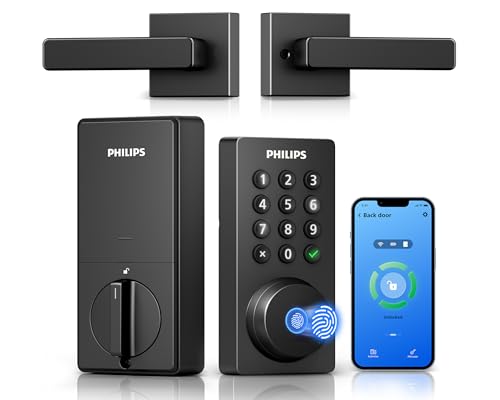
Pros
- Built-in WiFi, no hub required
- Fingerprint entry in 0.3 seconds
- One-time and recurring PIN codes
- Matching handle set included
Cons
- Requires 2.4GHz WiFi within 33 feet
- Batteries not included, alkaline only
Match the Lock to Your Existing Hardware
A handle-free model replaces the deadbolt, not the lower door knob or lever. That makes it a practical upgrade when the current handle matches your entry door, but you still need to confirm the deadbolt alignment, backset, bore size, and door thickness before ordering.
The eufy Security Smart Lock C220 is designed for most standard deadbolts and fits bores under 54mm after removing its spacer. The Schlage Encode Smart WiFi Deadbolt Lock fits standard doors from 1-3/8 to 1-3/4 inches thick and supports two backset sizes, making its fit information especially clear.
Pro Tip: Check that the interior thumb-turn can rotate freely and that the bolt enters the strike plate without rubbing before installing the electronic housing.
If the handle itself also needs replacement, a deadbolt-only purchase will not solve that problem. The Philips WiFi Keypad Deadbolt with Handle is the exception in this group because it includes a matching handle set, so it belongs on a different shopping path.
Choose Access for Your Household
Fingerprint entry is useful when family members regularly arrive with full hands or do not want to remember codes. The eufy Security Smart Lock C220 offers fingerprint, app, keypad, physical key, Apple Watch, and voice access, while the Veise VE017 Fingerprint Smart Door Lock with App adds temporary, recurring, and permanent code options for guests or renters.
The Aqara UWB Smart Lock U400, Apple Home Key is the most specialized choice for Apple households. Its hands-free UWB feature requires compatible Apple hardware and software, while Apple Home Key also requires a Thread-enabled Matter controller. Without that equipment, its extra access features may not fit your setup.
| Access style | Key requirement | Best fit |
|---|---|---|
| Fingerprint | Registered users | Busy households |
| Wi-Fi keypad | 2.4GHz or home Wi-Fi | Remote access |
| UWB hands-free | Compatible Apple hub | Apple homes |
For a straightforward remote lock, built-in Wi-Fi avoids a separate bridge on the eufy, Schlage, and Philips Wi-Fi models. The Veise requires the G1 Gateway for remote access and voice control, so include that additional device in your setup plan. Learn more about how smart lock bridges work before choosing a gateway-dependent model.
Plan for Batteries and Outdoor Exposure
Battery details can matter more than the access method. The eufy uses eight AA batteries and lists around eight months of operation, Schlage uses four AA batteries for up to six months, and the Veise uses four AA batteries for about twelve months. Actual runtime varies with use, and the Philips models require batteries that are not included.
The Aqara uses a removable rechargeable lithium battery lasting up to six months per charge and can be recharged through USB-C. It also has an IP65 exterior rating. The eufy has an IP53 rating, while the other listed models do not provide an outdoor water-resistance rating in the supplied specifications.
Before You Mount It: Never treat an emergency USB port as a substitute for routine battery maintenance. Keep the correct battery type available, respond to low-battery alerts, and verify that the physical key remains accessible to an authorized person.
Security ratings also need context. BHMA certification indicates recognized mechanical strength, protection, and durability criteria, but it does not mean every model offers the same app features, weather rating, or battery system. For broader door protection, review why the strike plate matters.
Expert Examined
From Jenna Castellano

I keep the existing handle in place only after checking that the deadbolt and lower latch work independently. The mistake I see is focusing on the keypad while ignoring a misaligned bolt, so I would correct the door fit before adding smart features.
Read more about Jenna CastellanoWhich Lock Fits Your Door Routine
I would point you to the eufy Security Smart Lock C220 for a standard deadbolt replacement when you want several entry methods without adding a bridge. Built-in Wi-Fi, fingerprint access, Apple Watch support, voice control, and an eight-month stated battery life give it a broad mix for a busy family entry.
For an Apple-centered home with compatible hubs and devices, I would choose the Aqara UWB Smart Lock U400, Apple Home Key. Its hands-free approach is distinctive, but only makes sense if your iPhone, Apple Watch, and Thread-enabled controller meet the stated requirements.
I would reserve the Veise VE017 Fingerprint Smart Door Lock with App for a rental or multi-user property where code management and activity logs matter. It offers remote user permissions through the app, local AES128 encryption, fingerprint access, and a stated battery life of about twelve months, but remote control requires the separate G1 Gateway.
The Bottom Line
The most common mistake is buying a deadbolt without checking whether the existing handle, bore, backset, and strike alignment are compatible. A smart lock can add convenient access, but it cannot correct a door that already binds or fails to latch cleanly.
If you do one thing first, measure the door and inspect the current deadbolt operation before comparing fingerprints, apps, or voice assistants. Then choose the access method your household will actually use and keep a physical backup plan available.
FAQs
Handle-free smart locks replace the deadbolt while leaving the lower handle in place. Compatibility depends on the existing deadbolt, bore, backset, door thickness, and alignment, so check those measurements before installation. Fingerprint entry can be faster for registered household members, while a keypad is easier to share with guests, cleaners, or renters. Models such as the eufy and Veise combine both methods, giving you more than one daily access option. Watch for low-battery alerts and keep the specified AA batteries or charging plan ready. Do not wait for an emergency port to become necessary, and keep the physical key available for authorized access. BHMA certification relates to recognized categories such as mechanical strength, durability, and security performance. It does not by itself describe Wi-Fi range, battery life, app functions, or water resistance.Are handle-free smart locks compatible with any door handle?
Is fingerprint entry better than a keypad for a front door?
How should I maintain a battery-powered smart lock?
What does BHMA certification mean on a smart deadbolt?
Sources
- Builders Hardware Manufacturers Association and product certification information. www.buildershardware.com
- UL Solutions and residential security standards information. www.ul.com