
Shopping for the best smart door locks with apple home key means deciding whether your door needs simple tap access, hands-free arrival detection, or a broader mix of fingerprints, codes, and remote control. Apple households should also check hub, Thread, Wi-Fi, and battery requirements before choosing a model.

Pros
- Six entry methods, including fingerprint recognition
- Apple Home Key via iPhone or Apple Watch
- Thread support for Apple Home connectivity
- Stores up to 100 fingerprints and passcodes
Cons
- Remote access requires a Thread-enabled hub nearby
- Uses eight AA alkaline batteries

Pros
- Apple Home Key access with compatible devices
- Built-in WiFi, no extra gateway for remote control
- Eight entry methods for varied households
- Complete deadbolt, pull handle, and lever set
Cons
- Home Key requires a compatible iPhone or Apple Watch
- Black finish is the only listed color

Pros
- Multiple entry methods, including fingerprint and passcode
- Matter over Thread supports multiple ecosystems
- Rechargeable battery lasts up to six months
- BHMA-certified with IP65 outdoor protection
Cons
- UWB requires specific Apple devices and a Thread hub
- NFC cards sold separately
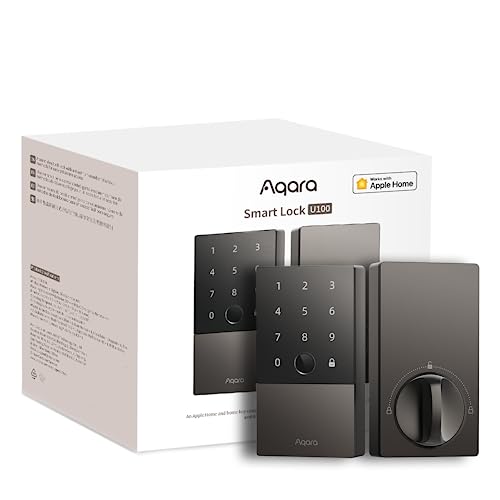
Pros
- Apple Home Key with iPhone and Apple Watch
- Fingerprint reader stores up to 50 prints
- Four AA batteries last up to 8 months
- IP65 zinc-alloy body, emergency USB-C charging
Cons
- Aqara Zigbee hub required for remote passwords
- NFC card sold separately

Pros
- Door sensor supports auto-locking and open-door alerts
- Apple Home Key and Android NFC support
- BHMA Grade 1 certified zinc alloy construction
- IP65 weather resistance for year-round use
Cons
- 2.4 GHz Wi-Fi only
- Requires eight AA batteries

Pros
- Apple Home Key and Thread support
- Fingerprint, keypad, app, and key entry
- Up to 100 fingerprints and passcodes
- IP65 weatherproof construction
Cons
- Remote access requires a nearby Apple hub
- Uses eight AA alkaline batteries
Apple Home Key Is Only One Entry Method
Every option here supports Apple Home Key, but the backup methods differ. ThorBolt X1 models add fingerprints, passcodes, Siri, an app, and traditional keys, while the Aqara U100 adds fingerprint access, touchscreen passwords, a physical key, and optional NFC cards.
The Aqara U400 is the unusual choice for hands-free entry because its UWB system detects approach, direction, and intent. That feature requires specific newer Apple devices and a Thread-enabled Apple Home hub, so tap access may be the more dependable everyday choice if your household devices do not meet those requirements.
Pro Tip: Check your iPhone, Apple Watch, and Apple home hub requirements before buying, especially if hands-free UWB access is important.
Thread, Wi-Fi, and Hub Requirements
Thread appears on both Aqara models and the ThorBolt X1 locks. ThorBolt states that remote access needs a Thread-enabled Apple home hub within 33 feet of the lock. Aqara also requires a Thread-enabled Matter controller for the relevant smart-home platform.
SMONET takes a different approach with built-in Wi-Fi for remote app control, without an extra gateway for that function. ULTRALOQ uses 2.4GHz Wi-Fi and includes remote access, while its network guidance calls for the router to remain within 70 feet of the lock. For more background, see this explanation of what a smart lock bridge does.
| Connection type | Main requirement | Best fit |
|---|---|---|
| Thread | Compatible home hub | Apple Home households |
| Built-in Wi-Fi | 2.4GHz network | Remote app access |
| UWB | Specific Apple devices | Hands-free arrival |
Battery Format and Door Compatibility
Battery design affects maintenance more than the Home Key feature itself. ThorBolt and ULTRALOQ use eight AA batteries and state up to one year of operation, while Aqara U100 uses four AA batteries with up to eight months of life. The U400 uses a removable rechargeable lithium battery rated for up to six months per charge.
SMONET includes Type-C emergency power and a complete handle set, which may suit a replacement project rather than a deadbolt-only swap. Before installation, confirm door thickness, hole size, latch backset, and handing. A useful related check is why the strike plate matters.
Before You Mount It: Do not assume every standard-looking door has compatible measurements. Confirm the listed door dimensions and latch requirements first, and keep a physical key available for emergency entry.
Expert Examined
From Ray Okafor

I keep seeing smart-lock projects delayed by door alignment rather than app setup. The practical fix is to make sure the deadbolt moves freely with the door closed before adding electronics, then plan battery access so maintenance does not require removing the lock.
Read more about Ray OkaforWeather Protection and Security Details
Outdoor exposure varies by model. ThorBolt X1, Aqara U100, Aqara U400, and ULTRALOQ list IP65 protection, while SMONET lists IP64. Aqara U400 states BHMA certification, and ULTRALOQ states BHMA Grade 1 certification, giving shoppers a clearer durability and security reference than appearance alone.
Features such as auto-lock, activity records, anti-peep keypads, local fingerprint storage, and emergency keys address different household concerns. If remote access worries you, review practical information about smart-lock security risks, and consult UL Solutions for general information about safety standards and certification.
Which Lock Fits Your Door
I would point Apple households wanting the widest range of entry methods toward the Aqara UWB Smart Lock U400, Apple Home Key. Its fingerprint, passcode, NFC card, physical key, app, voice control, Home Key, and optional hands-free UWB access cover very different routines, provided your Apple hardware supports the requirements.
I would put the Aqara Smart Lock U100, Apple Home Key on a door where fingerprint access, Apple Home integration, IP65 protection, and a familiar AA battery format matter more than UWB. For a complete entry refresh, I would choose the SMONET Smart Front Door Lock Set, since it includes the deadbolt, exterior pull handle, and interior lever, plus built-in Wi-Fi for remote app control.
The Bottom Line
The mistake many buyers make is treating Apple Home Key as a complete compatibility check. The lock may still need a Thread hub, a particular Apple device, a 2.4GHz network, or a separate ecosystem controller for specific functions.
Start by measuring the door and identifying the connection your home already supports. Then choose the backup method you will actually use, whether that is a fingerprint, keypad code, physical key, rechargeable battery, or remote app.
FAQs
Fingerprint, keypad, Home Key, and physical-key options provide different paths for household members and visitors. A model with several methods is useful when not everyone uses the same Apple device. Some local tap functions can work through the lock and Apple device, while remote access or shared Home Key management may require a compatible Apple home hub. Thread and UWB features have additional hub and device requirements. Battery life depends on the model and power design. The listed products range from rechargeable operation rated up to six months to AA battery operation rated up to one year, and several include low-battery or emergency-power features. BHMA certification identifies performance requirements related to residential lock strength, durability, and operation. It is one useful specification to consider alongside door fit, weather rating, and the lock’s available entry methods.Which smart lock entry method is best for a family?
Do Apple Home Key locks need a hub?
How often do smart-lock batteries need attention?
What does BHMA certification mean for a smart lock?
Sources
- UL Solutions and product safety standards. www.ul.com