
Shopping for the best smart door locks for apple homekit means deciding how you want to enter when your hands are full, your phone is unavailable, or guests need access. This selection suits Apple households comparing Home Key, fingerprint, keypad, and Thread features.

Pros
- Six entry methods, including fingerprint recognition
- Apple Home Key via iPhone or Apple Watch
- Thread support for Apple Home connectivity
- Stores up to 100 fingerprints and passcodes
Cons
- Remote access requires a Thread-enabled hub nearby
- Uses eight AA alkaline batteries

Pros
- Multiple entry methods, including fingerprint and passcode
- Matter over Thread supports multiple ecosystems
- Rechargeable battery lasts up to six months
- BHMA-certified with IP65 outdoor protection
Cons
- UWB requires specific Apple devices and a Thread hub
- NFC cards sold separately
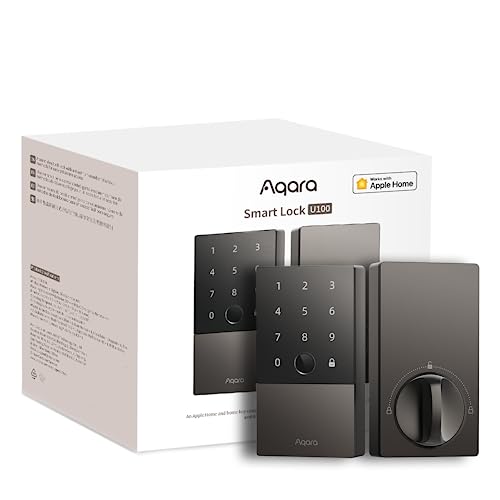
Pros
- Apple Home Key with iPhone and Apple Watch
- Fingerprint reader stores up to 50 prints
- Four AA batteries last up to 8 months
- IP65 zinc-alloy body, emergency USB-C charging
Cons
- Aqara Zigbee hub required for remote passwords
- NFC card sold separately

Pros
- Fingerprint access, up to 50 stored fingerprints
- Built-in Wi-Fi, no hub for app control
- 18-month battery life
- ANSI BHMA certified zinc alloy
Cons
- 2.4 GHz Wi-Fi only
- Matter requires a compatible Thread hub

Pros
- Door sensor supports auto-locking and open-door alerts
- Apple Home Key and Android NFC support
- BHMA Grade 1 certified zinc alloy construction
- IP65 weather resistance for year-round use
Cons
- 2.4 GHz Wi-Fi only
- Requires eight AA batteries

Pros
- Apple Home Key and Thread support
- Fingerprint, keypad, app, and key entry
- Up to 100 fingerprints and passcodes
- IP65 weatherproof construction
Cons
- Remote access requires a nearby Apple hub
- Uses eight AA alkaline batteries
Choose the entry method you will use most
Apple Home Key gives you tap access with an iPhone or Apple Watch, and the listed ThorBolt, Aqara, and ULTRALOQ models add other routes. Fingerprint readers make sense for households that want quick entry without carrying a phone, while keypad access is useful for visitors, cleaners, and family members who do not use Apple devices.
The Aqara UWB Smart Lock U400, Apple Home Key is the outlier for hands-free arrival. Its UWB feature detects presence, direction, and intent, but it requires compatible Apple hardware and software. If you want fewer device requirements, a fingerprint reader, passcode, or NFC tap is easier to plan around.
Pro Tip: Before ordering, confirm your iPhone or Apple Watch generation and the Apple Home hub requirements for the feature you want.
Thread, Wi-Fi, and hub requirements
Thread is prominent across this group, but it does not mean every remote feature works without a hub. ThorBolt X1 models require a Thread-enabled Apple home hub for remote access, while Aqara’s U400 requires a Thread-enabled Apple Home hub for UWB and Home Key functions.
The ULTRALOQ Bolt SE Wifi Smart Deadbolt Lock includes built-in Wi-Fi for remote management, and it also supports Matter over Thread when paired with a compatible hub. The ULTRALOQ Bolt NFC Smart WiFi Deadbolt Lock uses 2.4 GHz Wi-Fi and does not require a bridge for its app features. For background on hubs, see what a smart lock bridge does.
| Entry method | Main requirement | Useful setting |
|---|---|---|
| Apple Home Key | Compatible Apple device | Tap access |
| UWB arrival | Thread Apple hub | Hands-free entry |
| Fingerprint | Stored user print | Family access |
Battery type and exterior protection
Battery format affects maintenance more than many buyers expect. The ThorBolt X1 models use eight AA alkaline batteries and are rated for up to one year, the U100 uses four AA batteries for up to eight months, and the U400 uses a removable rechargeable battery for up to six months per charge.
The ULTRALOQ Bolt SE claims up to 18 months from its battery set, while the Bolt NFC claims up to one year with eight AA batteries. All six products list IP65 weather resistance or an IP65 rating, but you still need a correctly fitted deadbolt and a door that closes without binding.
Check the door thickness, hole size, and latch backset before installation. A smart lock cannot correct a misaligned strike plate, and strike plate alignment affects whether the motor can move the bolt reliably.
Before You Mount It: Never remove the physical-key option from your emergency plan. Keep the cylinder, emergency charging method, and battery replacement procedure accessible without leaving the door unsecured.
Security ratings and daily access
Certification language helps separate construction claims from app features. The U400 is BHMA-certified, the Bolt NFC carries a BHMA Grade 1 certification, and the U100 states that it follows the same safety standard as BHMA Level 3. These references concern physical performance and durability, not every aspect of software security.
For broader context on smart-lock risks, read about how smart locks can be hacked. The UL Solutions site is also a useful place to understand how safety certification differs from marketing language.
Expert Examined
From Ray Okafor

I keep seeing homeowners focus on app features while ignoring a sticky door. The practical fix is to correct alignment first, then choose the access methods that remain useful when the phone, network, or batteries are unavailable.
Read more about Ray OkaforWhich lock fits your household
I would point Apple-first households wanting the lowest purchase complexity toward the ThorBolt X1 Smart HomeKit Keyless Entry. It combines Apple Home Key, Thread, fingerprint entry, passcodes, Siri, the app, and a traditional key, while its eight AA batteries are specified for up to one year.
I would put the Aqara UWB Smart Lock U400, Apple Home Key on a door where hands-free arrival matters and the household already has compatible Apple hardware. Its UWB feature is the clearest fit for carrying groceries, but the hub, iPhone, and Apple Watch requirements deserve attention before purchase.
For a home that needs NFC access across Apple and Android devices, I would choose the ULTRALOQ Bolt NFC Smart WiFi Deadbolt Lock. It includes a door sensor, supports remote access over 2.4 GHz Wi-Fi, offers auto-lock and auto-unlock settings, and retains passcodes, app access, a key fob, and mechanical keys.
The Bottom Line
The mistake most buyers make is treating Apple Home compatibility as proof that every feature works the same way. Home Key, UWB, remote control, and voice control can each depend on different hubs, device versions, network conditions, or app settings.
Start by checking your existing Apple hub, phone or watch compatibility, door measurements, and preferred backup entry method. Then select the lock whose everyday access routine matches your household rather than choosing by platform support alone.
FAQs
Fingerprint access is convenient for household members who do not want to carry a phone, while passcodes work well for visitors. Apple Home Key is a strong choice when everyone uses compatible iPhones or Apple Watches. The product information states that Home Key can work when an iPhone or Apple Watch is out of power or disconnected from a wireless network on supported models. Remote access is a separate feature and may require a Thread-enabled Apple home hub. Battery life varies by model and power system. The listed products range from rechargeable power lasting up to six months to alkaline battery claims lasting up to 18 months, so enable low-battery alerts and keep the specified replacement or charging method available. BHMA references physical performance, security, durability, and finish standards for door hardware. It does not by itself describe app privacy, wireless reliability, or every smart-home function. IP65-rated models are designed to resist dust and water exposure, making them suitable for exterior home doors according to the product information. Correct installation and a properly aligned deadbolt still matter for reliable operation.Which smart lock entry type is easiest for a family?
Does Apple Home Key work without a network connection?
How often do smart-lock batteries need attention?
What does a BHMA rating mean for a smart lock?
Can an IP65 lock stay on an exterior door?
Sources
- BHMA, Builders Hardware Manufacturers Association. www.buildershardware.com
- UL Solutions, Product Safety and Certification. www.ul.com