
Shopping for the best security cameras that record 24/7 means choosing between an always-powered system and a camera that manages battery use. The key split is whether you need continuous local footage from a wired recorder or flexible outdoor coverage from solar or plug-in power. Homeowners, landlords, and small businesses can use that distinction to avoid buying a camera that cannot maintain the recording schedule they expect.
Pros
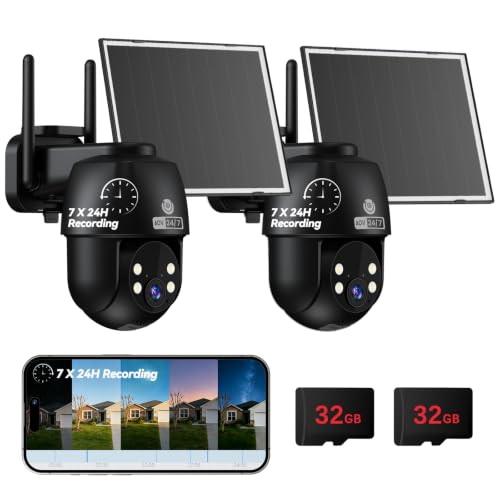
- Continuous 24/7 recording with included 32GB microSD card
- Heated 9000mAh battery charges below 32 degrees Fahrenheit
- Full 360-degree pan and 100-degree tilt auto-tracking
- Long-range alerts detect movement up to 98 feet
Cons
- Requires 2.4GHz Wi-Fi, unsupported on 5GHz networks
- Narrow 80-degree fixed horizontal field of view

Pros
- 4K commercial-grade video recording
- Eight-channel PoE camera deployment
- 2TB hard drive for 24/7 recording
- Person and vehicle detection
- HDMI and VGA viewing outputs
Cons
- Limited to eight camera channels
- 2TB storage may limit video history

Pros
- IK10 vandal-proof and IP67 weatherproof dome housing
- AI detection filters human and vehicle movement
- Included 4TB hard drive expandable to 16TB
- Up to 100ft night vision on 5MP cameras
- Single-cable PoE carries power and video simultaneously
Cons
- Fixed 2.8mm lenses lack optical zoom or PTZ controls
- Requires physical network cable runs for 16 cameras
Pros
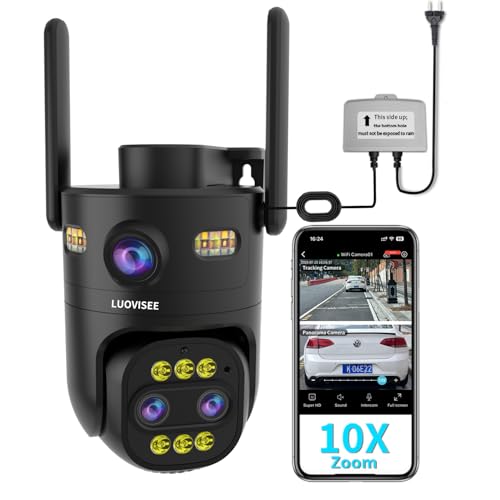
- Dual-band 2.4GHz and 5GHz Wi-Fi connectivity
- Triple-lens system with 10x hybrid zoom
- Motorized 355-degree pan and 90-degree tilt
- Full-color night vision with built-in spotlights
- Supports continuous 24/7 recording to NVR systems
Cons
- Requires access to an electrical outlet
- Storage card not included for local video

Pros
- Supports 16 simultaneous PoE camera channels
- Powers cameras up to 330 feet over single Ethernet run
- Dual drive bays support up to 16TB total storage
- Operates independently on local network without internet
Cons
- Internal hard drives are not included
- Requires firmware verification for camera compatibility

Pros
- Pre-installed 2TB hard drive with expansion support
- Single PoE cable runs power and data up to 330ft
- Continuous 24/7 recording across eight camera channels
- Free desktop and mobile app with zero monthly fees
Cons
- Cameras not included with recorder unit
- Works exclusively with Swann IP cameras
Continuous Recording Starts With Power
A camera cannot preserve a full timeline if its battery, outlet, network connection, or recorder cannot support the workload. The MUBVIEW option uses a 10W solar panel and a 9000mAh heated battery, while the Luovisee model connects to a household outlet. Both suit outdoor placement, but each requires a different installation plan.
For larger properties, PoE moves power and video through one Ethernet cable. The Lorex, 4COVR, REOLINK, and Swann options use recorder-based designs, making them better suited to a planned cable route and a dedicated storage location. If you are unsure how the recorder fits into a system, read this explanation of how an NVR differs from a DVR.
Pro Tip: Plan the power route before choosing the camera position. A clear view is not useful if the solar panel is shaded, the outlet is unreachable, or the Ethernet cable cannot reach the recorder.
Match Storage to the Area You Need Covered
Local storage is the practical foundation of continuous recording. MUBVIEW includes a 32GB microSD card and supports up to 256GB, while Luovisee records to a separately purchased card up to 256GB. These options keep the camera compact, but storage capacity and recording settings affect how far back you can review footage.
NVR systems are more appropriate when several views must remain available together. Lorex includes a 2TB hard drive and eight channels, Swann includes a 2TB hard drive and eight channels, and 4COVR includes a 4TB hard drive with sixteen channels. REOLINK supports up to sixteen cameras and two internal drives, but its hard drives are not included.
Before relying on stored footage, consider how lighting affects usable evidence. The rules around security camera footage in court vary by situation, so clear images, accurate timestamps, and preserved files matter more than simply having a recording.
Coverage, Detection, and Installation Tradeoffs
Wide coverage does not always mean better identification. MUBVIEW pans 360 degrees and tilts 100 degrees, while Luovisee pans 355 degrees and tilts 90 degrees with tracking and zoom. Those moving views can follow activity, but fixed PoE cameras may give you a consistent angle across entrances, driveways, and corridors.
Detection features also vary. MUBVIEW identifies people and can reduce alerts from wind, shadows, and passing cars. Lorex adds person and vehicle detection with smart search, while 4COVR and REOLINK support person and vehicle detection through compatible equipment. Check the camera and recorder pairing before purchase, especially with systems designed for a specific brand.
Before You Mount It: Do not point a camera toward a public space or a neighbor’s private area without checking applicable privacy rules. Keep the lens aimed at the property you are responsible for and secure cables where people cannot trip or tamper with them.
I keep the recorder in a protected indoor location rather than beside an exterior camera. The mistake I see is choosing a perfect viewing angle first and discovering later that the storage box, cable path, or power source cannot be reached safely.
Expert Examined
From Jenna Castellano

I look for the recording failure point before judging the image features. In real homes, missed footage often follows a full card, an unplanned cable route, or a shaded solar panel, so storage and power deserve attention before zoom or tracking.
Read more about Jenna CastellanoFor broader planning, the Security Cameras category can help you compare related installation approaches, including systems that use different recorder and camera combinations.
Which System Fits Your Property
I would put the MUBVIEW 24/7 Continuous Recording Wireless Outdoor on a detached garage, side yard, or other outdoor location where running cable is inconvenient. Its solar panel, heated battery, included microSD card, human detection, and pan-and-tilt coverage make it the most flexible choice for a location that still receives useful sunlight.
I would point you to the Lorex Connect XC 4K 8-Channel Commercial NVR for a business, workshop, or larger property needing 4K recording, a 2TB drive, eight PoE channels, and smart search. Its person and vehicle analytics also make reviewing a busy property more manageable.
For a substantial installation with many fixed viewpoints, I would choose the 4COVR 16 Channel PoE Security Camera System. Its sixteen 5MP vandal-resistant dome cameras, 4TB drive, person and vehicle detection, and 100-foot night vision suit a property where durable coverage matters more than wireless convenience.
The Bottom Line
The mistake most buyers make is treating every 24/7 claim as equivalent. A solar or plug-in camera may record continuously under the right conditions, while an NVR system is designed around sustained storage and multiple wired cameras.
If you do only one thing first, map the power and storage setup for the exact area you want covered. Then choose the camera type that can maintain that recording plan without relying on an accessory or connection you cannot protect.
FAQs
PoE cameras are often a strong fit because one Ethernet cable carries power and video to an NVR. They are especially useful for multi-camera properties, but you need a practical cable route and compatible cameras and recorder. Mount it where the intended property is visible without aiming into private neighboring areas. Check that the solar panel receives useful light, the outlet is reachable for plug-in models, or the Ethernet cable can safely reach the recorder. The MUBVIEW model combines a solar panel with a 9000mAh heated battery and can change to lower-power event recording when battery power is low. Runtime depends on use, sunlight, and settings, so placement and maintenance still matter. An IP rating describes protection against dust and water under defined conditions, not protection from every installation mistake. Follow the mounting instructions, protect connections, and avoid treating the rating as a substitute for proper placement.Are PoE cameras better for continuous recording?
Where should an outdoor continuous-recording camera be mounted?
How do solar cameras keep recording overnight?
What does IP weather resistance mean for security cameras?
Sources
- UL Solutions www.ul.com
- US Consumer Product Safety Commission www.cpsc.gov