
Shopping for the best residential smart door locks means choosing between direct Wi-Fi control, hub-based Matter connectivity, and several backup entry methods. This selection suits homeowners, renters, and landlords deciding which access system fits their door and daily routine.

Pros
- Apple Home Key access with compatible devices
- Built-in WiFi, no extra gateway for remote control
- Eight entry methods for varied households
- Complete deadbolt, pull handle, and lever set
Cons
- Home Key requires a compatible iPhone or Apple Watch
- Black finish is the only listed color
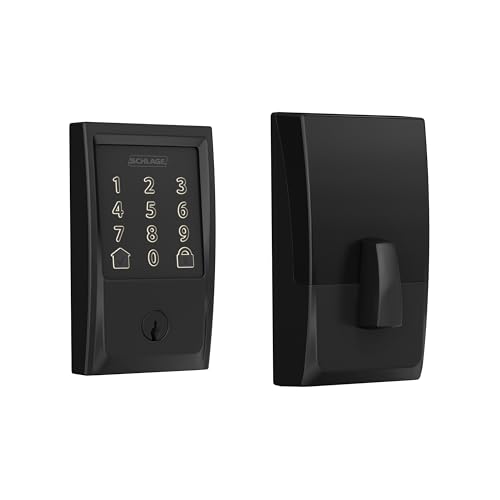
Pros
- Built-in WiFi, remote control from anywhere
- Stores up to 100 access codes
- Works with Alexa and Google Home
- Forced-entry alarm and encrypted connection
Cons
- Requires Schlage Home app for smart features
- Four AA batteries last up to six months

Pros
- Multiple entry methods, including fingerprint and passcode
- Matter over Thread supports multiple ecosystems
- Rechargeable battery lasts up to six months
- BHMA-certified with IP65 outdoor protection
Cons
- UWB requires specific Apple devices and a Thread hub
- NFC cards sold separately
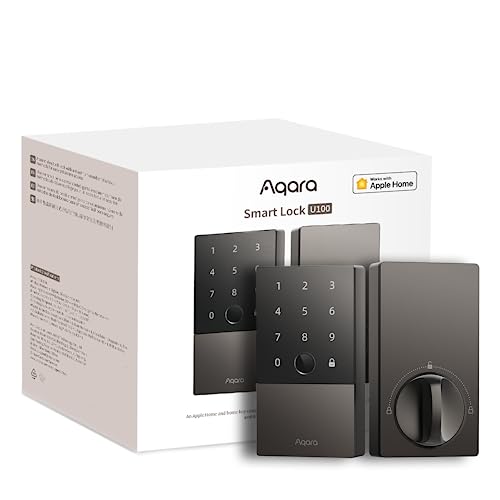
Pros
- Apple Home Key with iPhone and Apple Watch
- Fingerprint reader stores up to 50 prints
- Four AA batteries last up to 8 months
- IP65 zinc-alloy body, emergency USB-C charging
Cons
- Aqara Zigbee hub required for remote passwords
- NFC card sold separately
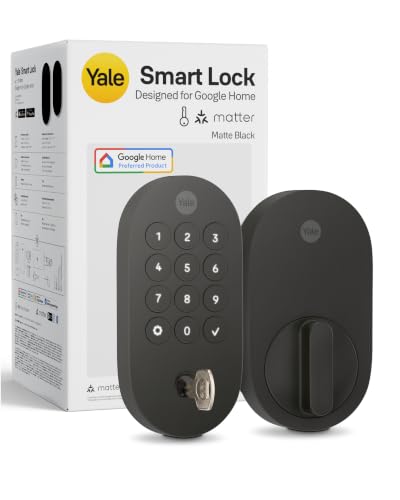
Pros
- Matter over Thread, energy-efficient mesh network
- Google Home and Google Assistant control
- Keypad, phone, voice, and backup key entry
- BHMA Grade 2 certified
- Designed for -22 to 140°F
Cons
- Matter hub required for remote access
- Google Home features limited to US and Canada

Pros
- Apple Home key support with iPhone and Apple Watch
- Built-in WiFi for remote access and monitoring
- Stores up to 100 access codes
- Forced-entry alarm and encrypted connection
Cons
- App and secure WiFi required for remote features
- Voice control requires a compatible enabled device
Start With the Entry Method You Will Actually Use
A keypad is useful for family members, guests, cleaners, and dog walkers because nobody needs to carry a key. Fingerprint readers can make daily entry quicker, while Apple Home Key suits households already using a compatible iPhone or Apple Watch. A physical key remains valuable as a fallback, especially for a rental or a home with several users.
Remote access also varies. Built-in Wi-Fi, as found on the SMONET Smart Front Door Lock Set and Schlage Encode Smart WiFi Deadbolt Lock, allows app control without buying an extra gateway for that function. Matter over Thread models require the appropriate controller or hub, so check your existing equipment before choosing a platform.
| Entry type | Main requirement | Best fit |
|---|---|---|
| Keypad and key | No hub required | Mixed households |
| Apple Home Key | Compatible Apple hub | Apple homes |
| Matter over Thread | Matter controller | Multi-platform homes |
The explanation of smart lock bridges can help clarify why some connected locks need another device for remote access or ecosystem integration.
Pro Tip: Check the required hub, controller, or operating-system version before buying. A feature can be present on the lock but unavailable in your current smart-home setup.
Match Connectivity to Your Smart Home
Apple-focused households have several routes. The Aqara UWB Smart Lock U400, Apple Home Key adds hands-free approach detection through UWB, but that function depends on a Thread-enabled Apple Home hub and supported Apple hardware. The Aqara Smart Lock U100, Apple Home Key provides Apple Home Key, fingerprint access, keypad credentials, and emergency charging through USB-C.
Google households may prefer the Yale Smart Lock Deadbolt with Google Matter, which is designed for Google Home and Matter hubs sold separately. The Schlage Encode Plus Smart WiFi Deadbolt Lock combines built-in Wi-Fi with Apple Home Key, while the standard Schlage Encode Smart WiFi Deadbolt Lock focuses on Alexa and Google Home.
For security terminology, the discussion of smart lock security risks is useful before you connect any door hardware to a home network. Use unique account credentials and keep access permissions limited to people who need them.
Before You Mount It: Confirm that your door, backset, handing, and existing deadbolt arrangement match the product requirements. A smart lock cannot compensate for a door that does not close and latch correctly.
Power, Weather, and Certification Matter
Battery format affects maintenance. The Aqara U400 uses a removable rechargeable battery rated for up to six months per charge, while the U100 uses four AA batteries with a stated life of up to eight months. Schlage Encode models use four AA batteries, and every battery-powered choice here includes a low-power or emergency-power provision in its listed features.
Outdoor exposure deserves equal attention. The Aqara U400 and U100 carry IP65 ratings, the SMONET set is rated IP64, and the Yale model uses Matter over Thread with a stated operating range from -22 to 140 degrees Fahrenheit. BHMA certification appears on several models, but the exact level or wording differs, so read the product specification rather than assuming all certifications mean the same thing.
Expert Examined
From Jenna Castellano

I keep the emergency entry method in mind before considering convenience features. The mistake I see is choosing a lock for phone access and forgetting that a dead battery, missing hub, or closed app account can interrupt that routine, so I prefer a clearly planned backup.
Read more about Jenna CastellanoFor broader door preparation, review why the strike plate matters. The US Consumer Product Safety Commission also provides household safety information at CPSC.gov, although lock-specific setup still belongs to the manufacturer instructions.
Which Lock Fits Your Household
I would point Apple households that want the most hands-free approach to the Aqara UWB Smart Lock U400, Apple Home Key. Its UWB feature is aimed at approach-based access, and it also offers fingerprint, passcode, app, voice, NFC card, and physical-key options. Make sure your Apple hub and device versions meet the stated requirements first.
I would put the SMONET Smart Front Door Lock Set on a door where you want a matched deadbolt and handle package. Its built-in Wi-Fi, Apple Home Key support, fingerprint storage, passcodes, IC cards, app control, and emergency Type-C power cover a broad household mix without requiring a separate gateway for remote app control.
For a lower-cost Google-centered setup that already has the required Matter equipment, I would consider the Yale Smart Lock Deadbolt with Google Matter. It offers keypad, phone, voice, and backup-key entry, while Matter over Thread is intended to reduce power demand through an energy-efficient mesh network.
The Bottom Line
The biggest mistake is treating smart-home compatibility as universal. Apple Home Key, Matter, Thread, Wi-Fi, and hub requirements can change which features are available, even when a lock appears to support several ecosystems.
First, identify your main entry method and confirm the required hub or controller. Then verify the door fit, battery plan, and physical-key fallback before choosing advanced convenience features.
FAQs
Keypad codes suit households with guests or changing access needs, while fingerprints can simplify regular entry. Apple Home Key is a strong match for compatible Apple households, and a physical key remains useful as an emergency fallback. Some models have built-in Wi-Fi for remote app control. Matter over Thread and certain Aqara features require a compatible controller or hub, so check the product requirements before installation. Use the low-battery alerts, keep the emergency charging method available, and know whether the lock uses AA batteries or a rechargeable removable pack. Do not wait until the battery is fully depleted to plan entry. BHMA certification indicates that the lock has been evaluated against specified performance categories such as security, durability, or finish. The stated grade or certification level still matters because products may carry different ratings. Yes. Exterior ratings such as IP64 or IP65 describe resistance to dust and water, while stated temperature ranges indicate the conditions the product is designed to handle. Check the rating against the lock’s actual outdoor location.Which entry type is best for a residential smart lock?
Do smart locks need a hub or bridge?
How should I manage smart lock battery power?
What does BHMA certification mean on a smart lock?
Can weather affect a smart door lock?
Sources
- Builders Hardware Manufacturers Association www.buildershardware.com
- US Consumer Product Safety Commission www.cpsc.gov