
Shopping for the best peephole cameras that connect to your phone gets easier once you separate remote access from the indoor viewing screen. The decisive choice is usually whether you need broad coverage, longer battery life, or flexible storage, especially in an apartment or rental.

Pros
- 2K video with 170-degree wide-angle coverage
- 4.3-inch indoor monitor for visitor screening
- Preinstalled 64GB SD card
- 8000mAh battery supports weeks of monitoring
Cons
- Remote viewing depends on the phone app
- Battery requires periodic recharging

Pros
- 1080P video with 120° viewing angle
- 4.3-inch LCD for live door viewing
- PIR alerts within a 6.5-foot range
- Local TF card and optional cloud storage
Cons
- 2.4GHz WiFi required for app features
- Micro-USB charging and monthly battery charging

Pros
- Wide-angle 1.6mm fisheye lens
- Motion detection alerts
- Two-way talk capability
- 128G memory card or cloud storage
Cons
- Requires peephole installation
- App and router setup required for remote viewing

Pros
- 2MP HD camera with wide-angle viewing
- Night vision for after-dark visitors
- Motion alerts sent to your phone
- Two-way audio and recording via app
Cons
- Requires the smartphone app for remote features
- No weather-resistance specification listed
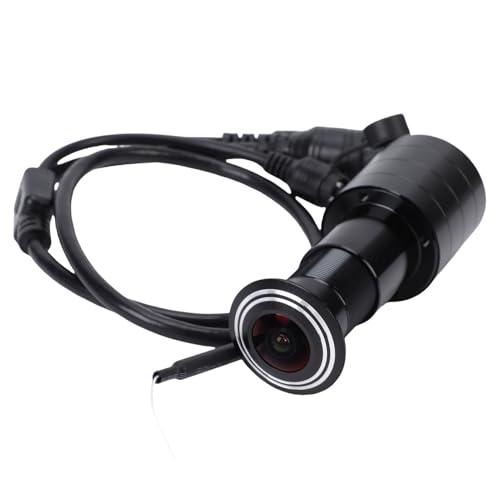
Pros
- 5MP high-definition video
- Human and vehicle detection
- Night face visibility
- Two-way talk with synchronized audio and video
Cons
- App and network setup needed for remote monitoring
- No included memory card specified

Pros
- 1080P video with 4.3-inch IPS display
- Fits 14-30mm door holes
- Supports 35-120mm door thickness
- 5000Ah rechargeable battery
- Infrared night vision
Cons
- Phone alerts require the Tuya app
- Battery needs periodic recharging
Phone access is only half the decision
A phone-connected peephole camera should give you a useful alert, a clear live view, and a way to speak without opening the door. The products here use app access alongside features such as motion detection, two-way talk, and event recording, but their viewing angles and detection methods differ.
For a narrow entryway, a wider lens can reduce blind spots around packages and visitors. The Bextgoo model offers a 170-degree view and 2K video, while the Eypkaol option lists a 180-degree view with dual-band WiFi. A wider view is helpful only if the camera is positioned so the doorway edges do not dominate the image.
Pro Tip: Check your router location before mounting. A strong phone signal does not guarantee a strong camera connection at the door.
Match detection and storage to your door
Motion alerts are useful for deliveries, but not every sensor works the same way. Cawhum’s Cawhun model uses a PIR sensor for human movement within a stated two-meter range, while LAISANIM adds human and vehicle detection with configurable alarm behavior.
Storage also changes the ownership experience. Bextgoo includes a 64GB card and supports a larger card, Cawhun supports a 16GB to 128GB TF card with local event storage, and Swokely supports up to 128GB plus cloud storage. The Generic model supports a 128GB memory card or cloud storage, which may suit buyers who want a simple recording choice.
| Device type | Key distinction | Suitable placement |
|---|---|---|
| Indoor-screen viewer | Local visitor view | Apartments and rentals |
| App-first camera | Remote alerts | Doors near WiFi |
| Wide-angle viewer | Fewer side blind spots | Package-facing entries |
If you want to understand how app-connected doorbells can lose their network connection, keep this explanation of why doorbell cameras disconnect nearby before choosing a mounting position.
Battery life and installation limits matter
Battery capacity is not the same as guaranteed runtime because alerts, live viewing, and night vision change power use. Bextgoo lists an 8000mAh battery, while Cawhun and Swokely list 5000mAh batteries. Swokely also states up to 180 days of standby, and Cawhun gives a month based on five alerts per day.
Measure the door before ordering. Cawhun fits doors from 3.5 to 11 centimeters thick and peepholes from 16 to 35 millimeters. Swokely lists 35 to 120 millimeters of door thickness and 14 to 30 millimeters of hole diameter, while adhesive pads and anti-theft screws may suit different renter or homeowner needs.
Before You Mount It: Do not enlarge a door hole or block the peephole with an incompatible bracket. Confirm the listed hole diameter and door thickness first, and avoid routing charging cables where they can be pinched.
Night vision is another practical check. Cawhun and Swokely specifically list infrared night vision, while LAISANIM describes night face visibility and alarm linkage. For a dim corridor, those details deserve more weight than a resolution number alone.
Expert Examined
From Ray Okafor

I keep seeing buyers focus on the app and forget the door measurements. The avoidable mistake is mounting a camera that sits off-center or cannot close with the interior screen attached, so I would measure the peephole and door thickness before comparing advanced features.
Read more about Ray OkaforFor broader doorbell context, the explanation of what a doorbell chime kit does can clarify why a peephole camera with an indoor monitor may be preferable when you want a visual alert inside the home.
Which camera fits your household
I would point apartment renters toward peephole camera options that offer nonpermanent installation and an indoor screen. The Cawhun Peephole Camera WiFi Doorbell with 4.3 LCD is the strongest fit when your door matches its dimensions because it combines a 4.3-inch display, PIR detection, infrared night vision, local storage, and adhesive pads for renters.
I would put the Bextgoo 2K Peephole Camera Doorbell on a house or apartment door where image detail and a wide view matter most. Its 2K video, 170-degree coverage, 8000mAh battery, included 64GB card, phone video calls, and adjustable motion sensitivity make it the more feature-heavy choice.
For a tighter budget or a setup that needs dual-band WiFi, I would consider the 1080P HD Wireless Door Peephole Camera Visual. Its 180-degree lens, motion alerts, two-way audio, and 5GHz and 2.4GHz support suit a buyer who prioritizes broad coverage and flexible network compatibility.
The Bottom Line
The mistake most buyers make is treating every phone-connected peephole camera as interchangeable. Door thickness, peephole diameter, WiFi band, detection range, and storage support can determine whether the camera fits and whether its alerts remain useful.
If you only do one thing first, measure the existing peephole and door thickness, then check whether your router can reach the entry. That simple check narrows the choices before battery capacity, resolution, or cloud features distract you.
FAQs
PIR sensors are useful for detecting human movement, while cameras with human or vehicle recognition can provide more specific alerts. Look for adjustable sensitivity when the door faces a busy hallway, because repeated movement can create unwanted notifications. Yes, several models are described for apartments, but the fit depends on door thickness and peephole diameter. Renters should also check whether the installation uses adhesive pads or another removable method and whether building rules allow electronic door viewers. Runtime depends on battery capacity, alert frequency, live viewing, and night vision use. The listed products include batteries from 5000mAh to 8000mAh, with some manufacturers providing standby or alert-based estimates rather than a universal charging interval. A WiFi label describes wireless connectivity, not image quality, battery life, or guaranteed range through walls. You still need to confirm whether the camera uses 2.4GHz, 5GHz, or both and whether the signal reaches the door reliably.What type of sensor should a peephole camera use?
Can a peephole camera work on an apartment door?
How often does a peephole camera battery need charging?
What does WiFi certification mean for a peephole camera?
Sources
- Federal Trade Commission, Protecting Personal Information. www.ftc.gov
- UL Solutions, IoT and Connected Device Safety. www.ul.com