
Mounting the best outdoor solar powered security cameras solves the headache of climbing ladders for battery swaps and drilling exterior walls for cables. The critical factor is matching your property layout to the transmission method before selecting hardware. Off-grid perimeter fences demand cellular links, while typical residential perimeters perform best on dual-band Wi-Fi networks.
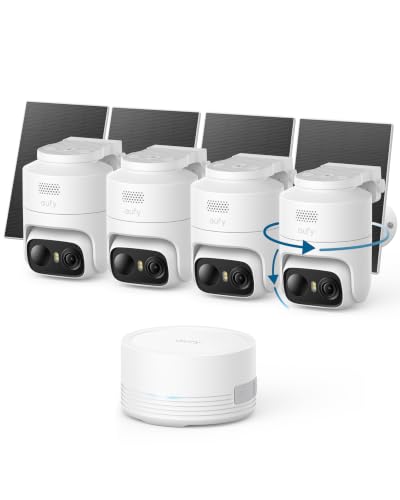
Pros
- 360 degree pan and tilt with automatic subject tracking
- Detachable 3W solar panels for independent positioning
- 2K color night vision with integrated spotlight
- Onboard 64GB local storage expandable to 1TB
- AI detection for humans, vehicles, pets, and faces
Cons
- Incompatible with Apple HomeKit and HomeBase 2
- Requires HomeBase Mini or updated HomeBase 3 hub

Pros
- 4G LTE works without WiFi
- Solar-assisted rechargeable battery
- 2K color night vision
- 350° pan and 90° tilt
- IP66 weatherproof housing
Cons
- Monthly data plan required after trial
- Memory card not included
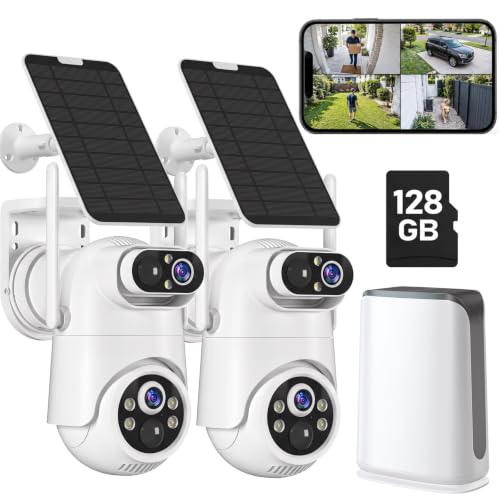
Pros
- Dual PIR sensors with AI human recognition
- 128GB encrypted local storage, no subscription
- 5W solar panel and 8000mAh battery
- 2.5K 4MP video with color night vision
Cons
- WiFi only, no 4G or LTE support
- App required for zones and sensitivity settings

Pros
- 4MP resolution for detailed daytime footage
- Full-color night vision up to 65 feet
- 8000mAh battery with detachable 5W solar panel
- Remote pan, tilt, and digital zoom
- AI human detection with adjustable sensitivity
Cons
- Pairs only with Carltec's home hub system
- Maximum four cameras per homebase

Pros
- Continuous solar charging with built-in battery
- 355-degree pan and 90-degree tilt coverage
- Sharp 3MP 2K resolution with color night vision
- Built-in spotlight and siren deterrence
- Fast Wi-Fi 6 connectivity on 2.4GHz networks
Cons
- Pet and vehicle tracking require paid subscription
- MicroSD card not included for local saving
- Free cloud storage clips limited to 6 seconds
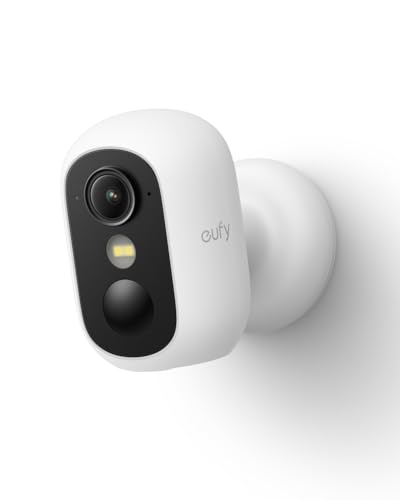
Pros
- Spotlight-free color night vision in total darkness
- Drill-free magnetic base mounts firmly to metal
- On-device AI detects people, vehicles, and pets
- Weatherproof IP67 enclosure suited for outdoor exposure
Cons
- MicroSD card not included with purchase
- Not compatible with eufy HomeBase 2
- Restricted to 2.4 GHz Wi-Fi frequencies
Solar Panel Positioning and Power Management
Solar security cameras rely on photovoltaic collectors to trickle-charge internal lithium packs throughout the day. Integrated panels require you to point the camera lens toward south-facing skies to catch direct sunlight, which frequently compromises your surveillance angle. Models with detachable solar panels allow you to mount the camera beneath deep roof eaves while securing the panel on a sun-drenched fascia board.
Panel wattage dictates recovery speed after prolonged overcast weather. A compact three-watt panel keeps an efficient detection profile running, but high-traffic driveways benefit from five-watt panels paired with large eight-thousand-milliamp batteries. Understanding what camera status lights indicate helps you identify charging errors before the reserve depletion turns off motion alerts completely.
Winter Sunlight Angles: Position your external panels to account for lower winter sun trajectories. Accumulations of wet snow or thick pollen cut charging efficiency by half, leaving depleted batteries vulnerable during freezing temperatures.
Network Transmission and Connectivity Range
Exterior surveillance systems require steady wireless throughput to transmit high-definition video feeds. Dual-band models operating on both 2.4 gigahertz and 5 gigahertz frequencies navigate residential radio clutter effectively, cutting down video buffering during live views. Standard 2.4 gigahertz frequencies penetrate brick and stucco walls better, though newer Wi-Fi 6 protocols handle multiple exterior devices without dropping data packets.
Properties without router access require cellular data transmission rather than local radio frequencies. Cellular hardware connects directly through nationwide carrier towers, making them viable choices for access gates, livestock barns, and distant outbuildings. The Federal Communications Commission regulates these radio spectrums to avoid interference across outdoor surveillance equipment.
| Connection | Ideal Placement | Power Draw |
|---|---|---|
| Dual-Band Wi-Fi | Near Home Router | Moderate |
| Single 2.4GHz | Suburban Perimeter | Low |
| 4G LTE Cellular | Remote Outbuildings | High |
Expert Examined
From Jenna Castellano

I keep seeing homeowners angle solar cameras entirely for sun exposure while ignoring signal paths. A camera that gets five hours of direct sun but sits behind two layers of brick will drop offline every time motion triggers video recording.
Read more about Jenna CastellanoStorage Architecture and False Alarm Filtering
Video storage splits into on-device memory cards and centralized indoor hubs. Standalone micro-SD cards keep footage inside the camera chassis, which leaves evidence vulnerable if an intruder removes the device. Dedicated indoor base stations function similarly to scaled-down dedicated network video recorders, archiving footage securely inside your living space regardless of exterior damage.
Passive infrared hardware working alongside software algorithms reduces unwanted phone notifications. Outdoor environments present blowing branches, neighborhood cats, and passing headlights that trigger unsophisticated motion sensors. Modern hardware distinguishes between human silhouettes and animal movement, with advanced systems offering facial recognition capabilities to verify regular family members before activating sirens.
Pro Tip: Create targeted activity detection zones that exclude public sidewalks and swaying tree branches to stretch your battery reserves across multiple cloudy days.
Selecting Equipment for Your Property Layout
I would point homeowners needing comprehensive perimeter coverage toward the eufy Security eufyCam C37 4-Cam Kit. Its centralized HomeBase Mini provides sixty-four gigabytes of internal storage right inside the house, while the 360-degree pan-and-tilt tracking eliminates blind spots around broad front yards without requiring cloud fees. The detachable three-watt panels give you the flexibility to install cameras under covered porches while angling panels toward clear sky.
For detached workshops, pastures, or construction locations far beyond home network range, I would select the LIWAN 4G LTE Cellular Security Cameras. It operates completely independently of home routers by routing 2K video across major cellular carriers, backed by an IP66 weather shell and continuous battery maintenance from its dedicated solar panel. Suburban buyers looking to cover a single driveway without multi-camera hub hardware should consider the Carltec 4MP Outdoor Security Cameras Solar Powered, which provides dual-band Wi-Fi 6 connectivity, an eight-thousand-milliamp battery, and crisp four-megapixel resolution at an accessible entry point.
The Bottom Line
The most frequent mistake buyers make is purchasing fixed-lens hardware without checking their mounting location against daily sun exposure. Installing an integrated solar camera under a north-facing roof overhang guarantees manual recharging every few weeks. Choosing a model with a separate, corded solar collector prevents you from compromising surveillance coverage for sunlight.
Before purchasing hardware, inspect your intended mounting points with your mobile phone to verify real Wi-Fi signal strength at that exact exterior surface. If the signal drops below two bars, plan for a dual-band Wi-Fi 6 camera or prepare an off-grid cellular setup to keep your perimeter monitoring reliable.
FAQs
Do solar security cameras charge on cloudy days?
Yes, solar panels generate electricity from indirect daylight, but power output drops significantly compared to direct sunlight. A high-capacity internal battery stores excess power during sunny periods to keep the camera functioning through successive overcast days.
Can solar outdoor cameras operate without internet?
Cameras equipped with internal memory cards can detect movement and record footage locally without internet access. However, sending real-time push alerts to your smartphone or viewing live streams requires either an active Wi-Fi connection or a cellular data link.
How far can an outdoor solar camera be from its panel?
Detachable panels typically connect with weather-sealed cables measuring between nine and thirteen feet. This length lets you position the camera lens in deep shade or under roof gutters while mounting the photovoltaic panel on the sunniest roofline nearby.
What does an IP66 weatherproof rating mean for exterior cameras?
An IP66 rating certifies that the camera housing completely blocks exterior dust intrusion and withstands high-pressure water jets from any direction. It ensures the camera survives heavy rainstorms, snowstorms, and outdoor hose washdowns without internal electrical shorts.
Sources
- Federal Communications Commission Equipment Authorization www.fcc.gov
- Federal Trade Commission Consumer Privacy Protection www.ftc.gov