
Running the best outdoor security cameras with 24/7 recording requires continuous electrical power and dedicated local storage rather than battery cells and spotty Wi-Fi clips. The primary division in this category separates standalone IP cameras from complete multi-channel recorder kits. Property owners who want nonstop footage must prioritize wired stability over quick wireless installation.

Pros
- 4K 8MP resolution at 20 frames per second
- 24/7 full-color night vision reaching 65 feet
- Weatherproof IP67-rated enclosure for outdoor use
- Wide 105-degree field of view on 2.8mm lens
- Single-cable Power over Ethernet data and power
Cons
- Incompatible with Reolink, Lorex, or Amcrest NVRs
- Wall mount and junction brackets sold separately

Pros
- Crisp 5MP video resolution at 25fps
- Wide 108-degree viewing angle
- Up to 98ft infrared night vision
- IP66 waterproof and IK10 vandal-proof housing
Cons
- No onboard SD card slot for storage
- Power adapter not included in the box
- Incompatible with Mac Safari browser

Pros
- Sharp 3K resolution with 123-degree field of view
- Smart dual-light color night vision up to 30 meters
- Onboard AI detection for people and vehicles
- Pre-installed 1TB hard drive for continuous recording
Cons
- One-way audio with no two-way talkback speaker
- Requires running PoE network cables to every camera
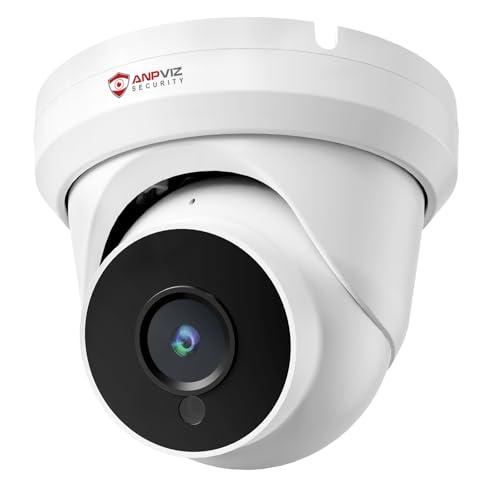
Pros
- 4MP resolution at 2560x1440 and 25fps
- PoE delivers power and data over single cable
- Wide 110-degree field of view with 2.8mm lens
- IP66 waterproof rated full metal enclosure
- Works with Blue Iris, NAS, and ONVIF NVRs
Cons
- Night vision range limited to 50 feet
- Requires wired Ethernet cable, no Wi-Fi option

Pros
- Dual 5MP lenses provide wide coverage and auto-tracking
- Single Ethernet cable supplies both power and data
- Smart AI detection flags people, vehicles, and animals
- Full-color spotlight night vision plus 15-meter infrared
Cons
- Corner mounting bracket must be purchased separately
- Requires running dedicated Ethernet cabling for PoE
- MicroSD storage card is not included in the box

Pros
- Single-cable PoE runs up to 820 feet
- Pre-installed 2TB hard drive expandable to 10TB
- AI detection classifies people, vehicles, pets, and packages
- Weatherproof IP66 metal housing rated down to -4 degrees Fahrenheit
Cons
- Night vision distance limited to 32 feet
- Requires physical Ethernet wiring to every camera location
Power Over Ethernet Versus Wireless Power
True nonstop surveillance generates massive amounts of data that quickly overwhelm standard residential wireless networks. Power over Ethernet carries power and video over a single network cable, providing steady bandwidth that battery units cannot deliver. You can learn more about managing footage retention by exploring what is an NVR and how is it different from a DVR before purchasing hardware.
Wired connections also eliminate the frustrating gaps caused by aggressive sleep timers on battery equipment. When motion triggers a battery sensor, the camera often starts capturing after an intruder walks past the lens. Continuous wired feeds capture the entire approach, the incident, and the departure without missing critical context.
Expert Examined
From Jenna Castellano

The mistake I see most often is attempting continuous video over standard home Wi-Fi bands. The signal inevitably drops during peak network usage, leaving hours of corrupted blocks on your drive.
Read more about Jenna CastellanoStorage Capacity and Video Compression Demands
Writing nonstop high-definition video around the clock fills digital drives rapidly. Modern surveillance hardware relies on H.265 compression to cut file sizes significantly compared to older H.264 video. That compression allows a standard surveillance drive to hold weeks of continuous multi-camera footage rather than just a few days.
| Camera Type | Primary Benefit | Best Location |
|---|---|---|
| Single Turret | Low visual profile | Porch overhangs |
| Vandal Dome | Impact resistant housing | Low mounting points |
| Dual Lens PT | Broad area tracking | Driveways and yards |
Standalone cameras that use internal memory cards offer a fast start, but local memory cards wear out under nonstop writes. Hardware surveillance systems equipped with dedicated hard drives provide the endurance required for uninterrupted daily operation. When maintaining evidence for disputes, knowing is security camera footage admissible in court helps you decide how long to preserve your archived drives.
Drive Endurance Warning: Never install standard desktop hard drives into continuous video recorders. Surveillance systems demand specialized drives engineered for constant write cycles and elevated heat.
Night Vision Capabilities for Unbroken Coverage
A camera that records around the clock must handle complete darkness without losing focal sharpness. Traditional infrared illuminators produce black and white video that can blow out human faces at close distances. Newer units employ warm white auxiliary spotlights to generate full color video through the night.
Understanding equipment indicators is also critical when mounting cameras near entryways. Checking what do the lights on a security camera mean helps you position status LEDs so they do not reflect off nearby walls or blind the lens. Proper adjustment keeps license plates and facial details clear under changing illumination.
Pro Tip: Position cameras so exterior floodlights do not shine straight into the glass dome. Glare creates severe backlighting issues that blind image sensors at night.
Matching Hardware to Your Property Layout
For an isolated entry point like a detached workshop or front porch, I would point you toward the REOLINK 5MP+5MP PT Dual-Lens Security Camera. Its combination of a fixed wide-angle view and an automated tracking lens monitors large perimeters from a single mounting bracket. It handles local storage independently while supporting continuous recording onto high-capacity cards or an external server.
For whole-property installations requiring multiple viewing angles, I would put the ANNKE 8CH 5MP PoE Security Camera System, 1TB HDD on your short list. The pre-installed storage drive and dedicated recorder eliminate network strain from your home computers. If you already maintain a dedicated network recorder with open channels, adding the 4K 8MP PoE IP Turret Camera Outdoor 24/7 Full gives you sharp 8MP clarity and full-time color capture across driveway gates.
The Bottom Line
Most buyers mistakenly look at resolution numbers while ignoring power stability and continuous write endurance. A high-resolution camera does little good if the wireless connection drops or the storage media burns out after two months of continuous duty. Wired power delivery combined with proper drive endurance is essential for non-stop reliability.
Map your cable pathways before purchasing any hardware. Knowing where you will route Ethernet lines from your recorder to your exterior eaves guarantees a smooth setup and reliable operation.
FAQs
Can wireless battery cameras record continuously all day?
Battery cameras cannot sustain continuous 24/7 recording because their power cells would deplete within hours. They remain asleep until a passive infrared sensor detects motion. Properties requiring uninterrupted recording must use hardwired power connections like PoE.
How much hard drive space does continuous recording require?
A single 5MP camera using H.265 compression generally consumes about 20 to 40 gigabytes per day. A four-camera system recording non-stop typically needs a 1TB to 2TB drive to store one to two weeks of continuous history.
What weather rating should an outdoor continuous camera have?
Outdoor surveillance hardware should carry at least an IP66 or IP67 rating. These ratings certify that the metal housing protects internal electronics against driving rain, dust storms, and extreme outdoor seasonal temperatures.
Do these cameras require a monthly subscription?
Hardware that saves video to an on-site network recorder or local microSD card requires no monthly cloud subscription. You retain complete ownership of your video files and can view playback remotely through the manufacturer app.
Sources
- Federal Communications Commission Equipment Authorization www.fcc.gov
- UL Solutions Standards for Video Surveillance Systems www.ul.com