
Finding the best home security cameras not made in China usually means balancing country-of-origin hardware standards against the convenience of consumer smart software. Homeowners prioritizing digital privacy over cut-rate imports need gear manufactured in regions like Taiwan, Vietnam, or Europe. Selecting the right hardware comes down to choosing between closed local network recorders and subscription-backed cloud platforms.

Pros
- Motorized 2.7 to 13.5mm optical zoom lens
- 4K 8MP resolution with 120dB True WDR
- Human and vehicle AI perimeter classification
- IP67 weather resistance down to -22 degrees
Cons
- Full 8MP capture caps at 20fps
- Requires network wiring and configuration

Pros
- Up to 1920 x 1920 video resolution
- 5MP CMOS sensor uses less power
- Local SD card storage support
- Indoor and outdoor placement options
Cons
- Requires wired DC power connection
- Substantial 1.44-pound dome footprint

Pros
- Motorized 360-degree pan with auto motion tracking
- High-resolution 2K video feed with 12x zoom
- Lens flips down automatically for physical privacy
- Sound detection for barking and crying audio
Cons
- Video history and smart detection require paid plan
- Continuous wired power requires nearby wall outlets

Pros
- Bright 2000 lumens articulating floodlights
- Sharp 2K HDR video with 160-degree view
- Continuous power from hardwired junction box
- Color night vision and 12x zoom
Cons
- Requires paid plan for video history and AI
- Must wire to a 4-inch round junction box

Pros
- Sharp 4K video recording at 30 FPS
- Onboard face and license plate recognition
- Infrared night vision reaches 98 feet
- Weatherproof IP66 rated exterior casing
Cons
- Requires a wired PoE network connection
- Fixed focal length prevents optical zoom
- Modest IK04 tamper and impact rating
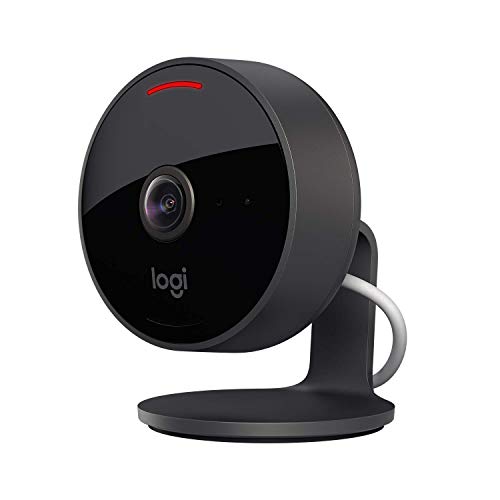
Pros
- Wide 180-degree field of view with 1080p HD
- IP64 weatherproof housing for outdoor installation
- Infrared night vision illuminates up to 15 feet
- Physical tilt-down privacy cover and power switch
Cons
- Exclusively Apple HomeKit, no Logi Circle support
- Motion-triggered recording only, lacks continuous video
- Requires an indoor USB power supply connection
NDAA Standards and Sourcing Transparency
Government procurement rules like the National Defense Authorization Act ban specific foreign telecommunications and surveillance chipsets from federal facilities. While residential properties do not legally require NDAA compliance, many privacy-conscious homeowners use these exact lists to filter out risky hardware. Brands manufactured in Taiwan, South Korea, or Vietnam avoid components produced by sanctioned state-backed component suppliers.
Chipset provenance matters just as much as the final assembly plant. A camera assembled outside China might still use internal system-on-chip components sourced from restricted vendors. When researching hardware, looking for explicit compliance statements from commercial-grade vendors helps verify that the video pipeline remains isolated from unauthorized backdoors. You can read more about data handling rules and whether is security camera footage admissible in court to understand evidentiary standards.
Verify Component Sourcing: Do not rely solely on the retail box label. Always check manufacturer spec sheets to ensure the processing chipset itself originates from approved jurisdictions.
Local NVR Storage Versus Encrypted Cloud Ecosystems
The transmission path of your video footage dictates your actual network exposure. Closed-circuit Power over Ethernet setups route directly to a local hard drive on your private network. Understanding what is an NVR and how is it different from a DVR helps clarify why digital network recorders offer better isolation than legacy analog setups.
Cloud-first ecosystems approach privacy differently by employing end-to-end encryption before packets leave the local gateway. Platforms that process automated alerts on the camera or within local hubs minimize the raw visual data transmitted to external servers. If you need automated alerts without giving up data autonomy, checking if do security cameras have facial recognition on the hardware level will narrow your search.
| System Architecture | Data Destination | Network Dependency |
|---|---|---|
| PoE NVR Hardwired | On-premise storage drive | Operates fully offline |
| Encrypted Cloud Hub | Remote server farm | Requires active broadband |
| Local SD Storage | On-camera memory card | Local wireless access |
Expert Examined
From Ray Okafor

The biggest mistake I see with privacy-conscious buyers is securing their camera hardware while leaving default passwords active on their network switch. Even hardware from trusted assembly plants can be compromised if your local gateway uses universal plug-and-play port forwarding.
Read more about Ray OkaforNetwork Protocols and Power Delivery
Hardwired Power over Ethernet cameras avoid wireless interference while keeping high-resolution video streams off your home Wi-Fi bands. Running a single Ethernet cable supplies low-voltage electricity alongside full bandwidth for 4K video feeds. Regulatory standards managed by the Federal Communications Commission govern these wireless and wired emissions to maintain network integrity.
For installations where running network cable through walls is impossible, hardwired line-voltage units provide uninterrupted power without Ethernet drops. Exterior floodlight housings tap straight into standard junction boxes, keeping outdoor zones covered without frequent battery maintenance. Monitoring external hardware states also helps you decipher what do the lights on a security camera mean when diagnosing sudden connection drops.
Pro Tip: If you choose Wi-Fi cameras, isolate them on a dedicated virtual local area network that cannot communicate with personal computers or network storage drives.
Hardware for Specific Property Layouts
For large perimeters and driveway monitoring where you need maximum detail, I would point you to the Ubiquiti UniFi G6 Turret Camera. Its 4K resolution, 30 frames per second capture, and local AI detection keep identification crisp while maintaining a closed, hardwired network. If your layout requires optical flexibility over fixed angles, the ENS HNC3IV181T-IR-ZAS Diamond 8MP IR Vari-Focal gives you an adjustable focal range and long-distance infrared night vision for remote property lines.
For indoor pet monitoring or small rooms where physical privacy matters, I would put the Arlo Essential Indoor Pan Tilt Zoom Security on your shelf. It offers an automatic physical privacy shield that tilts the lens down out of sight whenever you return home, eliminating accidental recordings.
The Bottom Line
Most buyers assume that selecting non-Chinese hardware automatically ensures total digital privacy, but they overlook open network ports and weak router security. Sourcing clean camera hardware solves only half the problem; how that device handles outbound traffic determines your real exposure.
If you only do one thing, audit your local network by isolating every surveillance device onto a firewalled subnet before mounting your first camera. That single step protects your video feeds regardless of future firmware updates or software changes.
FAQs
What does NDAA compliance mean for home cameras?
It means the equipment contains no internal processors or critical components manufactured by specific banned telecom entities. While designed for federal buildings, it serves as a reliable privacy baseline for residential buyers seeking trusted hardware components.
Can these cameras work without an active internet connection?
Dedicated Power over Ethernet cameras connected to a local network video recorder work completely offline. You lose mobile push notifications, but continuous recording and local viewing remain fully functional without any external web access.
Do non-Chinese cameras require paid monthly cloud subscriptions?
Local network systems from brands like Ubiquiti store video directly to on-site hard drives with zero recurring fees. Cloud-focused brands often offer basic live viewing for free but lock extended video history behind optional monthly service plans.
Where are most alternative security cameras manufactured?
Most alternative consumer and commercial surveillance devices are manufactured in Taiwan, South Korea, Vietnam, or Europe. These regions maintain distinct supply chains and independent component verification processes for their commercial export hardware.
Sources
- Federal Communications Commission www.fcc.gov
- National Institute of Standards and Technology www.nist.gov
- Underwriters Laboratories www.ul.com