
Shopping for the best hidden peephole cameras means deciding whether a discreet indoor screen is enough or whether you need remote alerts, recording, and two-way talk. Renters, apartment residents, and families should also confirm the camera fits the existing door opening before ordering.

Pros
- 95-degree wide-angle viewing
- 2.4-inch bright TFT LCD screen
- Manual visitor photo capture
- 640 x 480 image support
Cons
- Three AAA batteries not included
- 0.3MP camera limits image detail

Pros
- 2.4-inch LCD for direct visitor viewing
- 90-degree wide-angle lens
- Internal memory with automatic overwrite
- Fits 14 to 28mm door holes
- Supports 1.4 to 4.7-inch door thickness
Cons
- 0.3MP camera and 320 x 240 screen
- Built-in 600mAh battery requires recharging

Pros
- 1080P camera with 120-degree wide-angle view
- PIR motion alerts and video recording
- 4.3-inch color monitor with AHD support
- 5000mAh battery with up to 30-day standby
Cons
- System functions require the mobile app
- Memory card for storage is not included

Pros
- 1080P video with 120-degree wide-angle view
- 4.3-inch color monitor for local viewing
- PIR motion detection with phone alerts
- Two-way intercom with noise reduction
Cons
- Remote features depend on WiFi and app access
- Door fit limited to 35-120mm thickness

Pros
- 150-degree wide-angle field of view
- 800TVL CMOS sensor for color video
- Built-in privacy protection cover
- Aluminum alloy casing and hard glass lens
Cons
- DC operation requires a compatible power source
- No recording or alert features listed
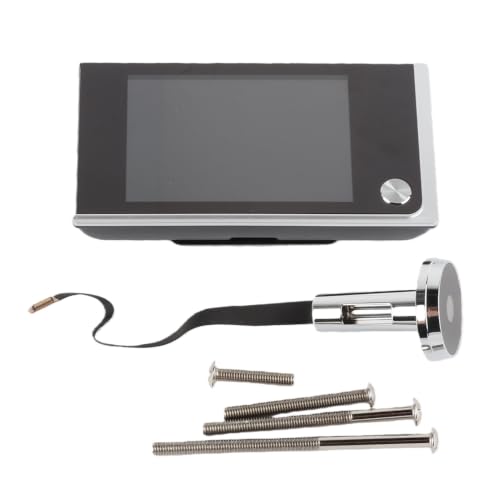
Pros
- 3.5-inch high-definition color LCD
- 120-degree actual viewing angle
- Fits 40 to 100mm door thicknesses
- Installs in about three minutes
Cons
- Requires four AAA batteries
- Limited to 14 to 28mm openings
Screen-only viewing or connected security
Basic digital viewers show the visitor on an indoor LCD and keep the interaction local. That approach suits an apartment or office where you mainly want to avoid looking through a traditional peephole, especially if several household members need a simple display.
Connected models add more decision-making power. Yunseity 1080P Video Door Viewer and Diyeeni 1080P Wireless Peephole Camera with 4.3 support Wi-Fi access, phone viewing, motion alerts, recording, and two-way communication. Those features are more useful when you may be away from the door or want to speak with a delivery person without opening it.
Wide-angle numbers are not interchangeable with image quality. The 150-degree Generic viewer gives the broadest stated view, while the Yunseity and Diyeeni models pair 120 degrees with 1080P video. A wider image can show more of the landing, but a sharper image may make the visitor easier to identify.
| Device type | Key specification | Best placement |
|---|---|---|
| Local LCD viewer | 90 to 120 degrees | Apartments and offices |
| Connected viewer | Wi-Fi, PIR, recording | Homes needing alerts |
| Wide-angle camera | 150-degree lens | Broad door landings |
Fit the camera to the door
Measure the door thickness and peephole diameter before choosing a model. Sonew supports 40 to 100mm doors and 14 to 28mm openings, while ZAICOLER supports 1.4 to 4.7-inch doors and 14 to 28mm holes. Diyeeni is listed for 35 to 120mm doors and 14 to 30mm holes.
Do not assume a familiar-looking viewer uses the same mounting hardware as another model. A poor fit can leave the camera tilted, expose gaps around the opening, or prevent the indoor screen from sitting flat. For broader doorbell placement advice, see how to angle a video doorbell down.
Before You Mount It: A camera should not replace safe door habits. Keep the door closed while identifying an unknown visitor, and do not block the peephole with an accessory that prevents a clear view.
Power, storage, and night viewing
Battery format affects upkeep. Sonew uses four AAA batteries and includes a low-power alert, while the Kukyller viewer uses three AAA batteries that are not included. ZAICOLER has a built-in 600mAh battery, and Yunseity uses a 5000mAh battery with USB charging and a stated standby time of up to 30 days under typical call use.
Recording also varies. ZAICOLER uses internal memory with automatic overwriting, while Yunseity supports a memory card up to 128GB, with the card sold separately. Diyeeni and Yunseity include PIR motion detection, and both connected designs provide infrared or day and night viewing features for darker entrances.
Expert Examined
From Dana Whitfield

I keep seeing door viewers chosen by screen size alone, even though the mounting range is what decides whether the camera sits correctly. I would measure the door and hole first, then decide whether alerts and recording justify the extra setup.
Read more about Dana WhitfieldFor privacy, the Generic model specifically includes a privacy cover, and its aluminum alloy casing and hard glass lens are intended for indoor surveillance installations. If privacy is your priority, also consider how recordings are stored and who can access a connected app.
The common causes of camera disconnection are worth understanding before choosing a Wi-Fi model. A local LCD viewer avoids app dependence, but it cannot provide the same remote access.
Which Door Setup Fits Your Home
I would point apartment residents and seniors toward the Peephole Cameras category when the priority is a straightforward indoor screen, then compare the fit range carefully. The Peephole Door Viewer Digital Door Eye Viewer is a sensible match for doors within its 40 to 100mm thickness range, with a 3.5-inch display, 120-degree view, and AAA battery power.
I would choose the Yunseity 1080P Video Door Viewer for a household that wants phone access, PIR notifications, two-way talk, night viewing, and recording. Its 5000mAh battery and support for up to 128GB storage make it the more feature-focused option, although the memory card is separate.
For a connected alternative with a smaller stated price category and a defined door fit, I would point you to Diyeeni 1080P Wireless Peephole Camera with 4.3. Its 4.3-inch monitor, 120-degree view, Wi-Fi app, PIR alerts, two-way intercom, and infrared night vision suit a home where visitors may need to be handled remotely.
The Bottom Line
The mistake most buyers make is treating every peephole camera as a universal replacement. Door thickness, hole diameter, battery format, and the difference between local viewing and Wi-Fi access can matter more than the headline resolution.
If you only do one thing first, measure the door thickness and existing opening. Once the model physically fits, choose between a simple LCD viewer for local identification and a connected system for alerts, recording, and communication away from home.
FAQs
A PIR model suits homes that need motion alerts, recording, or remote awareness. A basic digital viewer is simpler when you only need to see visitors on an indoor screen and do not need phone connectivity. Mount it in the existing peephole position at a height that gives you a clear view of the visitor’s face. Confirm the camera’s supported door thickness and hole diameter first, because an incorrect fit can leave the lens misaligned. Check the battery warning or charge indicator regularly, keep the lens clear, and review storage when recording is enabled. Models using AAA batteries need replacements, while built-in battery models need periodic USB charging. Certification should identify a specific safety or performance standard, not simply use a general marketing term. If a listing does not name a recognized standard or authority, do not assume the device has independent certification; consult UL Solutions for standards information.Should I choose a PIR peephole camera or a basic digital viewer?
Where should a peephole camera be mounted?
How do I maintain a battery-powered door viewer?
What does certification mean on a peephole camera listing?
Sources
- UL Solutions and product safety standards. www.ul.com
- US Consumer Product Safety Commission and home safety information. www.cpsc.gov