

Choosing among the best digital peephole cameras is mainly about deciding whether you need a simple indoor screen or a doorbell-style camera with night vision and recording. Renters, families, and older adults should also check door fit before choosing features.

Pros
- 3.5-inch HD color LCD screen
- 120-degree wide viewing angle
- Zinc alloy outdoor camera housing
- Wire-free installation with included bracket
Cons
- No night vision or motion detection
- Four AAA batteries not included

Pros
- 3.5-inch LCD color screen
- 120-degree viewing angle
- 1MP outdoor camera
- Simple DIY installation
Cons
- Requires four AAA batteries
- Battery replacement remains necessary

Pros
- 2.8-inch color LCD screen
- 130° wide-angle visitor view
- Night vision reaches about 3–5 meters
- Type-C rechargeable battery
- Fits 35–110mm door thicknesses
Cons
- Manual photography or video recording
- Limited to 15–50mm aperture diameters
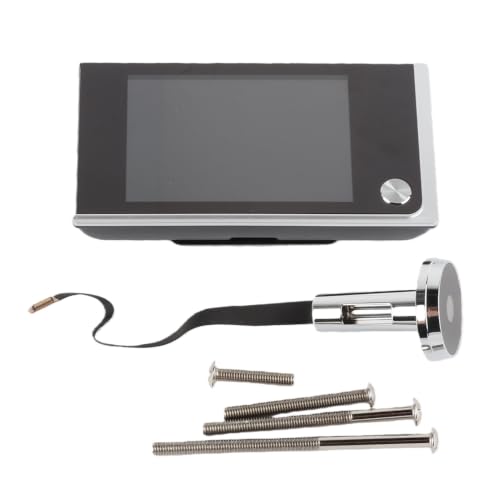
Pros
- 3.5-inch high-definition color LCD
- 120-degree actual viewing angle
- Fits 40 to 100mm door thicknesses
- Installs in about three minutes
Cons
- Requires four AAA batteries
- Limited to 14 to 28mm openings

Pros
- 0.3MP CMOS camera for visitor images
- 95° wide-angle field of view
- Bright 2.4-inch TFT LCD screen
- Manual visitor photo capture
Cons
- Battery not included
- 640 x 480P maximum resolution

Pros
- 2.4-inch LCD visitor screen
- Night vision for clearer views after dark
- Automatic visitor photos when bell is pressed
- Battery access without removing the doorbell
Cons
- AAA batteries are not included
- TF card required to save photos
Start With the Door and Viewing Area
A digital peephole camera replaces or uses the existing peephole opening, so the door hole and thickness matter before anything else. The listed models cover several ranges, including narrow standard openings and broader openings suited to replacement projects. Measure both dimensions rather than assuming a universal fit.
Viewing angle also changes how useful the screen is. The 120-degree and 130-degree models can show more of the visitor and nearby floor area, while narrower options may suit a door where visitors stand directly in front of the lens.
Pro Tip: Measure the door thickness and opening diameter before ordering, then compare both figures with the product specifications.
A larger indoor screen can make faces and clothing easier to see, especially for children or people with poor eyesight. The 3.5-inch models offer more display area than the 2.4-inch and 2.8-inch choices, but screen size should not outweigh compatibility.
| Device style | Key viewing feature | Suitable situation |
|---|---|---|
| Simple LCD viewer | 120-degree view | Everyday visitor checks |
| Wide-angle smart viewer | 130-degree view | Packages and groups |
| Recorded night viewer | Night vision and photos | Dark corridors |
Separate Basic Viewing From Active Features
Several choices are visual peepholes only. The Yulatik and Sonew models provide an indoor LCD view with a 120-degree angle, while the Splenssy 3.5-inch kit adds a 1MP outdoor camera and the same broad viewing angle.
Other models add functions that change the experience. The ZOMMRFVG includes a doorbell button, manual photography or video recording, infrared night vision, and a rechargeable battery. The Splenssy 2.4-inch model offers night vision and automatic photos when the doorbell is pressed, with storage requiring a memory card up to 32G.
If you are also comparing conventional doorbells, the video doorbell category explains how those devices differ from a peephole-mounted screen. A peephole camera is a closer fit when you want to see visitors from inside without relying on a separate doorbell system.
Before You Mount It: Do not assume every peephole camera provides night vision, motion detection, or a doorbell button. The Yulatik model specifically lacks all three, so confirm the feature list if nighttime identification or visitor alerts matter.
Plan Battery Changes and Maintenance
Battery format affects upkeep. The Yulatik, Splenssy 3.5-inch, Sonew, and Splenssy 2.4-inch models use four AAA batteries, while the ZOMMRFVG uses a rechargeable lithium battery with Type-C or USB charging. LEEZAD is battery powered, but its batteries are not included.
AAA-powered units avoid charging cables at the door, and several models include low-power or ultra-low-power designs. A rechargeable unit may be more convenient if you prefer charging rather than replacing batteries, but you still need access to the indoor charging connection.
I keep the indoor screen and battery compartment easy to reach because a low battery is easy to overlook when the camera is mounted at eye level. I also check that the outdoor camera cable is seated gently during installation, since the Yulatik instructions identify cable connection as important to proper operation.
For lens care, use a soft, dry cloth and avoid harsh cleaners around the camera opening. If you are also maintaining a doorbell camera, these lens-cleaning instructions provide useful general handling guidance.
Check Safety Claims Before Purchase
The supplied product information does not identify a UL, NFPA, or other certification for these six devices. Treat a certification logo or safety claim on packaging as something to verify, not as an automatic feature of every digital peephole camera.
UL Solutions explains its role in product safety certification, but a certification body’s existence does not confirm that a particular camera carries its mark. For installation questions involving the door, frame, or electrical accessories, follow the product instructions and use a qualified professional when needed.
Which Camera Fits Your Door
I would point renters or apartment residents toward the 3.5" Digital Door Viewer Peephole Camera when a large indoor display and straightforward battery operation matter. Its 3.5-inch color screen, 120-degree view, and stated fit for 14 to 28 mm openings and 40 to 100 mm doors make the measurements easy to check. It is a visual viewer only, so I would not choose it for night vision or motion detection.
I would put the ZOMMRFVG 2.8 Inch Digital Door on a door exposed to dark corridors or frequent deliveries. Its 130-degree lens, infrared night vision, doorbell button, recording functions, and rechargeable battery address more active monitoring needs, and its stated compatibility reaches 35 to 110 mm door thicknesses and 15 to 50 mm openings.
For a lower-profile basic setup, I would consider the LEEZAD Digital Door Viewer. Its 2.4-inch TFT display, 95-degree lens, manual photo support, and 320 by 240 display suit someone who wants a compact indoor viewer and does not need the widest field of view.
The Bottom Line
The mistake most buyers make is choosing by screen size alone while overlooking the door opening, door thickness, and feature type. A large display cannot compensate for an incompatible mount, and a basic visual viewer will not provide night vision or recording unless those functions are specifically listed.
Measure the door first, then decide whether you need simple live viewing or active features such as a doorbell button, night vision, and saved photos. That order keeps the comparison practical and prevents paying for functions your doorway cannot use.
FAQs
Choose a model that specifically lists night vision and infrared support. In this selection, the ZOMMRFVG and Splenssy 2.4-inch model include night vision, while the Yulatik model explicitly does not. Measure the existing opening diameter and the full door thickness. Compare both measurements with the listed compatibility range because the six models do not all use the same dimensions. Battery life depends on use and the model’s power design, so check for low-power alerts and keep replacement AAA batteries available where applicable. The ZOMMRFVG uses a rechargeable lithium battery instead. The supplied specifications do not identify certification for these products. Check the packaging and manufacturer documentation for any claimed mark, and verify it with the named certification organization.Which type of peephole camera should I choose for night viewing?
How do I know whether a digital peephole camera will fit my door?
How often do peephole camera batteries need attention?
Do these peephole cameras have safety certification?
Sources
- UL Solutions www.ul.com
- National Fire Protection Association www.nfpa.org