
The best Bluetooth water leak detectors are not interchangeable: your key choice is between a local alarm, broader cable coverage, and a sensor that can trigger water shutoff. Renters, Apple households, and owners of basements or vacation homes each need a different fit.

Pros
- WiFi, Bluetooth, Zigbee, and Matter connectivity
- Compatible with Alexa, Google Home, and HomeKit
- Extendable cable detects small water leaks
- Battery-operated for vacation-property monitoring
Cons
- Requires app or smart-home setup for remote alerts
- IP44 rating limits protection from water exposure

Pros
- 100 dB siren and flashing red warning light
- 6.5-foot full-length sensing cable
- Apple HomeKit, Thread, and Bluetooth support
- No bridge, gateway, cloud, or registration required
Cons
- Requires iPhone or iPad with latest iOS/iPadOS
- 6.5-foot cable needs extension for larger areas

Pros
- Wi-Fi, Bluetooth, Zigbee, and Matter support
- IP67-rated design for water-prone placement
- Rain Detection mode enables smart automations
- Pairs with a valve for automatic shutoff
Cons
- Automatic shutoff requires a compatible smart valve
- Battery-powered sensor needs eventual battery replacement
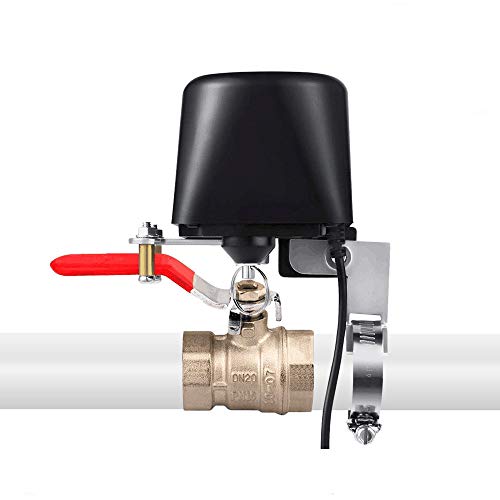
Pros
- Remote Tuya Smart and Smart Life control
- Alexa and Google Assistant compatible
- No hub or monthly charges
- Includes DN20 and adjustable brackets
Cons
- Ball valve sold separately
- Requires careful alignment and installation
Match the Sensor to the Leak
Point sensors work well beneath appliances, where a small pool reaches the device quickly. The Shelly Flood S Gen4 uses a large-surface triple-pad design and a low profile, making it suited to tight spaces beneath washers, dishwashers, or refrigerators.
A sensing cable covers a longer path than a single contact point. Shelly Gen4 Smart Flood Sensor, WiFi, Bluetooth includes an extendable cable, while Eve Water Guard has a 6.5-foot cable that can extend substantially farther. That format is useful along pipes, beneath sinks, or across a basement edge.
Before buying, map the likely leak sources rather than placing one sensor in a convenient central spot. The article on where water leaks start in a house can help you identify the areas that deserve coverage first.
Pro Tip: Place the sensing cable or contact pads at the lowest point where water will collect, not on a raised shelf or appliance panel.
| Sensor type | Main advantage | Best placement |
|---|---|---|
| Point sensor | Low-profile coverage | Under appliances |
| Cable sensor | Wider detection area | Along pipes and sinks |
| Valve actuator | Remote water control | Existing ball valve |
Bluetooth Is Only Part of the Connection
Bluetooth helps with nearby setup and communication, but the broader platform matters if you want alerts or automations. Shelly Gen4 Smart Flood Sensor, WiFi, Bluetooth and Shelly Flood S Gen4, WiFi, Bluetooth, Zigbee support WiFi, Bluetooth, Zigbee, and Matter, with compatibility that includes several major smart-home platforms.
Eve Water Guard is designed for iPhone or iPad users and supports Bluetooth and Thread. It also provides a 100 dB siren, a flashing red warning light, and notifications to Apple devices. Its local communication approach avoids registration, tracking, and an Eve cloud.
If your priority is automatic action rather than detection alone, read about whether water sensors shut the water off. A detector and a shutoff controller are separate functions, and the product box does not make them the same device.
Check the Valve First: A valve actuator cannot replace a leak sensor. The Tokatuker controller is sold without a ball valve and requires correct alignment with a compatible long-leverage valve.
Power, Alerts, and Remote Properties
Battery operation is useful under sinks, in garages, and at vacation properties where running a cable is inconvenient. Shelly Gen4 Smart Flood Sensor, WiFi, Bluetooth offers an Economic Alarm Mode intended to conserve battery life during long periods when a property is unattended.
Alert volume still matters when someone is home. Eve Water Guard combines its phone notifications with a loud siren and visual warning, while the Shelly models provide real-time alerts and configurable alarm behavior through their supported systems.
Expert Examined
From Dana Whitfield

I keep sensors close to the appliance or pipe most likely to fail, because a device placed in the middle of a room can react too late. The mistake I see is treating a shutoff controller as complete protection without adding a detector that can actually sense the water.
Read more about Dana WhitfieldMaintenance should include checking the contact area, confirming alerts remain enabled, and keeping the device accessible. For broader household preparation, the advice on how to shut off the water main is worth knowing before an alert arrives.
Which Sensor Fits Your Home
I would put Shelly Flood S Gen4, WiFi, Bluetooth, Zigbee beneath a refrigerator, washer, or dishwasher when a slim sensor and broad smart-home compatibility matter. Its rain detection mode also gives it a distinct role outdoors, where it can support weather-aware automations such as pausing irrigation.
I would point Apple households toward Eve Water Guard – Smart Home Water Leak Detector for a bathroom, utility room, basement, or sink area. The 100 dB siren, visual warning, Apple notifications, HomeKit support, and Thread connectivity make it the clearest fit when those features match your setup.
For a basement, garage, or vacation property needing cable coverage, I would choose Shelly Gen4 Smart Flood Sensor, WiFi, Bluetooth. Its extendable leak cable covers more area, and its Economic Alarm Mode is relevant when the home may sit empty for months. I would reserve the Tokatuker actuator for a compatible existing ball valve and a homeowner prepared to align the mechanism carefully.
The Bottom Line
The biggest mistake buyers make is treating Bluetooth connectivity as the deciding specification. Coverage style, phone ecosystem, alarm behavior, and the difference between detecting water and closing a valve matter more.
If you only do one thing first, identify the exact leak source and mark the lowest collection point. Then choose a cable sensor, point sensor, or actuator arrangement that addresses that location without blocking access.
FAQs
A point sensor suits a tight spot beneath an appliance, while a cable sensor covers a longer path along pipes, sinks, or a basement edge. Choose based on where water will collect first, not simply on which format looks smaller. Place it near likely sources such as washers, dishwashers, refrigerators, sinks, pipes, basements, or garages. Keep contact pads or cable at the lowest reachable collection point and leave the device accessible for alerts and maintenance. Keep the sensing surface clear and periodically confirm that phone notifications and local alarms remain active. Battery-powered units also need attention to battery condition, especially in vacation homes or other properties that may be unattended. An IP rating describes protection against specific dust or water exposure conditions, not unlimited submersion or every installation environment. Use the rating as one placement consideration and follow the product’s intended use.Should I choose a cable sensor or point sensor?
Where should a Bluetooth water leak detector go?
What maintenance do leak detectors need?
Does IP44 or IP67 mean the sensor is waterproof?
Sources
- National Fire Protection Association www.nfpa.org
- US Consumer Product Safety Commission www.cpsc.gov
- UL Solutions www.ul.com