
Shopping for the best 5K security cameras usually starts with a desire to read distant license plates and facial features without digital blur. The true dividing line in ultra-high-resolution hardware is whether your home network can sustain the high bitrates or if you need dedicated local recorder wiring. This comparison helps property owners match sensor resolution to practical network storage.

Pros
- 2.5K video with full-color night vision
- IP66 weatherproof rating for outdoor use
- Dual-band 2.4 GHz and 5 GHz Wi-Fi support
- Integrated flashing light and siren deterrence
- Detection range reaches up to 33 feet
Cons
- Cloud recording requires an ongoing subscription
- MicroSD card not included for local storage
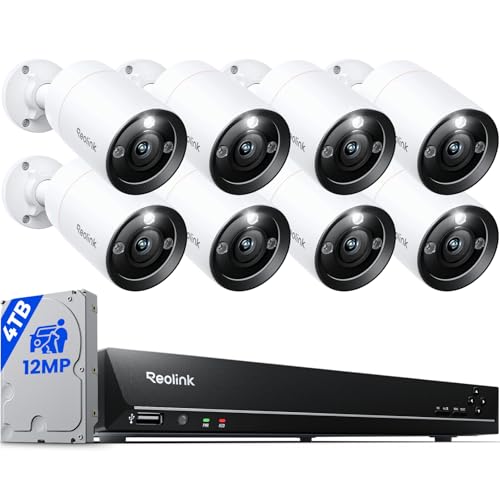
Pros
- 12MP ultra high-definition resolution across eight cameras
- Motion-activated spotlight enables full-color night vision
- Smart shape detection filters people, vehicles, and pets
- Built-in speaker supports two-way talk deterrence
- Pre-installed 4TB storage expandable up to 24 channels
Cons
- Requires dedicated PoE cabling to each camera location
- Battery camera expansion restricted to three specific models

Pros
- Sharp 2.5K QHD resolution with 120-degree view
- Color night vision via Starlight sensor and spotlight
- Built-in 100 dB siren and 72-lumen spotlight
- Supports local storage up to 512 GB microSD
Cons
- MicroSD card for local storage sold separately
- Only connects to 2.4 GHz Wi-Fi networks
- Cloud recording requires an ongoing monthly subscription

Pros
- Ultra-wide 180-degree panoramic camera view
- Bright 3000-lumen adjustable three-panel LED floodlights
- Crisp 2.5K HD video with color night vision
- Built-in 105 dB siren plus spoken voice warning
- Local 24/7 continuous recording via microSD card
Cons
- Bulky 2.9-pound frame requires solid outdoor mounting
- Motion zones and controls depend on the Wyze app

Pros
- No-drill adhesive glass mount
- 2.5K video with anti-glare lens
- Free lifetime human, vehicle, pet detection
- Wired or 5000mAh battery power
Cons
- Battery standby lasts 5 to 30 days
- SD card sold separately; cloud storage is paid
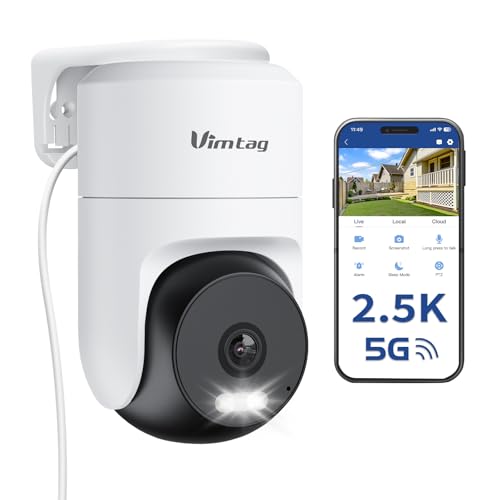
Pros
- Motorized 360-degree pan and tilt with auto-tracking
- Dual-band 2.4GHz and 5GHz Wi-Fi connectivity
- Local microSD storage supported up to 512GB
- Full-color night vision up to 65 feet
Cons
- Tethered to an outlet by a 9.8-foot power cable
- Cloud video history requires subscription after 30-day trial
Resolution Realities and Optical Clarity
Extreme resolution sensors capture an exceptional amount of visual data across broad driveways and yards. Jumping beyond standard 1080p into 2.5K QHD and multi-megapixel territory allows homeowners to zoom in on critical details after an incident occurs. For property owners evaluating whole-property infrastructure, understanding what is an NVR and how is it different from a DVR helps determine whether multiple high-bitrate video streams will choke your home router.
More pixels require superior physical lenses and larger apertures to draw in sufficient light. A high pixel count on a microscopic sensor will produce grainy, dark nighttime footage if it lacks integrated spotlights or starlight illumination hardware. Digital magnification only yields actionable evidence when the original exposure retains crisp edge contrast.
| Resolution Class | Primary Advantage | Best Placement |
|---|---|---|
| 12MP PoE | Extreme digital zoom | Driveways and perimeters |
| 2.5K QHD | Balanced bandwidth | Porches and doorways |
| 180° Panoramic | Zero blind spots | Wide building facades |
Bandwidth Loads and Continuous Local Recording
Streaming multi-megapixel footage over consumer Wi-Fi frequencies can quickly saturate 2.4GHz wireless bands. While dual-band 5GHz connectivity helps distribute the traffic, continuous high-definition recording demands massive local storage cards or dedicated multi-terabyte hard drives. You can verify device spectrum compliance on the Federal Communications Commission database before adding several wireless transmitters to your home router.
Network Overload Risk: High-resolution wireless streams can saturate home Wi-Fi bands. If you plan to install more than four cameras, use hardwired Ethernet cabling or dedicated local network storage to prevent dropped frames.
Standalone units that record 24/7 to high-capacity microSD cards keep high-bandwidth video streams off your home wireless channels. The footage writes directly to the local card, transmitting across the network only when you pull up a live stream or review alert clips. This architecture avoids monthly cloud subscription fees while preserving full frame rates.
Expert Examined
From Ray Okafor

The mistake I see most often is mounting high-resolution cameras too high under the roof eaves. When a camera looks down at a steep forty-five-degree angle, you record the top of a baseball cap rather than an identifiable face, no matter how many pixels your sensor packs.
Read more about Ray OkaforNight Illumination and Identification Features
Standard infrared night vision illuminates foregrounds with invisible light, but it washes out skin tones and obscures vehicle colors. Hardware equipped with high-lumen white spotlights or starlight image sensors preserves critical color data when dusk falls. Spotlights also serve as an immediate physical deterrent by announcing active property surveillance the moment motion trips the sensor.
Onboard processors now handle object recognition directly at the camera edge. Distinguishing between animals, delivery couriers, and passing vehicles prevents nuisance alerts and saves storage capacity. Buyers investigating automated identification should review whether security cameras have facial recognition built into local firmware or tucked behind recurring monthly cloud paywalls.
Pro Tip: Position your outdoor camera so driveway traffic passes perpendicular to the lens. Headlights pointed directly into the glass will blind the image sensor and wash out license plate characters.
Matching the Hardware to the Property
If you need comprehensive perimeter coverage without wireless interference, I would point you to the REOLINK 16CH 12MP Security Bullet Camera System. Its hardwired Power over Ethernet design, massive 4TB pre-installed drive, and sixteen available channels deliver crisp 12MP detail without consuming your household Wi-Fi bandwidth. When clarity matters for legal documentation, having clean local archives helps ensure that your security camera footage is admissible in court.
For wide suburban yards requiring substantial light, I would put the WYZE Floodlight Camera Pro on the garage gable. The 3000-lumen adjustable panels turn midnight into daylight, while the panoramic 180-degree field of view monitors the entire property front without needing multiple camera mounts.
For rental properties where outdoor wiring is impossible, the CINMOORE 2.5K Window Security Camera solves installation disputes. Its specialized anti-reflective glass mount looks through window panes without indoor glare, using a rechargeable 5000mAh battery and local facial recognition with zero mandatory subscriptions.
The Bottom Line
The single biggest mistake buyers make is chasing extreme resolution numbers while ignoring their power and data infrastructure. A high-resolution camera that drops its connection due to weak Wi-Fi or runs out of local card storage during an incident provides zero protection. Balance your image detail against where the footage actually gets saved.
If you only do one thing, map out how your chosen camera will receive continuous power and archive video before driving any screws into your siding. Selecting a unit with local microSD or hard drive recording prevents ongoing cloud fees and keeps your surveillance system operating smoothly through internet service outages.
FAQs
Do ultra-high resolution cameras slow down home Wi-Fi?
Yes, multiple wireless cameras streaming high-bitrate video continuously can congest consumer routers. Choosing models with dual-band 5GHz support or hardwired PoE connections prevents network degradation across your household devices.
How much microSD storage do I need for high-resolution video?
For continuous 2.5K or higher recording, install at least a 128GB or 256GB endurance-rated card. This capacity typically holds several days of uninterrupted video before overwriting older footage.
Can security cameras read license plates at night?
Reading plates requires high pixel density and adequate illumination to counteract reflective metal glare. Cameras with color night vision spotlights or dedicated exposure controls yield far clearer plate numbers than basic infrared emitters.
Are monthly subscription fees mandatory for AI detection?
Not always. Many modern cameras process human, vehicle, and pet detection directly on internal hardware chips, saving smart event clips directly to local microSD storage without ongoing monthly fees.
Sources
- Federal Communications Commission Equipment Authorization www.fcc.gov
- National Institute of Standards and Technology www.nist.gov
- US Consumer Product Safety Commission www.cpsc.gov