
Installing the best 3-in-1 smoke detectors eliminates ceiling clutter by grouping smoke sensing, carbon monoxide monitoring, and voice location warnings into one footprint. The primary division rests on whether your hallway electrical boxes already run interconnect wiring or if you need standalone sealed batteries. Homeowners replacing aging builders-grade alarms face very different mounting realities than apartment dwellers.

Pros
- 10-year sealed battery eliminates routine replacements
- Slim one-inch profile at half standard depth
- Dual protection against smoke and carbon monoxide
- Voice alerts state danger type and location
- Precision Detection reduces cooking false alarms
Cons
- Sealed battery cannot be replaced when depleted
- No hardwired power or multi-alarm interconnect

Pros
- Dual detection for smoke and carbon monoxide
- Voice alerts announce specific hazard type
- Hardwired interconnect triggers all linked Kidde alarms
- AA battery backup covers power failures
- UL Listed with 10-year limited warranty
Cons
- Requires dedicated 120V AC electrical hardwiring
- Backup AA batteries need periodic replacement

Pros
- Voice and location alerts pinpoint hazards
- Dual smoke and carbon monoxide detection
- Precision Detection reduces nuisance cooking alarms
- Hardwired interconnect triggers all compatible units
Cons
- Requires existing home wiring to install
- Replaceable AA batteries require regular maintenance
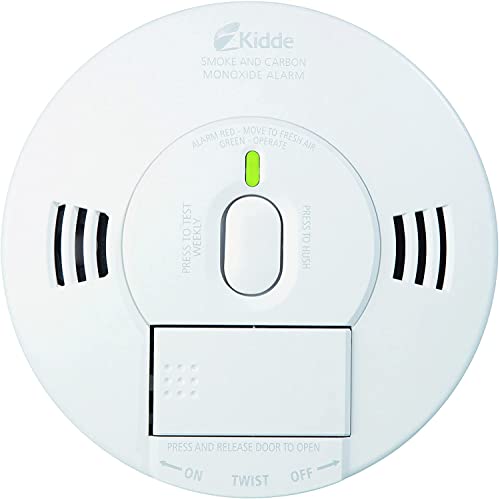
Pros
- Photoelectric smoke and electrochemical CO sensing
- Voice alerts announce specific fire or CO hazards
- Hardwired interconnect supports up to 24 alarms
- Front-access door for 9V battery replacement
Cons
- Requires 120V hardwired electrical installation
- Uses replaceable 9V backup rather than sealed lithium

Pros
- Dual wired and wireless interconnect up to 12 alarms
- Voice alerts identify smoke or carbon monoxide hazards
- Alarm horn sounds in excess of 85 decibels
- Meets UL 217 and UL 2034 safety standards
- Automatic self-check replaces routine manual testing
Cons
- Requires hardwired electrical line for main power
- Uses replaceable AA batteries instead of sealed cells

Pros
- Sealed 10-year lithium battery avoids replacements
- Photoelectric and electrochemical dual-sensor detection
- Built-in LCD screen displays real-time levels
- Certified to UL 217 and UL 2034 safety standards
Cons
- Standalone design without wireless alarm interconnection
- No Wi-Fi or base station connectivity
Deciphering Multi-Hazard Protection Standards
Shoppers looking for multi-threat protection often encounter alarms pairing photoelectric smoke sensors with electrochemical carbon monoxide cells alongside directional voice broadcasts. The home safety detection equipment category has transitioned toward smarter discrimination to satisfy updated standards. Newer units meet revised specifications from UL Solutions designed specifically to reduce nuisance alarms triggered by standard kitchen cooking.
Electrochemical sensors track carbon monoxide concentrations over time, identifying dangerous buildup from furnaces and water heaters long before physical symptoms appear. Combining this with photoelectric smoke detection ensures rapid response to slow-smoldering household fires like upholstery burns. The inclusion of voice alarms clarifies the exact threat instantly, preventing confusion when an alarm sounds during sleep.
Sensor Replacement Timelines: Carbon monoxide sensors degrade chemically and expire after five to ten years regardless of remaining battery life. Always check the manufacturing date stamp on the rear housing to ensure full compliance.
Wiring Infrastructure and Interconnection Demands
Existing drywall wiring dictates which power architecture your ceilings can support. Guidelines from the National Fire Protection Association state that houses wired after modern codes require hardwired 120-volt circuits where every detector triggers simultaneously through a dedicated interconnect traveler wire. Adding alarms that lack interconnect capability into a wired home violates building codes in most jurisdictions.
Older properties without junction boxes rely on ten-year sealed lithium cells to provide decade-long coverage without annual battery swaps. Pairing these units alongside broader comprehensive home security systems creates layered perimeter and life-safety coverage. However, standalone battery alarms only sound in the immediate room where smoke or gas appears.
| Alarm Type | Power Architecture | Best Placement |
|---|---|---|
| Hardwired Combo | 120V with backup | Prewired modern hallways |
| Sealed Battery | 10-year lithium | Retrofit rooms without wiring |
| Hybrid Wireless | Hardwired or RF | Multi-story homes without travelers |
Nuisance Alarms and Sensor Placement Boundaries
Placement errors cause the vast majority of false alarms and device disablings. Installing an alarm within ten feet of a cooking appliance or directly outside a steamy bathroom guarantees nuisance alerts. Keeping detectors at least twenty feet from stoves prevents steam and minor smoke particles from setting off sensitive optical chambers.
Expert Examined
From Jenna Castellano

I keep seeing homeowners pull alarms down after steam from a bathroom shower sets them off three days in a row. Moving the unit just four feet down the hallway resolves the air current issue without sacrificing bedroom corridor coverage.
Read more about Jenna CastellanoDead air spaces near wall-ceiling junctions also trap stagnant air and prevent smoke from entering sensor chambers. Positioning units at least four inches from adjacent walls ensures active airflow reaches internal sensors promptly. Safety guidance published across our safety blog consistently stresses keeping detection paths clear of overhead ceiling fan drafts.
Pro Tip: Vacuum your alarm covers twice a year using a soft brush attachment. Dust accumulation inside optical chambers is the number one cause of unexpected chirping and false triggers.
Matching the Alarm to Your Ceiling
For homes already fitted with interconnected ceiling junction boxes, I would point you to the First Alert Hardwire Combination Smoke & Carbon. It combines 120-volt hardwire line power with AA battery backup for outages, while the voice and location alerts announce the exact room in danger across every linked unit. Its Precision Detection system satisfies modern standards and keeps cooking nuisance alarms to a minimum.
If your ceilings lack electrical wiring and you want zero maintenance, I suggest the First Alert 10-Year Battery Combination Smoke. The sealed ten-year lithium battery eliminates annual replacements, and its slim profile sits at half the depth of conventional alarms without cluttering bedroom ceilings.
For isolated areas where you want visible gas readings, I would put the X-Sense Smoke Detector Carbon Monoxide Detector near a furnace closet or workshop. Its built-in LCD screen provides instant visual confirmation of carbon monoxide levels, though keep in mind it operates strictly as a standalone unit without network interconnectivity.
The Bottom Line
The most common mistake buyers make is purchasing standalone battery units for houses that require interconnected hardwired detection. Doing so breaks the warning chain between upstairs bedrooms and basement utility rooms, leaving sleeping occupants unaware of a fire or gas leak until smoke physically enters their room.
Before ordering any replacement hardware, remove an existing ceiling alarm and inspect the electrical box behind it. Check whether three wiring leads connect the base to your home, which confirms you need hardwired interconnected units rather than standalone battery alternatives.
FAQs
What does a 3-in-1 smoke detector actually detect?
These multi-threat alarms pair optical smoke sensors for smoldering fires with electrochemical carbon monoxide detectors for invisible combustion gases. They also incorporate voice alert modules that announce the emergency type and room location out loud. This combination replaces two or three separate ceiling devices with a single integrated unit.
Can I replace a hardwired smoke alarm with a battery model?
You should not replace hardwired alarms with standalone battery units if your home was constructed with interconnected wiring. Modern building codes require hardwired interconnected units so an alert on one floor sounds across the entire house. Switching to isolated battery alarms reduces your evacuation warning time.
How often do combination smoke and carbon monoxide detectors expire?
Combination smoke and carbon monoxide alarms must be replaced every ten years from their manufacture date. While the smoke sensing chamber may physically last longer, the chemical substrate inside the carbon monoxide sensor naturally degrades and stops reacting. Even sealed ten-year battery models must be discarded when that window closes.
Why do smoke detectors use voice alerts instead of just beeping?
Voice alerts announce the specific hazard and location rather than emitting a generic horn pulse. When awakened from deep sleep, residents often mistake simple beeps for low battery warnings or struggle to identify whether fire or odorless gas is present. Verbal prompts provide clear, instant instructions during stressful evacuations.
Sources
- National Fire Protection Association www.nfpa.org
- U.S. Consumer Product Safety Commission www.cpsc.gov
- UL Solutions Standards www.ul.com