
Installing the best 10-year sealed smoke detectors removes the nuisance of midnight battery chirps while meeting modern building codes. The real division in hardware separates dedicated smoke alarms from dual-sensor units that also monitor for carbon monoxide. Homeowners upgrading older hardware need devices that mount cleanly and handle cooking steam without triggering false alarms.
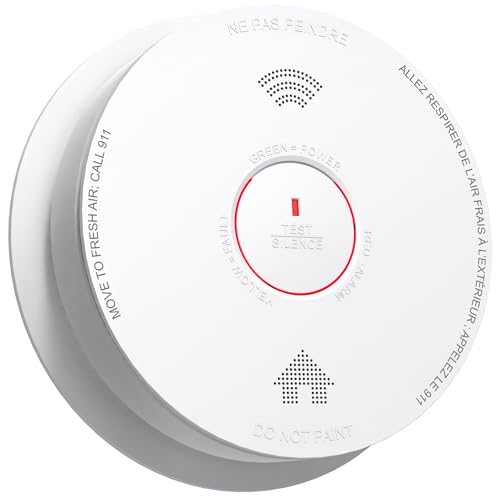
Pros
- Sealed 10-year lithium battery, no replacements
- Bilingual voice alerts in English and French
- Photoelectric sensor reduces steam false alarms
- Single button handles testing and silencing
Cons
- Detects smoke only, no carbon monoxide sensor
- Standalone unit with no wireless interconnect

Pros
- Photoelectric smoke and electrochemical CO sensors
- Sealed 10-year lithium battery eliminates battery swaps
- Informative LCD shows real-time CO levels in PPM
- Certified to both UL 217 and UL 2034 standards
- Includes mounting brackets, screws, and anchor plugs
Cons
- Standalone only, no wireless interconnection between units
- No Wi-Fi support or base station compatibility

Pros
- Dual-beam photoelectric sensor reduces nuisance cooking alarms
- Sealed 10-year lithium cell eliminates annual battery swaps
- UL 217 10th Edition and CSFM safety certified
- Audible 85 dB alarm with 20-second memory indicator
Cons
- Lacks integrated carbon monoxide detection
- Sealed battery requires discarding unit at end of life

Pros
- UL 217 10th Edition certified smoke sensing
- Electrochemical sensor reads CO up to 2000 ppm
- Sealed 10-year battery eliminates annual replacements
- Loud 85dB horn with silence button
Cons
- Non-replaceable battery requires replacing the whole unit
- Not hardwired for existing electrical junction boxes

Pros
- Sealed 10-year lithium battery eliminates annual replacements
- Photoelectric smoke and electrochemical CO sensors
- Certified to UL 217 and UL 2034 safety standards
- Includes brackets and anchors for wall or ceiling mounting
Cons
- No wireless interconnection between alarms
- Lacks Wi-Fi or smart hub connectivity
- Cannot connect to existing hardwired home circuits

Pros
- Sealed 10-year lithium power cell
- No annual battery replacement required
- Battery operation needs no existing hardwiring
- Living area specific placement design
Cons
- Smoke only, no carbon monoxide detection
- Sealed unit cannot take replacement batteries
Photoelectric Technology and Cooking Nuisance Immunity
Modern residential alarms rely primarily on photoelectric sensing chambers rather than older ionization mechanisms. Photoelectric sensors detect light scattered by smoke particles, making them responsive to slow smoldering fires while ignoring normal kitchen vapors. Upgrading your home safety and detection setup to optical designs dramatically reduces false alerts.
Recent safety standards from agencies like the U.S. Consumer Product Safety Commission emphasize synthetic fire detection alongside nuisance resistance. Modern alarms certified under the UL 217 10th Edition standard distinguish between burnt toast and real residential fires. This prevents homeowners from disabling units out of frustration.
Do Not Paint Detectors: Never apply paint or stickers over smoke alarms, as blocking the sensing vents prevents smoke from reaching the optical chamber.
Placement Strategies for Single and Combination Alarms
Fire codes dictate smoke alarms inside every bedroom, outside each sleeping area, and on every habitable floor. When homes use fuel-burning appliances or feature attached garages, carbon monoxide detection becomes mandatory. The National Fire Protection Association advises installing combination units in central hallways to cover both hazards efficiently.
Standalone smoke detectors remain the practical choice inside bedrooms where carbon monoxide accumulation is less immediate. Pairing dedicated bedroom smoke units with hallway combination alarms creates complete perimeter safety. This approach complements broader home security systems without creating duplicate hardware in every corner.
| Detector Type | Primary Hazard | Best Placement |
|---|---|---|
| Photoelectric Smoke | Smoldering fires | Bedrooms and living rooms |
| Dual Smoke and CO | Smoke plus carbon monoxide | Hallways near sleeping areas |
| Voice Alert Smoke | Rapid waking for occupants | Children bedrooms and hallways |
Sealed Battery Operation and End of Life Signals
A sealed lithium power cell operates continuously for a decade without requiring manual battery swaps. Once you activate the bracket, internal circuitry manages power consumption through power outages and seasonal temperature shifts. Maintenance updates on our safety blog note that sealed units stop occupants from removing batteries for other electronics.
Expert Examined
From Dana Whitfield

I keep seeing homeowners twist old alarms off the ceiling when the battery dies, leaving the mounting bracket empty for weeks. With a sealed lithium unit, when the end-of-life chirp begins after ten years, purchase the replacement before disarming the dead unit permanently.
Read more about Dana WhitfieldAt the end of ten years, internal components degrade and the device enters its end of life alert phase. A distinct pattern of chirps signals that the sensor chamber has reached its operational limit. Deactivation switches on the rear plate discharge the battery permanently before disposal.
Pro Tip: Always write the replacement date on the back plate with a permanent marker before twisting the unit into place.
Matching Alarms to Specific Household Layouts
For primary hallways connecting bedrooms and living areas, I would point you to the Heiman smoke detector carbon monoxide detector. It combines photoelectric smoke detection with an electrochemical carbon monoxide sensor monitoring up to 2000 ppm, meeting both UL 217 10th Edition and UL 2034 5th Edition standards. The compact 4.9-inch profile keeps the ceiling uncluttered while providing dual-hazard defense.
Inside individual bedrooms, I recommend the Heiman Smoke Detector 10-Year Sealed Battery. Its dual-beam photoelectric sensor suppresses cooking nuisance alerts while offering an 85dB alarm and a 20-second flashing LED memory. This visual indicator informs you if smoke was detected while you were away from home.
For multilingual households, I suggest the Siterlink Smoke Detectors 10 Year Sealed Battery. It provides clear bilingual voice alerts in English and French alongside a simple single-button silence interface. Connecting these focused units strengthens your property safety alongside any best home security systems running in the residence.
The Bottom Line
The biggest mistake buyers make is treating all residential spaces as identical hazard zones. Installing basic smoke detectors outside fuel-burning furnace closets leaves carbon monoxide unmonitored, while placing non-certified alarms right outside kitchens causes frequent nuisance alarms that tempt people to take them down.
Start by walking your home and counting the exact number of bedroom ceilings and central hallway locations needing coverage. Replace obsolete units with sealed lithium models certified to current standards, prioritizing combination smoke and carbon monoxide alarms for sleeping corridors first.
FAQs
Can you replace the battery in a 10-year sealed smoke detector?
No, the lithium power cell is permanently soldered and sealed inside the unit housing. When the alarm reaches its ten-year expiration mark, an audible end-of-life chirp sounds to indicate that the entire device must be safely deactivated and replaced.
Where should 10-year sealed smoke detectors be mounted?
Mount smoke alarms on the ceiling at least four inches from adjacent walls, or on walls between four and twelve inches below the ceiling. Install one unit inside every bedroom, outside each separate sleeping area, and on every level of the residence including the basement.
What does the UL 217 10th Edition standard mean for home safety?
The UL 217 10th Edition standard requires smoke alarms to pass rigorous safety evaluations against fast-flaming polyurethane foam fires typical of modern synthetic furnishings. It also mandates advanced immunity against common cooking smoke nuisances to minimize false alarms.
How do you permanently silence an expired sealed smoke alarm?
Turn the alarm over and locate the deactivation slot or switch on the back plastic casing. Inserting a small screwdriver into the slot snaps the internal contact switch, discharging the remaining battery life permanently so the alarm can be recycled safely.
Sources
- National Fire Protection Association www.nfpa.org
- U.S. Consumer Product Safety Commission www.cpsc.gov
- UL Solutions www.ul.com
- U.S. Fire Administration www.usfa.fema.gov