
Shopping for the best heat alarms means first deciding whether the room needs heat sensing instead of smoke sensing, then matching the wiring and backup power to your home. This is for homeowners protecting garages, kitchens, attics, and other spaces where normal smoke alarms may produce nuisance alerts.

Pros
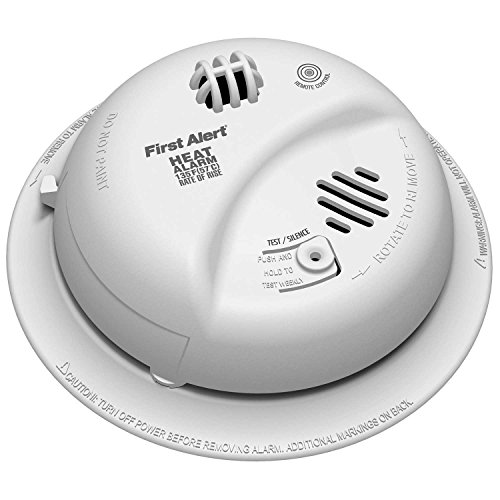
- Rate-of-rise technology detects rapid temperature increases
- Microprocessor control minimizes nuisance false alarms
- Remote test and mute via household remotes
- Hardwired setup backed by 9V battery
Cons
- Requires hardwired electrical installation
- Compatible remote control is sold separately
- Heat detector only, does not sense smoke
Pros
- Hardwired power with battery backup
- Ionization heat alarm format
- White finish
- 4.2 out of 5 rating
Cons
- Hardwired installation required
- CO sensing not specified

Pros
- Hardwire interconnectable with compatible alarm systems
- Fixed 135-degree thermal activation threshold
- Lightweight build at only 0.66 pounds
- Compact profile under six inches across
Cons
- Hardwired only, requires an existing electrical circuit
- Heat alarm only, lacks carbon monoxide detection

Pros
- 90dBA temporal-3 piezo horn
- 9V battery backup with low-battery indicator
- Interconnects with current Gentex alarm models
- Quick-disconnect wiring harness
Cons
- Requires 220V hardwired installation
- Heat alarm rather than smoke detector
Choose the right room for heat sensing
Heat alarms are intended for areas where smoke alarms may be unsuitable, such as a garage or a space affected by cooking fumes, dust, or exhaust. They respond to temperature conditions rather than the early smoke produced by many fires, so they should not replace smoke alarms throughout living areas and sleeping spaces. For more context, see what a heat alarm is.
Placement still matters. Keep the alarm where rising heat can reach it, follow the installation instructions for the selected model, and avoid treating a heat detector as a general-purpose alarm for every room. The article on smoke alarms in garages can help clarify why garages often need a different approach.
Before You Mount It: A heat alarm is not a substitute for smoke alarms in bedrooms, hallways, or other areas where early smoke warning is needed.
Compare sensing and alarm behavior
The First Alert BRK Hardwired Heat Alarm with Battery uses advanced rate-of-rise sensing, which watches for high temperatures and rapid temperature increases. Its microprocessor-controlled design is intended to reduce false alarms, while the 85-decibel alarm provides a loud local warning.
The Gentex HD135-223 uses a fixed 135°F temperature specification and a 90dBA temporal 3 piezo horn. The Kidde Hardwire Interconnectable 135-Degree Heat is also identified as a 135-degree heat alarm, while its listed product information emphasizes interconnection and official licensing. These distinctions matter more than appearance when you are matching an alarm to a specific room.
| Device type | Key sensing detail | Suitable concern |
|---|---|---|
| Rate-of-rise model | Rapid temperature changes | Nuisance-prone areas |
| 135-degree model | Fixed temperature point | Heat-only protection |
| Interconnectable model | Shared alarm wiring | Larger wired systems |
For broader category context, compare these choices with other smoke and heat detectors. A heat detector should complement, not remove, the smoke alarms your home needs.
Check wiring, backup power, and connections
All four choices are hardwired models, but their backup and connection details differ. The First Alert BRK Hardwired Heat Alarm with Battery includes a 9V battery backup and can be remotely tested and muted with almost any household remote control, sold separately. The Gentex model also lists a 9V backup, a low or missing battery indicator, quick-disconnect wiring, and mounting hardware that adapts to standard junction boxes.
Interconnection is especially important if you want several alarms to sound together. Gentex lists tandem interconnection with current Gentex alarm models, and the Kidde product is described as interconnectable. Confirm that the selected alarm matches the existing wiring and compatible alarm family before buying replacement units.
Pro Tip: Match the new alarm to your existing wiring, junction box, and interconnection system before removing the old unit.
Expert Examined
From Jenna Castellano

I keep seeing homeowners focus on the alarm face while overlooking the wiring relationship between units. The safer approach is to identify the existing alarm family and connection method first, then choose a compatible replacement.
Read more about Jenna CastellanoHardwired installation involves household electrical wiring, so use a qualified professional if you are not comfortable identifying circuits and connections. The National Fire Protection Association publishes fire-safety guidance that can help you plan the wider alarm arrangement.
Which alarm fits your room
I would point you to the First Alert BRK Hardwired Heat Alarm with Battery for a garage, workshop, or utility area where rapid temperature changes and nuisance alerts are concerns. Its rate-of-rise sensing, microprocessor control, 85-decibel alarm, and 9V backup give it a clear role when you want straightforward hardwired heat detection with remote testing and muting available through a household remote.
I would consider the Kidde Hardwire Interconnectable 135-Degree Heat when your priority is a 135-degree heat alarm that fits into a hardwired, interconnectable setup. Its listed details are limited, so I would verify compatibility with the alarms already installed before ordering. For a system that specifically needs a 9V backup, a low-battery indicator, quick-disconnect wiring, and tandem interconnection with current Gentex models, I would point you to the Gentex HD135-223 Heat Alarm.
The Bottom Line
The biggest mistake buyers make is installing a heat alarm where a smoke alarm is needed. Heat sensing is useful in rooms that can cause nuisance smoke alerts, but it does not provide the same type of early warning as a smoke alarm in living and sleeping areas.
If you do one thing first, identify the room, existing wiring, and interconnection family before choosing a model. Then select the sensing style and battery backup that fit that location, rather than choosing only by alarm appearance.
FAQs
Heat alarms can be more suitable for garages because they are intended for areas where smoke alarms may create nuisance alerts. They should not replace smoke alarms in bedrooms, hallways, or other living areas that require earlier smoke warning. Rate-of-rise sensing responds to high temperatures and rapid temperature increases. Fixed-temperature sensing is associated with a specified temperature point, such as the 135-degree specification listed for the Kidde and Gentex models. The First Alert BRK model and Gentex model list 9V battery backup, which provides backup power when household electricity is unavailable. Check the battery indicator or alarm instructions regularly and replace the battery as directed. No. Interconnection depends on compatible wiring and alarm families. The Gentex model lists tandem interconnection with current Gentex alarm models, while the Kidde product is described as interconnectable, so verify compatibility before installation. It identifies the fixed temperature detail listed for the alarm. It does not mean the unit is a smoke alarm or suitable for every room, so placement and the rest of your home’s smoke-alarm coverage still matter.Are heat alarms better than smoke alarms for garages?
What is the difference between rate-of-rise and fixed-temperature sensing?
Do hardwired heat alarms work during a power outage?
Can I connect a new heat alarm to any existing alarm system?
What does a 135-degree heat alarm specification mean?
Sources
- National Fire Protection Association, Fire safety guidance. www.nfpa.org
- US Fire Administration, Home fire safety information. www.usfa.fema.gov