
Choosing the best smart thermostats for large home means matching the control system to your HVAC wiring and the rooms that run hotter or colder. You need room sensing or zoning support if one hallway reading cannot represent the whole house.

Pros
- Supports 229+ AC brands and 8,000+ models
- Alexa and Google Home voice control
- Daily schedules and smart automation
- Built-in temperature and humidity sensor
Cons
- Requires Tuya Smart or Smart Life app
- Not a standalone AC or heat pump

Pros
- Works with 120V to 240V electric heating
- Humidity sensor and touchscreen
- Scheduling and geofencing support
- Apple Home, Alexa, and Google compatible
Cons
- Requires a neutral or second live wire
- Limited to electric baseboards and fan-forced heaters

Pros
- Built-in air quality sensor
- Controls compatible AC and mini splits
- Geofencing helps reduce wasted cooling
- Apple HomeKit, Google Home, Alexa support
Cons
- Requires a remote-controlled AC unit
- App and WiFi or Bluetooth setup required
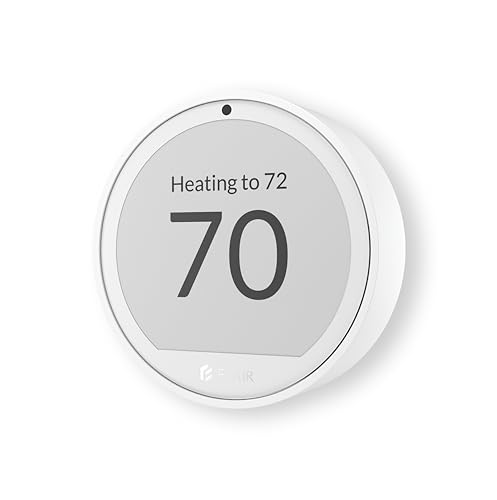
Pros
- Room-by-room temperature and humidity monitoring
- Works with 200+ mini split brands
- Up to 1-year battery life
- Alexa and Google Assistant support
Cons
- Flair Bridge required for central HVAC
- Smart Vents needed for airflow balancing

Pros
- Learns schedules and outdoor temperature effects
- Temperature Sensor included for hot and cold spots
- No C wire required in most homes
- Works with Google Home, Alexa, and Siri
Cons
- C wire may be needed in some homes
- System compatibility varies by heating setup

Pros
- Included SmartSensor manages hot and cold spots
- Built-in air quality monitor with alerts
- Energy STAR certified, saves up to 26%
- Siri, Alexa and Google Home support
Cons
- Smoke alerts require an ecobee security subscription
- Siri requires an Apple home hub
Start With the Heating and Cooling System
The largest split in this category is system type. The Mysa Smart Thermostat V2 for Electric Baseboard is built for 120V to 240V electric baseboards and electric fan-forced heaters, while the Google Nest Learning Thermostat (4th gen) is intended for most 24V systems such as gas, electric, oil, forced air, heat pump, and radiant setups.
For a window unit, portable AC, mini split, or compatible heat pump controlled by an infrared remote, the Smart Air Conditioner Controller and 3 Pack Sensibo Air PRO – Air Conditioner take a different approach. They add app-based control without replacing a conventional low-voltage wall thermostat.
Before ordering, identify the voltage, equipment type, and wiring at the existing thermostat. The smart thermostats category is useful for narrowing the format, but compatibility still belongs to the individual product.
Before You Mount It: A line-voltage thermostat is not interchangeable with a 24V HVAC thermostat. Shut off the correct circuit and confirm the system type before touching wiring; choose a qualified electrician if the wiring is unclear.
Room Sensors Matter in a Large Floor Plan
A large home can have a warm sunny room, a shaded bedroom, and a distant hallway all reporting different temperatures. The ecobee Smart Thermostat Premium – WiFi includes a SmartSensor that detects the room you are using, while the Google Nest Learning Thermostat (4th gen) includes a Nest Temperature Sensor (2nd gen) for choosing the temperature a room should reach at a particular time.
Flair Puck 2 Temperature Sensor & Thermostat takes a broader room-balancing approach. With Flair Smart Vents, it can monitor temperature and humidity in individual rooms and adjust airflow across a central HVAC system. It also controls compatible ductless and window systems, though central HVAC use requires a Flair Bridge sold separately.
Expert Examined
From Jenna Castellano

I keep the primary sensor away from kitchens, direct sunlight, supply registers, and exterior doors. The mistake I see is putting the only sensor in the most convenient hallway, then expecting bedrooms at the end of a long floor plan to stay comfortable.
Read more about Jenna Castellano| System type | Room coverage | Best placement |
|---|---|---|
| 24V central HVAC | One or more sensors | Main living area |
| Electric baseboard | Zone-level control | Each heated zone |
| Ductless or window AC | Remote room control | Served room |
For broader advice about connected home devices, the site’s HomeKit device coverage can help you think through platform compatibility before adding another brand.
Automation, Air Quality, and Remote Access
Large properties benefit from schedules and occupancy features because unused areas do not need the same temperature all day. The ecobee model can automatically adjust temperature based on occupancy, while Nest can learn how outdoor conditions affect indoor temperature and ask for permission before changing a schedule.
The Sensibo option adds geofencing, temperature and humidity monitoring, and an air quality sensor for remote-controlled AC or heat pump equipment. The Smart Air Conditioner Controller offers scheduling, group control, scenes, and voice commands through Alexa or Google Home, making it a practical choice for several compatible room units.
Platform support also affects daily convenience. Mysa supports Apple Home, Alexa, and Google, Flair works with Alexa and Google Assistant, and the Nest model supports Google Assistant, Alexa, Siri, and Matter integration. For general indoor-air context, the CDC provides public health information that can supplement, but not replace, the product’s built-in air-quality readings.
Pro Tip: Map the rooms that need independent comfort before buying extra sensors. A sensor is most useful when its reading can influence the thermostat or airflow serving that room.
Which Thermostat Fits Your Home
I would put the ecobee Smart Thermostat Premium – WiFi first on the shortlist for a large central-HVAC home with noticeable hot and cold spots. Its included SmartSensor focuses comfort on occupied rooms, and the Power Extender Kit supports many homes without a C-wire. The built-in air-quality monitor is also useful if you want alerts and filter reminders in the same wall device.
I would point you to the Google Nest Learning Thermostat (4th gen) when you want a broad 24V compatibility range, a larger display, and a room sensor included in the package. Its permission-based schedule changes and outdoor-condition learning suit households that want automation without giving up control.
For a home heated by electric baseboards, I would choose the Mysa Smart Thermostat V2 for Electric Baseboard instead of a conventional 24V model. It supports 120V to 240V systems, offers scheduling and geofencing, and can be adjusted from an Android or iOS device, provided the required neutral or second live wire is present.
The Bottom Line
The mistake most large-home buyers make is treating every smart thermostat as a universal replacement. Voltage, HVAC format, remote-control compatibility, sensor placement, and bridge requirements determine whether the device can actually manage the rooms you care about.
If you only do one thing first, photograph or document the existing thermostat wiring and identify every heating and cooling zone. Then choose a model whose system type and room-sensing method match that information, rather than choosing by display or voice-assistant support alone.
FAQs
Choose a 24V model with room sensors for central HVAC, a line-voltage model for electric baseboards, or an infrared controller for compatible window, portable, or mini split units. The right type depends on the equipment already installed. Place sensors in representative living or sleeping areas, away from direct sunlight, exterior doors, kitchens, and supply registers. In a large home, use the rooms whose comfort matters most during the schedule you create. Power requirements vary by system. Nest often works without a C-wire on compatible homes, ecobee includes a Power Extender Kit for homes without one, Flair Puck 2 is battery-powered, and Mysa requires the specified line-voltage wiring. Matter is a smart-home connectivity standard that can simplify integration across supported platforms. It does not make an incompatible HVAC system compatible, so you still need to verify the thermostat’s equipment requirements first.Which smart thermostat type suits a large home?
Where should smart temperature sensors be placed?
Do smart thermostats need constant power?
What does Matter compatibility mean for a thermostat?
Sources
- U.S. Department of Energy, Home Heating and Cooling www.energy.gov
- Environmental Protection Agency, ENERGY STAR www.energystar.gov