
Shopping for the best smart thermostats for home starts with identifying the system the thermostat must control, not comparing screens or apps. The decisive split is line-voltage electric heat, ductless AC, or conventional 24V HVAC, so your choice should match the equipment and the rooms you want to manage.

Pros
- Supports 229+ AC brands and 8,000+ models
- Alexa and Google Home voice control
- Daily schedules and smart automation
- Built-in temperature and humidity sensor
Cons
- Requires Tuya Smart or Smart Life app
- Not a standalone AC or heat pump

Pros
- Works with 120V to 240V electric heating
- Humidity sensor and touchscreen
- Scheduling and geofencing support
- Apple Home, Alexa, and Google compatible
Cons
- Requires a neutral or second live wire
- Limited to electric baseboards and fan-forced heaters
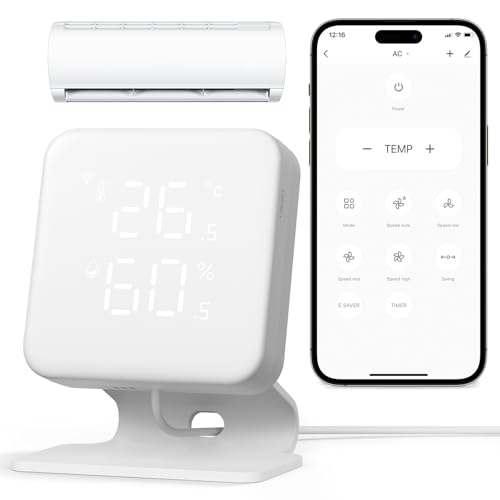
Pros
- Works with 300+ AC brands
- Built-in temperature and humidity display
- Alexa and Google Home control
- 7-day schedules and geofencing
Cons
- 2.4GHz WiFi only, no 5GHz
- Requires IR line of sight

Pros
- 4.3-inch customizable touchscreen display
- Occupancy and presence detection
- Humidity monitoring for indoor air quality
- ENERGY STAR certified with smart-home compatibility
Cons
- C-wire required, adapter voucher included
- Not compatible with 120-240V electric baseboard heat

Pros
- Learns schedules and outdoor temperature effects
- Temperature Sensor included for hot and cold spots
- No C wire required in most homes
- Works with Google Home, Alexa, and Siri
Cons
- C wire may be needed in some homes
- System compatibility varies by heating setup

Pros
- Included SmartSensor manages hot and cold spots
- Built-in air quality monitor with alerts
- Energy STAR certified, saves up to 26%
- Siri, Alexa and Google Home support
Cons
- Smoke alerts require an ecobee security subscription
- Siri requires an Apple home hub
Match the thermostat to your system
Electric baseboards and electric fan-forced heaters need a different class of control from central HVAC. The smart thermostat category includes both types, but compatibility is not interchangeable. Mysa Smart Thermostat V2 for Electric Baseboard is designed for 120V to 240V systems and requires one neutral or a second live wire.
Ductless, window, and portable AC units are another distinct group. Smart Air Conditioner Controller works through infrared signals across many listed AC and heat-pump models, while WOOX Smart AC Controller is also limited to IR-controlled ductless equipment and requires line of sight to the AC receiver.
Before You Wire It:
Compare control style and room sensing
Remote access is common across these products, but the sensing approach differs. WOOX Smart AC Controller shows temperature and humidity on its LED display and supports rules based on both readings. Smart Air Conditioner Controller also includes temperature and humidity monitoring through its app.
For whole-home HVAC, room awareness may matter more than a built-in display. ecobee Smart Thermostat Premium – WiFi includes a SmartSensor for room-by-room comfort, while Google Nest Learning Thermostat (4th gen) includes a Nest Temperature Sensor (2nd gen) and lets you set the temperature a selected room should reach at a particular time.
| Device type | Key distinction | Best placement |
|---|---|---|
| Line-voltage thermostat | 120V to 240V heat | Electric baseboard rooms |
| IR AC controller | Remote signal control | Ductless or window AC |
| 24V HVAC thermostat | Central system support | Forced-air homes |
Occupancy features add another layer. Honeywell Home X7S Smart Wi-Fi Programmable can adjust settings for presence and occupancy when Auto Away is enabled, and the Nest can learn how outdoor conditions affect indoor temperature before pausing heating or cooling.
Check installation and connectivity details
Installation requirements can eliminate an otherwise appealing model. Honeywell Home X7S Smart Wi-Fi Programmable requires a C-wire, although a C-wire adapter voucher is included if your existing system lacks one. ecobee Smart Thermostat Premium – WiFi includes a Power Extender Kit for homes without a C-wire.
Google Nest Learning Thermostat (4th gen) works with most 24V systems and generally does not require a C-wire, but checking compatibility remains sensible. WOOX requires 2.4GHz WiFi, whereas Honeywell supports both 2.4GHz and 5.0GHz networks.
Pro Tip: Write down your HVAC type, wire labels, and whether the equipment uses a handheld remote before ordering. That short inventory prevents choosing an IR controller for central HVAC or a line-voltage model for a low-voltage system.
Expert Examined
From Jenna Castellano

Smart-home compatibility also varies. Mysa, Honeywell, ecobee, and Nest list support for major voice or smart-home platforms in their product details, while the two AC controllers use Alexa and Google Home. For broader device interoperability, Honeywell and Nest are described as Matter compatible. You can also review related smart energy and climate control topics before deciding how the thermostat fits with other devices.
Which thermostat fits your rooms
I would point you to Mysa Smart Thermostat V2 for Electric Baseboard if your home relies on 120V to 240V electric baseboards or electric fan-forced heaters. Its scheduling, geofencing, humidity sensor, touchscreen, and phone control make it the clearest match for that specific heating setup, provided the required neutral or second live wire is available.
For a window, portable, or mini-split system, I would choose between WOOX Smart AC Controller and Smart Air Conditioner Controller based on compatibility and sensing needs. WOOX adds a seven-day schedule, geofencing, humidity rules, and IR learning, while Smart Air Conditioner Controller emphasizes broad model coverage, app control, and grouped smart scenes.
For conventional central HVAC, I would narrow the decision to ecobee, Nest, or Honeywell after checking system compatibility. ecobee is the strongest fit when a supplied room sensor and air-quality monitoring matter, Nest suits households wanting a learning thermostat with a room sensor, and Honeywell is appealing when a customizable display, presence detection, Matter, and ENERGY STAR certification are priorities.
The Bottom Line
The single mistake most buyers make is treating every smart thermostat as a universal replacement. Line-voltage heat, IR-controlled AC, and 24V HVAC use different control methods, so an attractive app cannot make an incompatible device work.
If you only do one thing first, identify the equipment type and wiring or remote-control method. Then verify the product’s stated compatibility before weighing sensors, schedules, geofencing, voice control, or display design.
FAQs
Electric baseboards and electric fan-forced heaters need a line-voltage model such as Mysa. Window, portable, and mini-split systems need an IR controller, while conventional forced-air, heat-pump, and radiant systems generally need a compatible 24V thermostat. Place an additional room sensor in the room whose comfort matters most, away from direct sunlight, drafts, and heat sources. ecobee and Nest use included room sensors to help manage hot or cold spots, but the supported control behavior differs by model. Some do and some do not. Honeywell Home X7S requires a C-wire, with an adapter voucher included for eligible homes, while ecobee includes a Power Extender Kit and Nest generally does not require a C-wire for most compatible systems. ENERGY STAR certification indicates that the qualifying thermostat meets the program’s efficiency requirements. It does not override system compatibility, wiring requirements, or the manufacturer’s installation conditions.Which type of smart thermostat does my home need?
Where should a temperature sensor go?
Do smart thermostats need a C-wire?
What does ENERGY STAR certification mean here?
Sources
- US Environmental Protection Agency, ENERGY STAR program. www.energystar.gov
- UL Solutions, product safety standards organization. www.ul.com