
Choosing the best smart locks for interior doors means matching the entry method to the room, not simply choosing the most connected model. The key split is between direct Wi-Fi control and local Bluetooth access, especially for bedrooms, offices, and shared spaces.

Pros
- Fingerprint handle recognition for keyless entry
- Built-in Wi-Fi with remote app control
- Real-time notifications and event history
- 15-minute installation with no drilling
- Works with left- and right-hand doors
Cons
- Requires eight AA batteries
- IP53 protection limits outdoor exposure

Pros
- Fingerprint handle opens in 0.3 seconds
- Five entry methods, including app and key
- Built-in 2.4GHz Wi-Fi, no hub required
- Up to 100 PIN codes with access logs
Cons
- Requires eight AA alkaline batteries
- Requires specific door hole and clearance
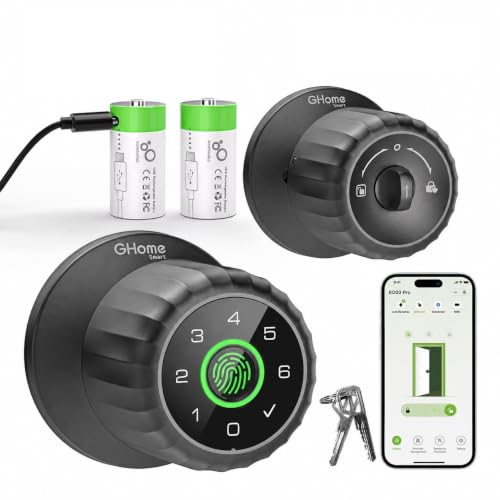
Pros
- 0.2-second fingerprint recognition
- Four entry methods, including backup keys
- Two removable 700mAh rechargeable batteries
- Local fingerprint storage for added privacy
Cons
- Remote access requires separate GHome Gateway
- App control works within Bluetooth range

Pros
- Fingerprint, keypad, NFC, and mechanical key access
- Remote temporary and permanent passcode management
- Entry logs and silent mode in app
- Installs without drilling or wiring
Cons
- Gateway required for Wi-Fi and voice control
- Admin fingerprint setup required before first use

Pros
- Five entry methods for family and guests
- App access records and remote code sharing
- DIY installation with no drilling or wiring
- Works with Alexa and Google via gateway
Cons
- No fingerprint entry
- Voice control requires a separate gateway
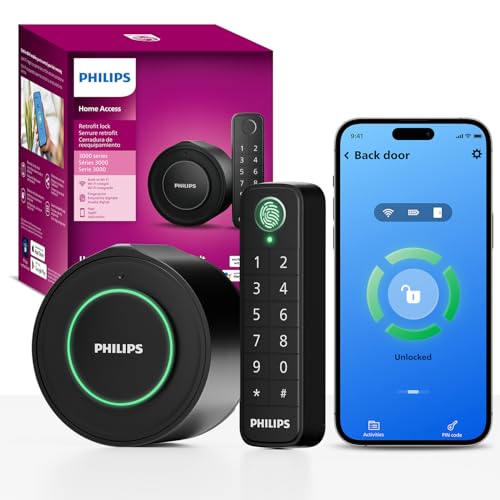
Pros
- Keeps original exterior hardware and keys
- Wireless fingerprint and passcode keypad
- Built-in WiFi, no extra hub required
- Remote app control and access history
Cons
- Requires a 2.4GHz WiFi network
- Keypad must sit within 39 inches
Match the Lock to the Room
Bedrooms and home offices usually benefit from a door knob or handle with fingerprint access, because you can enter without carrying a key or remembering a code. A keypad is more practical for children, guests, cleaners, or roommates who need separate access credentials.
Interior doors also have different hardware needs from exterior entry doors. Before ordering, check door thickness, backset, hole size, and the space between the existing latch and handle. The Philips Upgraded Wi-Fi Smart Lock with Handle requires a 2-1/8-inch hole and specific clearance, while the GHome Smart Fingerprint Door Knob with Keypad fits doors from 1-3/8 to 2-1/8 inches thick.
Pro Tip: Measure the door and confirm that the latch closes smoothly before removing existing hardware.
A retrofit design can preserve the exterior appearance of a door. The Philips WiFi Smart Retrofit Lock replaces only the inside portion of an existing deadbolt, keeps the original exterior hardware, and lets you continue using existing keys.
Fingerprint, Keypad, or Existing Deadbolt
Fingerprint access is fast for regular household members, while keypad codes are easier to share and replace. The eufy Security Smart Lock C33 combines a fingerprint handle with built-in Wi-Fi, app access, notifications, and event history. The Philips handle model adds voice control, physical-key backup, scheduled codes, and up to 100 passcodes.
If preserving the current deadbolt matters, the Philips retrofit model is the more natural fit. Its wireless keypad can be placed within 39 inches of the door, allowing fingerprint or passcode entry without replacing the outside cylinder.
| Access type | Connection | Best placement |
|---|---|---|
| Fingerprint handle | Wi-Fi or Bluetooth | Private rooms |
| Keypad handle | App or gateway | Shared rooms |
| Retrofit deadbolt | Built-in Wi-Fi | Existing deadbolts |
The GHome Smart Fingerprint Door Knob with Keypad uses Bluetooth for everyday app control. Remote access and voice assistants require a separate GHome Gateway, so it suits a room where nearby phone control is enough.
Set the Administrator First: The Evanshow lock allows any fingerprint to open it until an administrator fingerprint is registered. Complete that setup before placing the lock into regular household use.
Power, Backup Entry, and Remote Access
Battery format affects maintenance. The eufy and Philips handle models use eight AA batteries, while the Philips retrofit model uses two included CR123 batteries with stated battery life of up to four months under typical use. The GHome model uses removable rechargeable batteries, and a spare can remain charged while the other is installed.
Emergency access still matters on an interior door, particularly if the room contains valuables or someone may close the door behind them. GHome provides mechanical keys, low-battery alerts, and emergency USB-C power. Evanshow provides emergency power through a power bank, but its USB port does not charge the internal batteries.
Expert Examined
From Dana Whitfield

I keep backup entry details where household members can reach them without leaving a key in the door. The mistake I see most often is assuming a gateway or emergency port supplies every smart feature, so check the connection and battery limits before installation.
Read more about Dana WhitfieldFor security terminology and hardware context, the strike plate explanation is useful because a smart lock still depends on the door and frame lining up correctly. For broader device safety information, consult UL Solutions.
Which Lock Fits Your Interior Door
I would put the eufy Security Smart Lock C33 on a bedroom, basement, garage, or office door where direct Wi-Fi access matters. Its fingerprint handle, app management, event history, notifications, and left-or-right door compatibility make it a sensible choice for households wanting remote control without a separate gateway.
I would point families and rental-property owners toward the Philips Upgraded Wi-Fi Smart Lock with Handle when many people need separate credentials. It supports fingerprint entry, voice control, scheduled and temporary codes, physical-key backup, and up to 100 passcodes, but you must verify the required door measurements first.
For a simpler indoor setup, I would choose the GHome Smart Fingerprint Door Knob with Keypad when Bluetooth control is sufficient. Its removable batteries, local fingerprint storage, emergency USB-C power, and backup keys suit a bedroom or home office, while the optional gateway remains available for remote access later.
The Bottom Line
The mistake most buyers make is treating every interior door as if it accepts the same hardware. Door thickness, backset, hole size, existing deadbolt design, and gateway requirements can matter more than the number of entry methods.
If you do one thing first, measure the door and decide whether you need remote access. Then choose between a Wi-Fi model, a Bluetooth knob, or a retrofit lock that preserves the hardware already on the door.
FAQs
Fingerprint locks are convenient for regular household members because they do not require a code. Keypad locks are easier to share with guests, children, cleaners, or roommates, so the better choice depends on who needs access and how often permissions change. No. Check door thickness, backset, hole size, latch alignment, and clearance before ordering. Retrofit models also require a compatible existing deadbolt, while some knobs and handles fit a broader range of interior doors. Not always. Bluetooth models can manage basic functions nearby without a gateway, while built-in Wi-Fi models provide remote app control directly. Some Bluetooth locks need a separately sold gateway for remote access or voice assistants. Backup options vary by model. Mechanical keys, emergency USB or power-bank input, low-battery alerts, and removable rechargeable batteries can help prevent lockouts, but you should confirm which option your chosen lock provides. An IP rating describes protection against dust and water exposure under defined conditions. It does not certify that a lock is suitable for every exterior location, so consider the door position and the model’s stated intended use.Are fingerprint locks better than keypad locks for bedrooms?
Can I install a smart lock on any interior door?
Do interior smart locks need Wi-Fi?
What happens when the batteries run out?
What does IP53 or IP54 mean on a smart lock?
Sources
- UL Solutions www.ul.com
- US Consumer Product Safety Commission www.cpsc.gov