
Choosing among the best smart locks for Apple HomeKit is mainly a question of how you want to enter: tap with Home Key, use a fingerprint, or approach with hands-free UWB. This selection is for homeowners who already use Apple devices and want a deadbolt that fits their door, battery routine, and hub setup.

Pros
- Six entry methods, including fingerprint recognition
- Apple Home Key via iPhone or Apple Watch
- Thread support for Apple Home connectivity
- Stores up to 100 fingerprints and passcodes
Cons
- Remote access requires a Thread-enabled hub nearby
- Uses eight AA alkaline batteries

Pros
- Multiple entry methods, including fingerprint and passcode
- Matter over Thread supports multiple ecosystems
- Rechargeable battery lasts up to six months
- BHMA-certified with IP65 outdoor protection
Cons
- UWB requires specific Apple devices and a Thread hub
- NFC cards sold separately
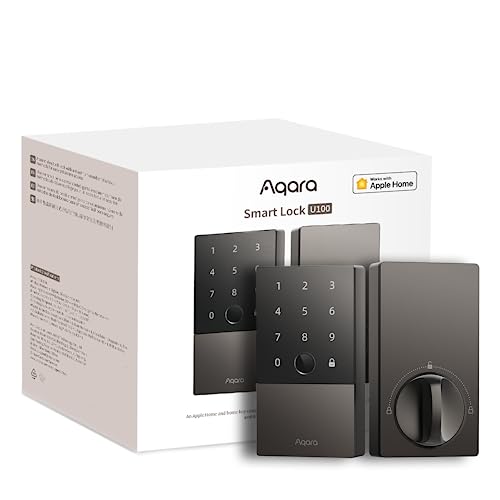
Pros
- Apple Home Key with iPhone and Apple Watch
- Fingerprint reader stores up to 50 prints
- Four AA batteries last up to 8 months
- IP65 zinc-alloy body, emergency USB-C charging
Cons
- Aqara Zigbee hub required for remote passwords
- NFC card sold separately

Pros
- Fingerprint access, up to 50 stored fingerprints
- Built-in Wi-Fi, no hub for app control
- 18-month battery life
- ANSI BHMA certified zinc alloy
Cons
- 2.4 GHz Wi-Fi only
- Matter requires a compatible Thread hub

Pros
- Door sensor supports auto-locking and open-door alerts
- Apple Home Key and Android NFC support
- BHMA Grade 1 certified zinc alloy construction
- IP65 weather resistance for year-round use
Cons
- 2.4 GHz Wi-Fi only
- Requires eight AA batteries

Pros
- Apple Home Key and Thread support
- Fingerprint, keypad, app, and key entry
- Up to 100 fingerprints and passcodes
- IP65 weatherproof construction
Cons
- Remote access requires a nearby Apple hub
- Uses eight AA alkaline batteries
Home Key Is Only One Part of the Decision
Apple Home Key lets you tap a compatible iPhone or Apple Watch at the lock, and several options here also support entry when the device is out of power. That convenience does not remove the need for a backup method. Fingerprint readers, passcodes, apps, NFC cards, and physical keys vary by model, so choose the combination that matches your household.
Thread is important for Apple Home control, but remote access depends on the right hub. ThorBolt requires a Thread-enabled Apple home hub within 33 feet of the X1, while Aqara’s U400 requires a Thread-enabled Apple Home hub for UWB entry. The ULTRALOQ Bolt NFC uses 2.4 GHz Wi-Fi for remote control without a bridge, although Apple Home automations still rely on a compatible home hub.
Pro Tip: Confirm your Apple home hub and its location before removing the existing deadbolt.
Match Entry Methods to Daily Routines
Fingerprint access suits families, guests, and anyone who does not want to carry a phone. The ThorBolt X1 models store up to 100 fingerprints, while the Aqara U100, U400, and ULTRALOQ Bolt SE store up to 50. The U400 adds UWB, which can recognize an approaching supported iPhone or Apple Watch without a tap.
Hands-free entry has the strictest device requirements. Aqara specifies supported iPhone and Apple Watch generations, operating systems, and a Thread-enabled Apple Home hub for UWB. If your household uses Android as well as Apple devices, the ULTRALOQ Bolt NFC adds Android NFC tap entry, while the U400 supports multiple smart-home ecosystems through Matter over Thread.
| Entry style | Key requirement | Best fit |
|---|---|---|
| Home Key tap | Apple device and hub | Apple-focused homes |
| Fingerprint | Stored user print | Families and guests |
| UWB approach | Supported device and hub | Hands-full arrivals |
Before You Mount It: A smart deadbolt does not correct a misaligned door. Check that the existing latch moves freely and that the door closes fully before relying on auto-lock.
Battery Format and Exterior Conditions Matter
Battery design changes the maintenance routine. ThorBolt’s X1 models use eight AA alkaline batteries and are specified for up to one year, the ULTRALOQ Bolt NFC uses eight AA batteries for up to one year, and the ULTRALOQ Bolt SE is specified for up to 18 months. Aqara’s U100 uses four AA batteries for up to eight months.
The Aqara U400 uses a removable rechargeable lithium battery rated for up to six months per charge, with USB-C charging and a low-battery voice alert. That is convenient if you prefer rechargeable power, but it creates a different maintenance habit than keeping spare AA batteries available.
All six products have IP65-rated exterior protection or weather-resistant construction described for outdoor doors. The Aqara U400 is BHMA-certified, the ULTRALOQ Bolt NFC is BHMA Grade 1, and the other models list their own durability or weather specifications. For background on the hardware behind a deadbolt, see what a strike plate does.
Expert Examined
From Ray Okafor

I keep the emergency entry method in mind before any smart lock is installed. The mistake I see is treating a phone-only setup as sufficient, so I prefer a physical key or local passcode that remains available during a dead phone or network problem.
Read more about Ray OkaforWhich Lock Fits Your Household
I would point Apple-first households seeking a lower-cost combination of Home Key, Thread, fingerprint entry, and long AA battery life to the ThorBolt X1 Smart HomeKit Keyless Entry. It supports up to 100 fingerprints and 100 passcodes, while its dimensions cover common US and Canadian deadbolt configurations.
I would choose the Aqara UWB Smart Lock U400, Apple Home Key for a household with supported newer Apple devices that values hands-free approach entry. Its rechargeable battery, BHMA certification, IP65 exterior, and rekeyable cylinder add useful flexibility, but the required hub and device compatibility should be confirmed first.
I would put the ULTRALOQ Bolt NFC Smart WiFi Deadbolt Lock on a mixed-device door or rental property where Android NFC, Apple Home Key, remote sharing, and a door sensor all matter. For a simpler Apple Home setup with fingerprint access and AA batteries, the Aqara Smart Lock U100, Apple Home Key is another sensible fit, provided you account for its Aqara hub requirement for some remote features.
Before choosing any model, review common smart lock security concerns and decide which access method you will use if your phone is unavailable.
The Bottom Line
The biggest mistake Apple HomeKit buyers make is treating Home Key support as proof that every feature works without a hub. Remote access, Thread control, UWB entry, and shared access can have separate requirements, so check those details against your Apple devices and home network.
If you only do one thing first, measure your existing deadbolt and confirm the hub requirement. A lock with the right entry features is still the wrong purchase if its latch, door thickness, battery plan, or Apple hardware support does not fit your door.
FAQs
Fingerprint entry is useful for family members, guests, and situations where carrying a phone is inconvenient. Apple Home Key is simpler for compatible iPhone and Apple Watch users, but a fingerprint reader or physical key gives you another local entry method. Some local Home Key functions can work through the lock and Apple device, but remote access and certain advanced features require a compatible hub. Thread-based models specifically identify a Thread-enabled Apple home hub for remote control or UWB operation. Battery life depends on the model and power format. The products listed use either AA batteries or a rechargeable lithium battery, with stated periods ranging from about six months to 18 months, so monitor alerts and keep the appropriate replacement or charging plan ready. BHMA certification indicates that the lock has been evaluated against applicable performance requirements for areas such as strength, durability, and operation. It is a useful security specification, but it does not replace checking door alignment, installation fit, and the lock’s electronic requirements. Local methods such as a physical key, passcode, fingerprint, or Home Key may remain available depending on the product and device state. Remote control and notifications depend on network and hub conditions, so keep a local backup entry method available.Is fingerprint entry better than Apple Home Key?
Do Apple HomeKit smart locks need a home hub?
How often do smart lock batteries need attention?
What does BHMA certification mean for a smart lock?
Can a smart lock work during a power or internet outage?
Sources
- UL Solutions and residential door lock standards. www.ul.com
- U.S. Consumer Product Safety Commission and home safety. www.cpsc.gov