

Shopping for the best affordable smart locks means deciding whether simple keypad access is enough or whether you need fingerprints, remote control, and voice commands. Renters, families, and property managers each face different installation and access needs.

Pros
- Fingerprint access in under one second
- Built-in Wi-Fi, no bridge required
- Up to eight months with eight AA batteries
- BHMA Grade 3 certification
Cons
- Requires eight AA batteries
- IP53 protection, not fully waterproof

Pros
- 20 user codes plus one-time guest PIN
- Auto-lock adjustable from 10 to 99 seconds
- One-touch locking from the keypad
- IP54 weather resistance and low-battery alert
Cons
- Requires four AA batteries, not included
- Only fits 2 1/8-inch door holes

Pros
- Fingerprint recognition with self-learning AI chip
- Eight entry methods for flexible access
- Remote user permissions and activity logs
- USB-C emergency port and low-battery alerts
Cons
- G1 Gateway required for remote access
- Four AA batteries not included

Pros
- Fingerprint, app, passcode, key fob, and key access
- 10-minute screwdriver installation
- Temporary and one-time passcode management
- Reversible handle for left- or right-handed doors
Cons
- Remote control needs a separately sold WiFi gateway
- App required for remote code management

Pros
- Fingerprint, passcode, app, key, and voice entry
- Built-in Wi-Fi, no extra hub needed
- Up to 100 custom passcodes
- Auto-lock adjustable from 10 to 180 seconds
Cons
- Batteries not included
- Supports 2.4GHz Wi-Fi only
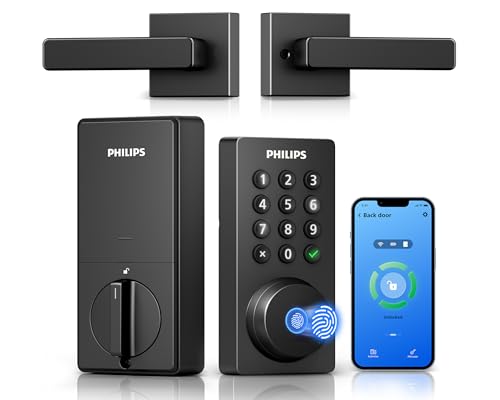
Pros
- Built-in WiFi, no hub required
- Fingerprint entry in 0.3 seconds
- One-time and recurring PIN codes
- Matching handle set included
Cons
- Requires 2.4GHz WiFi within 33 feet
- Batteries not included, alkaline only
Start With the Access Method
A keypad deadbolt is often the clearest choice for households that want to leave keys behind without depending on an app. The TEEHO TE001 supports family codes, a single-use guest code, anti-peeping entry, one-touch locking, and an automatic lock timer. It also uses four AA batteries and provides a low-battery light.
Fingerprint models reduce the need to remember a code. The eufy Security Smart Lock C220 adds built-in Wi-Fi, app access, physical-key backup, Apple Watch access, and Alexa or Google Voice Assistant support. The Veise VE017 adds detailed user permissions, entry logs, temporary codes, and local AES128-encrypted access data.
Pro Tip: Choose at least one access method that still works if your phone, Wi-Fi network, or app is unavailable.
Connectivity Changes the Daily Routine
Built-in Wi-Fi lets you manage the lock away from home without buying a bridge. The eufy Security Smart Lock C220 offers remote app control with no bridge required, while the Philips Wi-Fi Smart Deadbolt Lock also works directly over Wi-Fi and supports remote codes, alerts, and voice control.
Bluetooth-first designs can still be practical, especially when you are nearby. The Smart Door Handle Lock with Keypad combines fingerprint, app, passcode, key fob, mechanical-key, and voice options, but remote control and Alexa access require a separately sold Wi-Fi gateway. Check what a smart lock bridge does before assuming every app feature works from anywhere.
| Access style | Main distinction | Best placement |
|---|---|---|
| Keypad deadbolt | Codes and key backup | Family entry doors |
| Fingerprint lock | Touch access | Busy household doors |
| Wi-Fi lock | Remote app control | Rentals and travel |
Fit, Power, and Door Hardware
Measure the existing bore and check whether the product replaces only a deadbolt or the entire handle. The TEEHO TE001 fits 2-1/8-inch door holes and does not fit 38mm holes, while the Yamiry handle design replaces a handle, knob, or deadbolt on many standard American wooden doors without additional drilling.
Battery claims vary with use, and batteries are not included with several models. The C220 uses eight AA batteries for around eight months, the Veise VE017 uses four AA batteries for about twelve months, and the Philips WiFi Keypad Deadbolt with Handle provides up to six months. Keep the mechanical key accessible, and note where the emergency USB-C port or low-battery alert applies.
Before You Mount It: Do not skip the door-direction reset, alignment check, or compatibility measurements. A motorized deadbolt can drain power or fail to throw fully if the bolt rubs against the strike plate.
I keep a spare mechanical key in a controlled location rather than placing it beside the door. The mistake I see is treating app access as a substitute for checking the physical bolt, batteries, and strike alignment.
For broader door protection, review why the strike plate matters. A smart lock cannot compensate for loose mounting hardware or a door that does not close squarely.
Which Lock Fits Your Household
I would point families wanting broad access flexibility to the eufy Security Smart Lock C220. Its fingerprint, keypad, physical key, app, watch, and voice options reduce the chance that one person is stranded without the preferred entry method, and built-in Wi-Fi avoids a separate bridge.
I would choose the TEEHO TE001 for a straightforward family or rental door where codes matter more than remote control. Its one-time guest PIN, twenty access codes, auto-lock setting, long stated battery life, and two backup keys keep the setup focused. For a property manager who needs app-based permissions and activity records, I would consider the Veise VE017 Fingerprint Smart Door Lock with App, especially with its temporary, recurring, and permanent code options.
If your project includes a full handle replacement, the Philips WiFi Keypad Deadbolt with Handle is the more appropriate format. It includes the matching handle set, supports remote app management, and offers fingerprint entry, flexible PIN types, and auto-lock settings.
The Bottom Line
The most common mistake is buying based on the number of entry methods while overlooking door compatibility and the network required for remote features. A lock can advertise app control yet still need a gateway, a 2.4GHz network, or a specific distance from the router.
First, measure your door hole, backset, existing hardware, and strike alignment. Then decide whether you need local keypad or fingerprint entry only, or whether remote access and activity history justify a Wi-Fi model.
FAQs
Fingerprint locks are convenient for people who frequently enter with full hands, while keypad locks make guest access simple without storing fingerprints. A keypad and physical key backup can also be preferable if you want fewer electronic access methods. No. Confirm the bore size, door thickness, backset, handing, and whether the product replaces a deadbolt or a full handle set. The TEEHO TE001, for example, specifies a 2-1/8-inch door hole. Battery life depends on usage and the model. The listed products range from about six months to about twelve months under stated conditions, and some provide low-battery alerts. Keep the required AA batteries available and retain a physical-key backup. BHMA Grade 3 is a residential performance classification. The eufy Security Smart Lock C220 is listed as BHMA Grade 3 certified and described as having passed more than 100,000 lock and unlock cycles, but the rating does not replace correct installation.Are fingerprint locks better than keypad locks?
Can a smart lock fit any front door?
How often do smart lock batteries need changing?
What does BHMA Grade 3 mean on a smart lock?
Sources
- Builders Hardware Manufacturers Association and ANSI/BHMA standards. www.buildershardware.com
- UL Solutions and residential security standards. www.ul.com