
Shoppers comparing the best doorbell cameras with long battery life should focus first on battery format and daily motion activity, not resolution alone. This selection suits renters and homeowners who want fewer charging interruptions without giving up useful visitor alerts.

Pros
- 2K HD video with 166-degree wide view
- No subscription for alerts and playback
- HDR night vision up to 10 meters
- MicroSD storage support up to 128GB
Cons
- 2.4 GHz Wi-Fi only
- Built-in battery is non-removable

Pros
- Head-to-Toe 2K video resolution
- Three AA lithium batteries included
- Two-way audio with noise cancellation
- IP65 weather-resistant design
Cons
- Person detection requires a separate subscription
- Three AA batteries eventually need replacement

Pros
- Retinal 2K video with wide-angle coverage
- Up to 6x Enhanced Zoom
- Live View and Two-Way Talk
- Real-time phone motion notifications
Cons
- USB-C charging cable not included
- Ring Protect subscription sold separately

Pros
- 2K video with 165° head-to-toe view
- Color night vision for dark entrances
- 4.3-inch monitor with quick response button
- Free 4GB SD card, no subscription
Cons
- Indoor monitor requires a power cable
- Best connection within 5 metres

Pros
- 2K video with color night vision
- 150-degree wide-angle view
- Battery or wired installation
- Motion detection with real-time alerts
Cons
- AI alerts require a separate monitoring plan
- Battery must be removed for USB-C charging
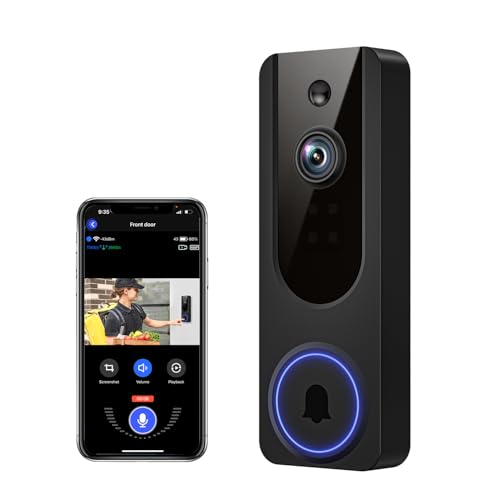
Pros
- AI human detection filters unnecessary motion alerts
- 1080p video with four-LED night vision
- Two-way audio from a smartphone
- Encrypted cloud storage with AES-128
Cons
- 2.4GHz WiFi only
- Cloud subscription required for recording storage
Battery claims need a real-world context
A published runtime is only a reference point because frequent motion events, longer recordings, and a busy walkway consume more power. BOIFUN states up to 60 days under laboratory conditions with 30 daily motion activations and 10-second recordings, while Blink describes months of power from three AA Energizer lithium batteries.
Battery format also changes maintenance. The BOIFUN unit has a built-in rechargeable battery, Blink uses replaceable AA lithium batteries, and Ring, SwitchBot, and CHAMBERLAIN use rechargeable designs or removable units described in their product details.
Pro Tip: Choose motion zones carefully if the door faces a sidewalk, road, or constantly moving plants. Fewer unnecessary alerts can extend the useful time between charges.
Match the view to your entryway
Wide coverage helps when visitors stand close to the frame or packages sit below the camera. BOIFUN offers a 166° field of view, SwitchBot provides a 165° angle with a head-to-toe format, and CHAMBERLAIN uses a 150° wide-angle lens.
Resolution and night visibility are separate considerations. Several options provide 2K video, while BOIFUN specifies HDR night vision up to 10 meters and SwitchBot lists color night vision, so compare the lighting conditions around your entrance before choosing.
| Power format | Key battery detail | Useful placement |
|---|---|---|
| Rechargeable | Charge at intervals | Accessible front door |
| AA lithium | Three replaceable cells | Easy maintenance access |
| Monitor-linked | 5000 mAh battery | Nearby indoor screen |
For a doorbell mounted at an awkward angle, placement affects faces and parcels as much as the camera specification. These doorbell angling instructions can help you avoid aiming too high or leaving the delivery area outside the frame.
Storage, alerts, and household access
No-subscription operation is not identical across the models. BOIFUN provides essential alerts, human detection, two-way audio, and playback without a subscription, with microSD support up to 128GB. SwitchBot includes a 4GB SD card and supports cards up to 512GB, while VanaOrbi keeps core alerts, human detection, and two-way audio available without cloud service.
Other features may require a paid plan. Blink identifies its person detection as requiring a compatible subscription, and CHAMBERLAIN says AI alerts for recognized or unknown people are available with a Video Monitoring Plan. Ring also places additional history and AI alert features behind a compatible Ring Protect subscription.
Before You Mount It: A rechargeable doorbell still needs a practical removal and charging routine. Confirm that the mounting position lets you detach the unit safely, and do not assume a wired connection or indoor chime is included unless the product details say so.
SwitchBot is the unusual choice for households that want an indoor display, but its monitor needs a power cable and works best within five meters of the exterior doorbell. If your wireless unit disconnects, review these common doorbell connection causes before moving the camera.
Expert Examined
From Dana Whitfield

I keep seeing battery doorbells placed where a porch light, busy walkway, or passing cars trigger constant activity. The better approach is to narrow detection areas and make sure the charging point remains reachable before finalizing the mount.
Read more about Dana WhitfieldWhich doorbell fits your household
I would put the BOIFUN Video Doorbell Camera on a porch where broad coverage, local storage, and subscription-free essentials matter. Its 166° view, 2.4 GHz Wi-Fi, built-in battery, human detection, and microSD support make it a practical fit for buyers who want a wire-free setup with several ways to manage battery use.
I would point renters toward the Blink Battery Doorbell 2K+ (newest model) when replaceable AA lithium batteries are more convenient than removing a rechargeable unit. Its head-to-toe 2K view, noise-canceling two-way audio, and completely wire-free installation suit a front door where quick setup matters.
For a household that wants someone indoors to see and answer visitors, I would choose the SwitchBot Video Doorbell Camera. The 4.3-inch monitor, 5000 mAh battery, local 4GB storage, and head-to-toe 2K view give this model a different role than a phone-alert-only doorbell.
The Bottom Line
The mistake most buyers make is treating the longest advertised battery period as universal. Activity levels, recording behavior, Wi-Fi conditions, and the ability to reach the charging point all affect how convenient a battery doorbell becomes.
If you do one thing first, inspect the area around your door for motion triggers and confirm where the unit will be charged. Then choose between replaceable batteries, a rechargeable design, or a monitor-linked system based on that routine.
FAQs
Maintenance depends on the design and activity around the door. A model using replaceable lithium batteries may be easier to service, while a rechargeable model can work well when the unit is easy to remove and charge. Mount it where faces and packages remain in view, while avoiding areas with constant passing motion. Check the angle and make sure you can safely remove the doorbell for charging. There is no single interval for every home. Motion frequency, recording length, Wi-Fi conditions, and environment affect runtime, so use the stated laboratory figure only as a reference rather than a promise. A weather-resistance rating describes protection against conditions such as rain and dust, but it does not explain battery runtime or image quality. Blink, for example, lists an IP65 design, so consider that rating separately from power and video features.Which doorbell camera type uses the least maintenance?
Where should a battery video doorbell be mounted?
How often will a battery doorbell need charging?
What does weather resistance mean on a doorbell camera?
Sources
- UL Solutions www.ul.com
- US Consumer Product Safety Commission www.cpsc.gov