
Choosing the best battery powered doorbell cameras without subscription means deciding how much storage and detection you need to keep free. Renters, package-heavy porches, and households avoiding monthly fees need different compromises, especially around Wi-Fi, recharging, and local recording.

Pros
- 2K HD video with 166-degree wide view
- No subscription for alerts and playback
- HDR night vision up to 10 meters
- MicroSD storage support up to 128GB
Cons
- 2.4 GHz Wi-Fi only
- Built-in battery is non-removable

Pros
- Head-to-Toe 2K video resolution
- Three AA lithium batteries included
- Two-way audio with noise cancellation
- IP65 weather-resistant design
Cons
- Person detection requires a separate subscription
- Three AA batteries eventually need replacement

Pros
- Retinal 2K video with wide-angle coverage
- Up to 6x Enhanced Zoom
- Live View and Two-Way Talk
- Real-time phone motion notifications
Cons
- USB-C charging cable not included
- Ring Protect subscription sold separately

Pros
- 2K video with 165° head-to-toe view
- Color night vision for dark entrances
- 4.3-inch monitor with quick response button
- Free 4GB SD card, no subscription
Cons
- Indoor monitor requires a power cable
- Best connection within 5 metres

Pros
- 2K video with color night vision
- 150-degree wide-angle view
- Battery or wired installation
- Motion detection with real-time alerts
Cons
- AI alerts require a separate monitoring plan
- Battery must be removed for USB-C charging
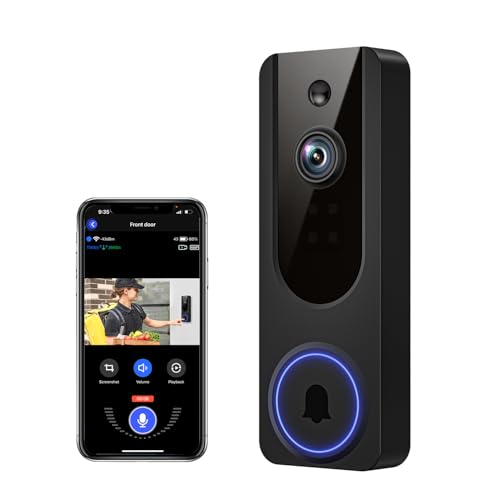
Pros
- AI human detection filters unnecessary motion alerts
- 1080p video with four-LED night vision
- Two-way audio from a smartphone
- Encrypted cloud storage with AES-128
Cons
- 2.4GHz WiFi only
- Cloud subscription required for recording storage
Free Features Matter More Than Resolution
A high-resolution camera is useful, but subscription rules determine whether you can keep using its most important alerts. BOIFUN provides human detection, motion alerts, two-way audio, and video playback without a required plan, while VanaOrbi keeps two-way audio, human detection, and real-time notifications available without cloud service.
Other models reserve some advanced functions for paid plans. Blink identifies person detection as requiring a compatible subscription, Ring places extra playback and AI-powered alerts behind Ring Protect, and CHAMBERLAIN identifies recognized-face and unknown-person alerts as plan features. Check the exact free feature set before mounting anything.
Local storage can reduce dependence on cloud fees. BOIFUN supports a microSD card up to 128GB, while SwitchBot includes a 4GB SD card and supports cards up to 512GB. For broader advice about doorbell platforms, see these HomeKit doorbell camera options.
Pro Tip: Choose local storage when retaining recordings without a monthly plan is your priority.
Battery Format and Daily Maintenance
Battery design affects how often you handle the doorbell. Blink uses three AA Energizer lithium batteries and states that they can provide months of power. BOIFUN uses a built-in, non-removable rechargeable battery with laboratory life of up to 60 days under specified motion activity, though actual results vary with use and surroundings.
Ring and CHAMBERLAIN use removable doorbell batteries that recharge by USB-C, while SwitchBot lists a 5000 mAh battery. A removable design can make charging less disruptive if you keep a routine, but a built-in battery keeps the exterior unit wire-free without a separate battery format.
Before You Mount It: Do not assume every included chime works wirelessly. SwitchBot’s indoor monitor needs a power cable, and Blink’s in-home ring experience is tied to existing doorbell wiring, although the doorbell can also operate wire-free with app alerts.
Match the View to the Porch
Wide viewing angles help when the camera sits close to a door or must cover packages beside the threshold. BOIFUN lists a 166-degree view, SwitchBot lists 165 degrees with a head-to-toe 16:9 view, and CHAMBERLAIN lists 150 degrees. Ring adds up to six-times enhanced zoom, which may help you inspect details farther away.
Night coverage also differs in approach. BOIFUN uses HDR with invisible 940 nm infrared and states night vision up to 10 meters, SwitchBot offers color night vision, and CHAMBERLAIN lists color night vision. A clear view still depends on placement, so an angled mount may help when visitors stand below the lens. These doorbell angle instructions explain the positioning issue.
| Feature | What it changes | Best placement |
|---|---|---|
| Local storage | Avoids cloud dependence | Privacy-focused entry |
| Wide angle | Covers nearby sides | Narrow porch |
| Indoor monitor | Adds visible in-home screen | Family entryway |
Wi-Fi, Installation, and Household Fit
Most of these products depend on 2.4 GHz Wi-Fi, which can help reach an exterior door. BOIFUN supports only 2.4 GHz, VanaOrbi also specifies 2.4 GHz only, and SwitchBot uses a 2.4 GHz connection through its monitor. Confirm your network and signal before choosing a location.
Installation needs vary. BOIFUN describes a no-drill setup and includes a built-in anti-theft alarm, while CHAMBERLAIN can be installed as a battery or wired solution. SwitchBot’s monitor should stay within five metres of the exterior doorbell for a strong connection, so it suits homes where an indoor screen can sit nearby.
Expert Examined
From Dana Whitfield

I keep the camera close enough to capture faces without pointing directly into harsh porch lighting. The mistake I see is mounting first and checking the view later, so I would confirm the visitor’s approach, package area, and Wi-Fi signal before fixing the mount.
Read more about Dana WhitfieldFor broader placement concerns, review this explanation of why doorbell cameras disconnect. If you choose wired operation, follow safe electrical practices and consult hardwiring guidance for video doorbells.
Which Doorbell Fits Your Household
I would point renters toward Blink Battery Doorbell 2K+ (newest model) when replaceable AA batteries and quick installation matter. Its 2K video, head-to-toe view, noise-canceling two-way audio, and IP65 weather resistance suit a household that wants a straightforward wireless setup. Keep in mind that person detection requires a compatible subscription, so it is not the strongest match for completely free advanced alerts.
I would choose BOIFUN Video Doorbell Camera for a porch where essential alerts and playback should remain free. Its 166-degree view, human detection, local microSD support, 2.4 GHz connection, and anti-theft alarm create a practical subscription-free combination. The built-in rechargeable battery means you should plan charging around motion activity.
For a home with children, older family members, or anyone who prefers a visible indoor screen, I would point you to SwitchBot Video Doorbell Camera. Its 4.3-inch monitor, 2K head-to-toe view, included 4GB SD card, and operation without internet make it distinctive, provided the monitor can stay close to the exterior doorbell and remain powered.
The Bottom Line
The mistake most buyers make is treating “no subscription” as meaning every feature is permanently free. Person detection, cloud playback, AI alerts, and local recording are separate functions, so read the feature details for the exact model before deciding.
If you do only one thing first, confirm your preferred storage method and free alert features. Then check the 2.4 GHz signal, charging access, and the camera’s view of faces and packages before selecting the final mounting spot.
FAQs
Several models retain essential functions without a required plan, including alerts, two-way audio, or human detection. However, advanced detection and cloud playback may require a subscription on some products, so check each model’s stated free features. A wider angle can cover visitors and packages beside a close-set door. The products listed range from 150 to 166 degrees, while SwitchBot also provides a head-to-toe 16:9 view. Mount the camera to avoid walls, glare, and low visitor faces. Charging depends on motion activity, recording length, weather, and how often the doorbell is used. BOIFUN cites up to 60 days under laboratory conditions, while Blink uses three AA lithium batteries and describes months of battery power. IP65 is an enclosure protection rating associated with resistance to dust and water jets, but it does not describe battery life, video quality, or subscription rules. Blink lists an IP65 weather-resistant design, so review the manufacturer’s installation instructions for exposure limits.Do battery doorbell cameras work without a subscription?
Which viewing angle is best for a doorbell camera?
How often do battery doorbells need charging?
What does IP65 mean on a video doorbell?
Sources
- UL Solutions www.ul.com
- US Consumer Product Safety Commission www.cpsc.gov
- National Fire Protection Association www.nfpa.org