
Choosing the best security cameras with two-way audio means deciding whether you need a fixed room view, a camera that follows movement, or weather-ready coverage outside. This selection is for households comparing voice communication, night vision, storage, and viewing control before buying.
Pros
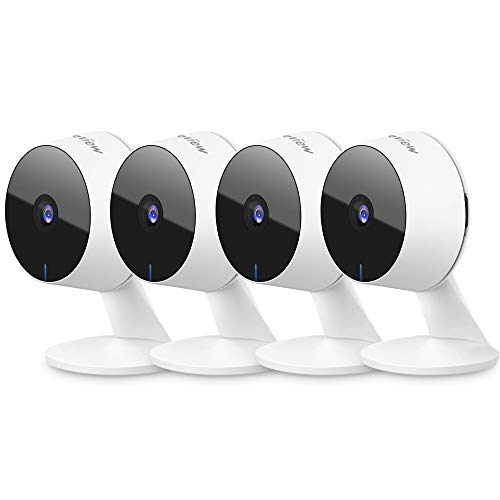
- Four-pack provides 1080p coverage across multiple rooms
- Infrared night vision reaches up to 33 feet
- Supports local microSD card storage up to 128GB
- Two-way audio includes built-in noise cancellation
- LaView app supports viewing up to 9 live feeds
Cons
- Incompatible with 5GHz Wi-Fi networks
- Wired power cords limit indoor placement options
- Cloud storage requires subscription after 30-day trial

Pros
- Motorized 360-degree pan and tilt coverage
- Infrared night view with HD day video
- Two-way audio to speak through the app
- Hands-free voice control and streaming with Alexa
Cons
- Local video storage requires separate Sync Module 2
- Extended 90-minute live streaming requires paid subscription

Pros
- Dedicated 7-inch touchscreen monitor included
- Sharp 3MP resolution with 100-foot night vision
- IP66 weatherproof housing on outdoor cameras
- Local storage up to 256GB with no subscriptions
Cons
- Four-channel NVR limits system to four cameras total
- Includes only two cameras out of the box
Pros
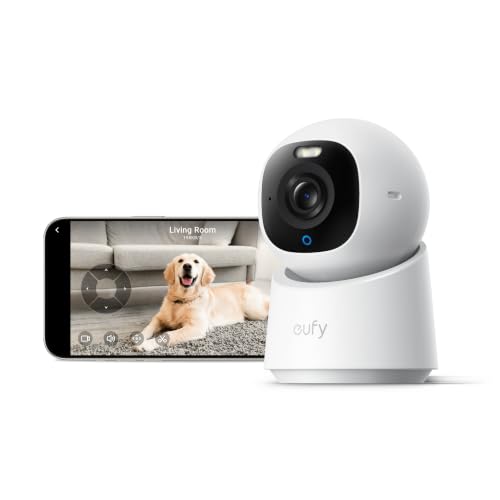
- Ultra-clear 4K recording with 24/7 video capture
- 360-degree pan and tilt with quick focus tap
- On-device AI tracking for people, pets, and crying
- Integrated spotlight enables full color night vision
- No required monthly subscription for full functionality
Cons
- Micro SD card must be purchased separately
- Apple HomeKit resolution is limited to 1080P

Pros
- Dual motion and sound detection alerts
- Two-way audio with infrared night vision
- Clear 1080P resolution in a two-pack
- Local storage up to 128GB microSD
Cons
- Manual angle adjustment with no remote pan
- MicroSD card not included in box

Pros
- Sturdy IP66 waterproof metal casing
- Night vision reaches up to 82 feet
- Supports ONVIF and RTSP video streams
- Combines humanoid detection with a siren alarm
Cons
- Maximum MicroSD card capacity capped at 128GB
- Video resolution tops out at 1080P
Match the Camera to the Space
Indoor cameras are the natural fit for nurseries, living rooms, offices, and pet areas. LaView Security Cameras 4pcs provides multiple indoor views from one account, while GNCC 2.4GHz Indoor Security Camera for Home supplies a two-pack with motion and sound alerts. Both are designed for room monitoring rather than exposed outdoor placement.
Outdoor coverage requires more than a microphone and speaker. Topodome J10A ONVIF Bullet Outdoor WiFi Security has an IP66 metal case, 82-foot night vision, human detection, and a siren. Those features make it the distinct choice for an exterior view, while the indoor models should remain protected from rain and snow.
Before You Mount It: A camera intended for indoor use should not be treated as weatherproof equipment. Confirm the placement matches the product’s stated environment before connecting power or leaving it unattended.
Compare Viewing Control and Night Coverage
A fixed camera can work well when its angle already covers the room. If furniture, doorways, or active pets create blind spots, remote movement is more useful. Blink Mini Pan-Tilt Camera offers left-to-right and up-and-down control through its app, and eufy Security 4K Indoor Camera E30 adds 360-degree viewing, AI tracking, and a spotlight for color night vision.
Night vision also varies in practical reach and detail. LaView Security Cameras 4pcs lists infrared coverage up to 33 feet, Topodome reaches up to 82 feet, and ANNKE Wireless Security Camera System lists up to 100 feet. Use those stated distances as planning points, not promises that every scene will look identical.
| Camera type | Key viewing feature | Best placement |
|---|---|---|
| Fixed indoor | Simple room view | Nursery or office |
| Pan-tilt indoor | Remote angle control | Living room or pet area |
| Outdoor bullet | Weather-resistant housing | Exterior wall or entrance |
For a broader explanation of camera indicators during setup, see what security camera lights mean.
Storage and Connection Choices Matter
Storage affects how useful alerts remain after an event. LaView includes a 30-day US cloud storage trial and supports a microSD card up to 128GB. GNCC supports a microSD card up to 128GB or paid cloud storage, while eufy Security 4K Indoor Camera E30 supports local SD storage and states that its functions can work without a monthly fee.
ANNKE Wireless Security Camera System is aimed at buyers who prefer a local viewing point, with a 7-inch touchscreen monitor, 64GB SD card, and support for up to a 256GB microSD card. Topodome adds ONVIF and RTSP compatibility, which can matter if you already use a compatible NVR or viewing software. Understanding NVR and DVR differences can help clarify that choice.
Pro Tip: Before choosing cloud storage, check whether local recording, remote playback, or family sharing matters most in your household.
Expert Examined
From Ray Okafor

I keep seeing buyers focus on image resolution while overlooking where the speaker is placed in the room. A camera can show a useful view yet make conversations awkward if people are too far from its microphone, so plan the talking position as carefully as the viewing angle.
Read more about Ray OkaforPower planning is equally important because every product here is described as wired or plug-in equipment. Place the camera where its included or required power connection can stay secure, and avoid routing cords where children or pets can pull them.
Which Camera Fits Your Home
I would point you to LaView Security Cameras 4pcs when you need several indoor viewpoints, app or web access, and the ability to share access with family members. Its support for up to nine simultaneous live feeds and microSD recording suits a household that wants multiple rooms visible from one account.
I would choose Blink Mini Pan-Tilt Camera for a single indoor room where remote pan and tilt are more useful than a fixed angle. Its app provides motion alerts, two-way communication, HD day viewing, infrared night viewing, and Alexa integration, while the setup is designed around plugging in and connecting to Wi-Fi.
For outdoor monitoring, I would put Topodome J10A ONVIF Bullet Outdoor WiFi Security ahead of the indoor choices because its IP66 housing, metal case, human detection, siren, and network compatibility address exterior surveillance needs. If local viewing without a phone is the priority, ANNKE’s touchscreen monitor and plug-and-play design are a better match.
The Bottom Line
The biggest mistake is treating two-way audio as the main selection criterion while ignoring whether the camera is indoor or outdoor, fixed or movable, and dependent on cloud storage. A clear conversation feature cannot compensate for a blind spot, unsuitable housing, or a storage plan that does not fit your routine.
Start by marking the exact room or exterior area you need to watch, then choose the viewing style and storage method that match it. After that, compare audio, night vision, alerts, and smart-home compatibility instead of allowing one attractive specification to decide the purchase.
FAQs
Most two-way audio cameras in this selection are intended for indoor rooms, including nurseries, offices, living spaces, and pet areas. The Topodome model is the outdoor-oriented option because its housing is rated IP66 and includes outdoor-focused features such as a siren and extended infrared night vision. Pan and tilt can help you change the viewing direction remotely, which is useful in rooms where furniture or movement creates gaps. They do not replace thoughtful placement, and a camera still needs a suitable power connection and a clear path for its view. The listed products are wired or plug-in cameras rather than battery-powered models. Plan the cable route before installation, keep cords secure, and avoid locations where children or pets can pull on them. IP66 is an enclosure rating associated with protection from dust and water exposure under specified conditions. It does not mean every installation location is automatically suitable, so placement, power routing, and the manufacturer’s stated use still matter.Are two-way audio cameras better for indoor or outdoor use?
Do pan-tilt cameras reduce blind spots?
Do these cameras need batteries?
What does IP66 mean for an outdoor camera?
Sources
- UL Solutions security and surveillance resources www.ul.com
- US Consumer Product Safety Commission home safety information www.cpsc.gov