
Choosing the best security cameras with optical zoom means deciding whether you need precise distant views or simple wide-area coverage. Lens control, connection type, and night visibility matter most for homeowners securing driveways, entrances, and large rooms.
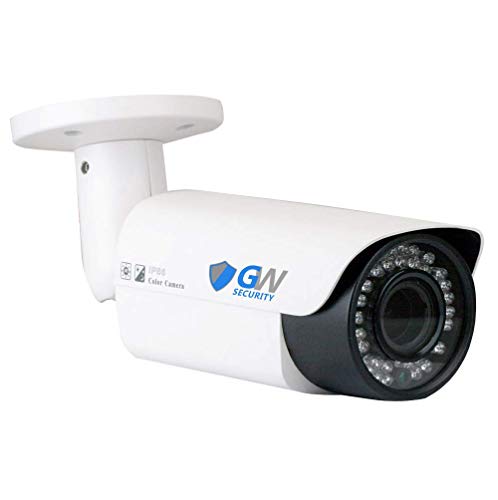
Pros
- 5MP 2592x1920 resolution for detailed video
- Manual 2.8 to 12mm varifocal zoom lens
- 42 IR LEDs deliver 120ft night vision
- Power over Ethernet for single-cable installation
Cons
- Caps at 15 FPS when recording in 5MP
- Manual zoom requires physical adjustment at camera

Pros
- Adjustable 2.8 to 12mm varifocal lens
- High definition 1080p video resolution
- 98 foot infrared night vision range
- Weather resistant metal casing
Cons
- Requires manual lens adjustment
- Limited one year manufacturer warranty

Pros
- 1/2.9-inch IMX323 sensor handles 0.01 Lux lighting
- Adjustable 5-50mm varifocal CS zoom lens
- H.264 compression reduces storage and bandwidth demands
- Driver-free UVC operation over standard USB 2.0
Cons
- Requires direct wired USB connection without battery
- Video capture limited to 30fps at 1080p

Pros
- 5MP resolution at 2592 by 1920 video
- 2.8 to 12mm manual varifocal zoom lens
- Night vision reaches up to 120 feet
- NDAA compliant with federal certification
Cons
- Zoom is manual, requiring physical lens adjustment
- Full 5MP recording tops out at 20 FPS

Pros
- Uncompressed 1080p video with zero signal delay
- Versatile 5-50mm manual varifocal telephoto lens
- Dual 3G/HD-SDI digital and CVBS analog outputs
- Smooth fast-motion capture at up to 60fps
Cons
- Manual varifocal lens lacks motorized remote zoom
- Requires specialized SDI or CVBS receiving hardware

Pros
- Motorized 5X optical zoom lens
- Sharp 4K 8MP resolution with 110-degree coverage
- Smart dual-light night vision reaching 98 feet
- Built-in mic and speaker for two-way talk
- Works with Blue Iris and third-party PoE NVRs
Cons
- Requires separate PoE switch or injector
- Flashing alarm feature defaults to off
Optical Zoom Versus Varifocal Framing
Optical zoom changes the lens view before the image reaches the sensor, so enlarging a distant subject preserves more detail than relying on digital enlargement. A varifocal lens also lets you set the viewing angle during installation, which is useful when a doorway or driveway sits at an awkward distance.
Not every camera uses motorized adjustment. The GW Security models and Evertech model use manual varifocal lenses, while the Tennoz camera offers a motorized 5X optical zoom. The ALPCAM and MOKOSE options also use long-range manual varifocal lenses, but their USB and SDI connections suit specialized setups more than a typical PoE NVR system.
Frame the Critical Area: Set the lens for the face, license plate area, or doorway rather than aiming for the widest possible scene.
| Camera type | Lens control | Best placement |
|---|---|---|
| PoE IP | Manual or motorized | Driveways and entrances |
| Analog hybrid | Manual varifocal | Existing CCTV wiring |
| USB or SDI | Manual telephoto | Specialized systems |
Match Resolution and Night Coverage
Resolution and lens range work together. A narrow, distant view benefits from more pixels, while a broad scene may need a wider angle to avoid leaving important areas outside the frame. The Tennoz combines 8MP resolution with a 5X motorized lens, while the GW Security cameras provide 5MP resolution and up to 120 feet of infrared distance.
Night specifications deserve equal attention. The Evertech lists infrared coverage up to 98 feet, the ALPCAM is designed for low-light use with a 0.01 Lux rating, and the Tennoz can switch between smart color, infrared, and full-color night modes. Bright lighting, reflective surfaces, and mounting direction can still affect the useful view.
For background on camera indicators and nighttime behavior, see our explanation of security camera lights. If you need identification at night, aim the camera away from direct porch glare and keep the important zone inside the sharp center of the frame.
Before You Mount It: Do not assume a long infrared distance guarantees a clear face or plate image. Test the planned angle after installation and avoid pointing the lens directly toward headlights or strong exterior lights.
Choose the Connection That Fits Your System
PoE models send power and video over one Ethernet cable, but they require a compatible PoE switch, injector, or NVR. The GW Security and Tennoz cameras are built around PoE networking, and the Tennoz supports H.265 and H.264 with several named NVR and software platforms.
Evertech is a hybrid 4-in-1 camera for TVI, AHD, CVI, or analog systems, so it makes more sense when existing coaxial CCTV equipment is already installed. The ALPCAM uses driver-free USB 2.0 and works with Windows, Linux, Android, and Mac OS, while the MOKOSE sends SDI or CVBS output for compatible switching and recording equipment.
Before buying a network model, confirm that your recorder supports the camera’s resolution, compression, and connection standard. Our explanation of NVR and DVR differences can help clarify whether your current recorder matches the camera type.
Expert Examined
From Ray Okafor
I keep seeing homeowners choose a lens for the empty view at installation rather than the activity zone they actually need to identify. The better approach is to mark the doorway or driveway first, then select the lens range and mounting direction around that target.
Read more about Ray OkaforWhich Camera Fits Your Property
I would point you to the Tennoz 8MP 4K PoE IP Security Camera with 5X for a driveway or entrance where you want high resolution, motorized framing, and flexible night modes. Its 110-degree viewing angle can cover a broad area, while the 5X optical zoom helps preserve detail when you enlarge a distant subject.
For a wired outdoor or indoor installation using an NVR, I would consider the GW Security 5MP 2.8-12mm Varifocal Zoom Outdoor. It combines 5MP video, PoE, up to 120 feet of infrared distance, motion alerts, a built-in microphone, and a two-year warranty with US-based technical support. Its NDAA compliance is also relevant for buyers who need that stated procurement standard.
I would reserve the Evertech Indoor Outdoor 1080P HD Dome CCTV for a household that already has compatible analog or hybrid CCTV wiring. Its adjustable 2.8-12mm lens, weather use, automatic day and night vision, and 98-foot infrared range cover practical entry-point monitoring without requiring a PoE network.
The Bottom Line
The mistake most buyers make is treating optical zoom as a substitute for correct placement. A powerful lens cannot identify activity hidden behind an obstruction, outside the frame, or inside a bright glare zone.
Start by marking the exact area you need to recognize, then choose the lens range, resolution, night mode, and connection standard that support that view. Confirm recorder compatibility before running cable or attaching the camera.
FAQs
Optical zoom adjusts the lens before the image is recorded, so distant subjects generally retain more detail when enlarged. Digital zoom enlarges existing pixels and can appear softer, especially when the original scene is far away or poorly lit. A manual varifocal lens works well when you can set the view once during installation. A motorized lens is more convenient when you want to adjust framing remotely or refine the view after the camera is mounted. PoE uses one Ethernet cable to carry power and network data, but the network equipment must support PoE. A PoE switch, injector, or compatible NVR may be required, depending on your installation. NDAA compliance indicates that the stated product is intended to meet relevant U.S. federal procurement requirements. It can matter for government or regulated installations, but you should still confirm the exact requirements for your project.Is optical zoom better than digital zoom for security cameras?
Should I choose a manual or motorized varifocal lens?
Does PoE provide both power and video?
What does NDAA compliance mean for a security camera?
Sources
- UL Solutions www.ul.com