
Mounting the best security cameras for large properties requires solving a distance problem before worrying about app notifications. Acreage quickly overwhelms consumer battery cameras with dropped Wi-Fi signals and blurry digital zoom. Rural parcels, long driveways, and detached barns demand hardwired transmission lines and optical lenses built to monitor targets hundreds of feet away.
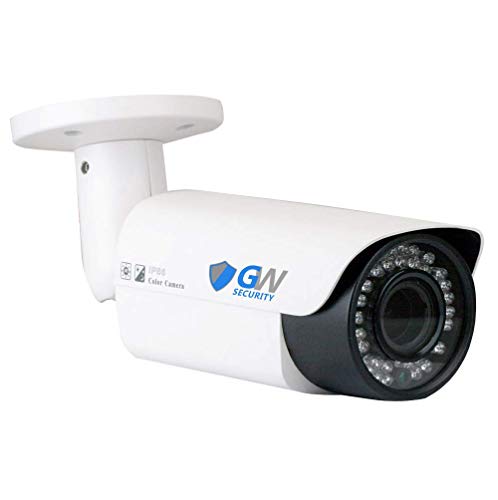
Pros
- 5MP 2592x1920 resolution for detailed video
- Manual 2.8 to 12mm varifocal zoom lens
- 42 IR LEDs deliver 120ft night vision
- Power over Ethernet for single-cable installation
Cons
- Caps at 15 FPS when recording in 5MP
- Manual zoom requires physical adjustment at camera

Pros
- Dual 4K fixed and 360-degree PTZ tracking lenses
- Auto-tracks moving subjects up to 164 feet away
- Starlight color night vision without needing a spotlight
- AI human, pet, and vehicle detection filters alerts
Cons
- Requires eufy NVR S4 or updated HomeBase Pro
- PoE injector, switch, and adapter sold separately

Pros
- Pre-installed 4TB hard drive, expandable to 16TB
- Single-cable PoE setup carries power and video
- Triple-lens build combines 4K wide-angle and 360-degree PTZ
- Smart keyword video search without subscription fees
- Auto-tracking follows subjects up to 164 feet away
Cons
- Expanding to 16 channels requires an external PoE switch
- Each Bullet-PTZ unit consumes two NVR channels

Pros
- 300-degree pan and 90-degree tilt coverage
- Automated human tracking with integrated spotlight alarm
- Two-way audio communication via free mobile app
- IP66 waterproof rating for outdoor weather resistance
- Operates with no monthly subscription fees
Cons
- Requires PoE network cabling rather than wireless setup
- Horizontal rotation stops at 300 degrees instead of 360
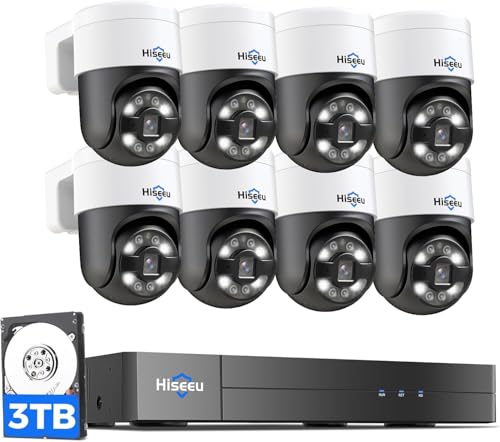
Pros
- Pre-installed 3TB hard drive for continuous recording
- Motorized 300-degree pan and 90-degree tilt coverage
- PoE setup delivers power and data over one line
- IP66 weatherproof rating protects against rain and snow
Cons
- Expanding past eight channels requires an additional PoE switch
- Physical network cables must be routed to every camera

Pros
- Includes 15 4K bullets and 20X optical PTZ
- Smart AI human, vehicle, and face recognition
- Full-time color night vision with active deterrence
- Pre-installed 4TB drive expandable up to 20TB
- NDAA compliant with US-based technical support
Cons
- Requires routing cables to sixteen separate locations
- Included 4TB drive fills quickly across sixteen feeds
Optical Zoom Versus Wide Digital Coverage
Broad camera views leave serious blind spots along wide perimeters. Standard fixed lenses cast a wide net across a yard, but spreading 4K resolution across a hundred feet of open ground leaves distant intruders looking like pixelated silhouettes. To read a license plate at an entry gate or confirm an intruder at a fence line, you need optical zoom lenses that physically shift glass to narrow the field of view without destroying image sharpness.
Many property owners install dedicated pan-tilt-zoom hardware alongside wide-angle units to balance overview footage with forensic detail. Knowing whether you need continuous wide recording or dynamic patrol tracking helps you pick the right camera design. Understanding what do the lights on a security camera mean can also help you position deterrent strobes away from bedrooms while maintaining visible perimeter warnings.
| Lens Type | Effective Reach | Ideal Placement |
|---|---|---|
| Fixed Wide | 30 to 50 Feet | Porches and Entry Doors |
| Manual Varifocal | 50 to 120 Feet | Driveways and Fence Lines |
| Motorized PTZ | 150 to 500 Feet | Open Pastures and Gates |
Power over Ethernet and Cable Run Limits
Wi-Fi signals degrade rapidly over open acreage, especially when passing through metal outbuildings or dense tree canopies. Power over Ethernet cables supply both electrical current and gigabit video data along a single line, eliminating the need to run separate electrical conduits to outbuildings. For detached garages or distant gates, understanding transmission limits prevents sudden camera drops.
Expert Examined
From Jenna Castellano

The mistake I see most on big parcels is running cheap Cat5e cables past three hundred feet without inline switches. Voltage drops over long runs, which causes PTZ motors to stall and night vision spotlights to flicker right when you need them most.
Read more about Jenna CastellanoStandard Ethernet runs max out at 328 feet before signal attenuation requires a powered network switch or fiber-optic converter. Running underground conduit certified by UL Solutions ensures your low-voltage lines survive ground settling, burrowing pests, and water ingress. Centralizing your wiring back to a central hub makes ongoing surveillance management far easier.
Cable Run Hazards: Never bury unrated networking cable directly in soil or run unshielded lines near high-voltage electric fence wiring, as electrical interference will degrade your video feed.
Storage Architecture and Network Video Recorders
Continuous recording on an expansive property burns through massive amounts of storage space. Relying on cloud subscriptions across eight to sixteen high-resolution cameras will quickly saturate your internet upload bandwidth and lead to steep monthly fees. Instead, dedicated multi-terabyte hard drives handle the unrelenting stream of multi-camera 4K feeds right on your property.
Choosing between recording architectures comes down to how your cameras handle incoming video streams. Reviewing what is an NVR and how is it different from a DVR clarifies why network recorders handle high-resolution IP camera streams far better than old analog setups. Local storage also ensures full-quality video capture continues even if your internet service provider goes down during severe weather.
Pro Tip: Size your storage for at least thirty days of continuous multi-channel recording so you retain footage long enough to spot recurring property trespassers.
Perimeter Protection by Property Layout
If you need complete perimeter coverage for a working farm, horse property, or multi-building estate, I would point you to the GW Security 16 Channel 4K Security Camera System. Its 16-channel capacity, fifteen fixed bullet cameras, and massive 20X optical zoom PTZ camera allow you to blanket outbuildings while monitoring property borders up to 500 feet out at night.
For large residential properties that need intelligent perimeter deterrence without industrial complexity, I would put the eufy Security 4K NVR System S4 Max, 4-Cam on your list. Its triple-lens cameras pair a wide 122-degree overview with a synchronized 8x auto-tracking PTZ unit that hands off moving subjects seamlessly across cameras without requiring cloud fees. If you already have a functional recorder and simply need to monitor a long entry driveway, the GW Security 5 Megapixel 2592 x 1920 Pixel Super HD offers a manual 2.8-12mm varifocal zoom lens that lets you manually dial in the exact focal width needed for gateposts up to 120 feet away.
The Bottom Line
The single thing most buyers get wrong when protecting large acreage is underestimating the optical reach required to identify faces and vehicles. Wide-angle fixed lenses make yards look massive on an app screen, but they render distant activity completely unreadable during an actual security incident.
If you do only one thing, map your physical cable paths and calculate actual distances from your recorder location before buying hardware. Selecting a system with optical zoom and dedicated Ethernet connections ensures reliable video coverage that survives the elements.
FAQs
How far can PoE cameras be mounted from the main recorder?
Standard Power over Ethernet cables carry stable power and video signals up to 328 feet (100 meters). To place cameras farther out at gates or barns, you must install an intermediate PoE extender, a powered network switch, or a fiber-optic media converter.
Are PTZ cameras better than multiple fixed cameras for acreage?
A combination of both yields the best defense on large properties. Fixed cameras maintain unbroken surveillance over critical approach choke points, while motorized PTZ cameras automatically track movement and zoom in on subjects across wide fields and long driveways.
Can security cameras detect vehicles and people at property borders?
Modern surveillance systems use on-device artificial intelligence to distinguish humans and vehicles from wildlife or wind-blown brush. Advanced cameras automatically ignore sway and trigger sirens, strobes, or push notifications only when true perimeter intrusions occur.
Do large property security cameras work during internet outages?
Hardwired IP camera systems connected to a local network video recorder continue recording 24/7 video straight to internal hard drives during internet disruptions. You only lose remote smartphone viewing until your local broadband network connection is restored.
Sources
- Underwriters Laboratories Standards www.ul.com
- Electronic Security Association Standards esaweb.org