
Finding the best security cameras for garages usually starts with solving poor lighting and spotty Wi-Fi rather than catching intruders. Garages feature uninsulated walls, vehicle exhaust, and concrete barriers that swallow wireless signals. The right setup delivers wide-angle coverage, clear night optics, and continuous wired power without demanding constant network troubleshooting.

Pros
- Dual lenses, broader coverage with fewer blind spots
- 135° wide-angle view plus 355° pan
- 5GHz and 2.4GHz WiFi support
- IP66 weather-resistant outdoor housing
Cons
- Plug-in wired setup needs a nearby outlet
- SD card required for local recording, not included
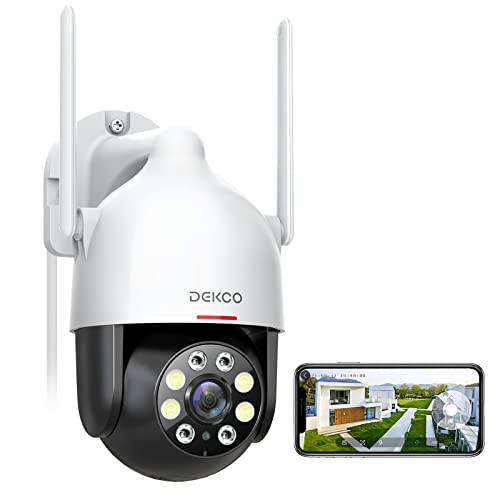
Pros
- Pan and tilt with 350-degree horizontal rotation
- Full-color night vision with built-in floodlights
- Automatic motion tracking with instant mobile alerts
- IP66 weatherproof housing for harsh outdoor conditions
Cons
- Requires corded power connection, no battery operation
- Supports 2.4GHz WiFi only, incompatible with 5GHz
- MicroSD card not included with purchase

Pros
- 2K video with color night vision
- IP65 waterproof indoor or outdoor use
- Two-way talk through the phone app
- White light and siren motion deterrent
Cons
- Plug-in power required
- MicroSD card not included

Pros
- Crisp 2K video resolution with night vision
- Automated physical privacy shield covers lens
- Wide 130-degree field of view
- Works with Amazon Alexa and Google Home
Cons
- Requires paid Arlo Secure plan for video storage
- Limited to 2.4GHz Wi-Fi networks only
- Wired plug-in power restricts placement to outlets
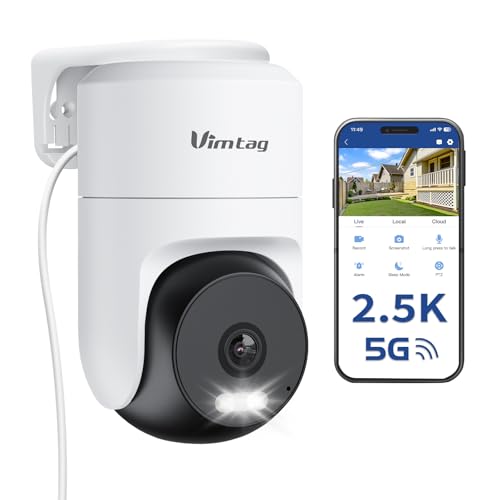
Pros
- Motorized 360-degree pan and tilt with auto-tracking
- Dual-band 2.4GHz and 5GHz Wi-Fi connectivity
- Local microSD storage supported up to 512GB
- Full-color night vision up to 65 feet
Cons
- Tethered to an outlet by a 9.8-foot power cable
- Cloud video history requires subscription after 30-day trial

Pros
- 2.5K QHD video with 8X zoom
- 360-degree pan and 90-degree tilt
- Auto tracking for people and pets
- Local microSD or encrypted cloud storage
Cons
- Plug-in power requires a nearby outlet
- MicroSD card is not included
Handling Dust, Drafts, and Garage Temperatures
Most attached and detached garages experience dramatic climate fluctuations throughout the calendar year. Cold winter air creeps through garage door seals, while summer afternoons create stifling heat pockets near the ceiling rafters. Selecting hardware rated at IP65 or IP66 weather resistance shields internal circuit boards from blowing dust, engine soot, and ambient condensation.
Indoor-only housings often fail prematurely when exposed to unconditioned garage spaces. If you mount a camera near a bay door, passing drafts bring moisture directly across the lens. Checking safety specifications through UL Solutions ensures your chosen unit handles real thermal swings without risking an electrical short.
Thermal Drafts Trap Indoor Hardware: Never place a delicate indoor-rated unit near the garage roll-up door. Temperature swings and humidity will cause internal lens fogging and sensor corrosion within months.
Overcoming Concrete Walls and Weak Signals
Garage structures represent the single worst environment for standard 2.4GHz wireless transmissions. Dense cinder blocks, steel reinforcement bars, and aluminum overhead doors bounce radio waves and degrade video streams. Cameras offering dual-band 5GHz and 2.4GHz connections help bypass standard household channel congestion, maintaining smooth frame rates during live monitoring.
Local recording formats also safeguard evidence when the connection drops entirely. Units equipped with onboard microSD slots record vehicle arrivals even if your home network experiences an outage. For wider network architectures, understanding what is an NVR and how is it different from a DVR provides insight into preserving high-resolution video streams locally.
| Mounting Spot | Coverage Style | Ideal Rating |
|---|---|---|
| Ceiling Center | 360-Degree Pan-Tilt | IP65 Minimum |
| Driveway Eaves | Dual Fixed-Plus-PTZ | IP66 Weatherproof |
| Workbench Corner | Wide-Angle Fixed | Indoor or IP65 |
Illumination and Blind Spot Elimination
Garages lack balanced natural daylight, producing harsh shadows around parked vehicles and storage racks. A single fixed-angle lens mounted in a corner leaves deep blind spots behind tool chests and under carports. Pan-and-tilt motorized cameras actively track moving targets across wide bays, ensuring subject tracking across the whole floor.
Integrated LED floodlights convert pitch-black interiors into usable color feeds. Decoding status indicators and warning flashes is simple once you know what do the lights on a security camera mean during night operations. Sudden white light bursts also deter uninvited visitors before they touch personal property.
Expert Examined
From Jenna Castellano

I frequently see homeowners mount their garage camera directly above the roll-up door, which blinds the sensor the moment a car pulls in with high beams on. Place the lens on a side wall angled perpendicular to the entrance so vehicle headlights do not wash out the license plate.
Read more about Jenna CastellanoPro Tip: Position your lens at least seven feet off the ground to prevent tall work trucks or open overhead doors from blocking the line of sight.
Matching the Hardware to Your Space
Selecting the proper unit depends heavily on whether you need to watch a detached outbuilding or an interior parking stall. If you monitor an exterior driveway alongside an open bay, I would point you to the Dual Lens Security Camera Outdoor. Its combination of a static 135-degree wide lens and an independent tracking lens eliminates the coverage gap typical of single-sensor units.
For interior spaces packed with workbenches and parked cars, I suggest the VIMTAG 2.5K Pan/Tilt Wired Outdoor Security Camera. It provides full 360-degree motorized rotation, onboard siren deterrents, and dual-band wireless compatibility without requiring recurring monthly subscription fees. If you manage a climate-controlled attached garage and already use smart voice hubs, the Arlo Essential Indoor Security Camera 2K handles person detection with built-in privacy shutters for peace of mind while working inside.
You can discover broader property layouts by browsing our primary guide on security cameras to match exterior perimeters with internal garage positions.
The Bottom Line
The biggest misstep garage owners make is buying battery-operated units that require constant ladder climbs to recharge. Garages experience heavy foot traffic, vehicle movement, and fluctuating temperatures that drain small internal cells rapidly. Choosing a wired, plug-in model connected to an active outlet guarantees continuous 24/7 video capture without maintenance headaches.
Before purchasing hardware, take your smartphone into the garage, close the main overhead door, and verify your Wi-Fi signal strength at your intended mounting height. If your feed stutters, upgrade your wireless router coverage or pick a dual-band camera model with onboard storage. Clear video storage also ensures that your footage remains reliable if you ever wonder is security camera footage admissible in court after an incident.
FAQs
Should garage cameras be mounted inside or outside?
Mounting a camera inside monitors stored tools, entry doors, and vehicles, while outside mounting protects the driveway and detects intruders before entry. Many homeowners use a weatherproof camera placed on the exterior garage trim to cover both the apron and the door threshold.
Do garage security cameras work in freezing temperatures?
Yes, provided the camera carries an outdoor rating like IP65 or IP66. High-grade outdoor models handle extreme cold and heat, whereas indoor-rated hardware can experience lens fogging, sensor lag, or frozen mechanical motors during winter freezes.
Will a garage door opener interfere with Wi-Fi cameras?
Standard garage door openers operate on radio frequencies around 300 to 390 MHz, which will not interfere with 2.4GHz or 5GHz Wi-Fi signals. However, heavy steel tracks, metal door panels, and motor casings can physically obstruct wireless signal transmission.
Can security cameras see through car windshields in a garage?
Standard infrared night vision reflects off vehicle glass, producing a blinding white glare that obscures the interior. To see inside parked vehicles, use cameras with integrated white LED floodlights or keep overhead garage lighting active rather than relying purely on infrared illumination.
Sources
- UL Solutions Standards Directory www.ul.com
- U.S. Consumer Product Safety Commission www.cpsc.gov