
Installing the best security cameras around a property rarely fails because of image clarity, but because homeowners mismatch the power infrastructure to the coverage zone. A sprawling yard requires sustained power delivery and targeted focal length, whereas a porch entryway demands broad peripheral vision. Choosing the right unit hinges on whether you run dedicated network cables or rely on local wireless transmission.

Pros
- 8MP 4K resolution at 20 frames per second
- Full-color night vision reaching 65 feet
- Wide 105-degree field of view with 2.8mm lens
- PoE support for single-cable power and data
- Weatherproof IP66 metal turret dome housing
Cons
- Incompatible with Reolink, Lorex, and Amcrest NVRs
- Video capture capped at 20 frames per second
- Technical support limited to weekday business hours
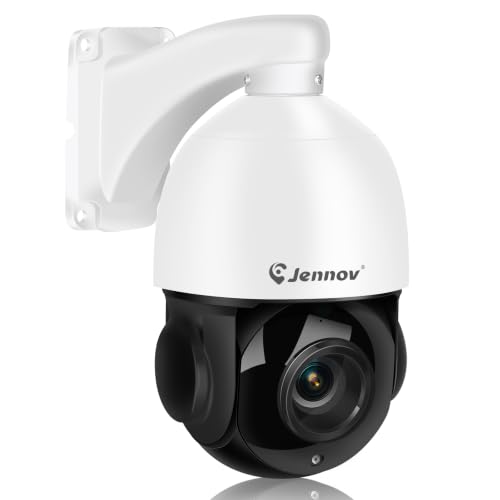
Pros
- 4K 8MP video with 20X optical zoom
- Auto tracking with adjustable human detection
- 320-foot IR night vision
- PoE connection uses one Ethernet cable
Cons
- Works only with Onvif PoE NVRs
- Tracks only one target at a time

Pros
- Ultra-wide 180-degree panoramic viewing angle
- High-resolution 8MP 4K video recording
- Single-cable Power over Ethernet installation
- IP66 weatherproof rating for outdoor mounting
Cons
- Incompatible with Reolink, Lorex, and Amcrest NVRs
- Requires manual IP setup via ONVIF protocol

Pros
- 4K 8MP resolution at 20 frames per second
- 24/7 full-color night vision reaching 65 feet
- Weatherproof IP67-rated enclosure for outdoor use
- Wide 105-degree field of view on 2.8mm lens
- Single-cable Power over Ethernet data and power
Cons
- Incompatible with Reolink, Lorex, or Amcrest NVRs
- Wall mount and junction brackets sold separately
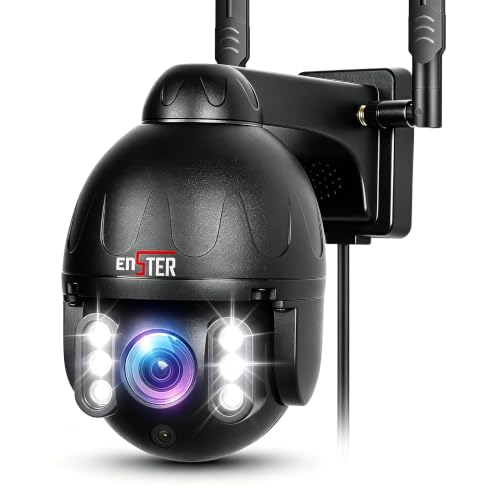
Pros
- 150-foot full-color night vision via 6 LEDs
- Dual-band 2.4G and 5G Wi-Fi transmission
- All-metal IP66 weatherproof exterior casing
- 355-degree pan and 90-degree tilt with 4X zoom
Cons
- App controls restricted to the CamHiPro platform
- Local storage requires buying a separate micro SD card

Pros
- Sturdy IP66 waterproof metal casing
- Night vision reaches up to 82 feet
- Supports ONVIF and RTSP video streams
- Combines humanoid detection with a siren alarm
Cons
- Maximum MicroSD card capacity capped at 128GB
- Video resolution tops out at 1080P
Transmission Protocols and Cable Infrastructure
Wired Power over Ethernet delivers both electrical current and video data through a single category cable. This eliminates the latency, packet drops, and radio interference common to wireless hardware. If you plan to record continuously to a local recorder, learning what is an NVR and how it is different from a DVR ensures your storage drives handle the high bitrate of 4K streams without dropped frames.
Wi-Fi units offer faster mounting because they only require local electrical outlets or existing lighting fixtures. However, dual-band radios operating on 2.4 GHz and 5 GHz bands are essential if you place hardware far from your central access point. Connecting unmanaged Wi-Fi hardware to home networks also requires consulting basic guidelines from the Federal Communications Commission regarding spectrum interference and device density.
Compatibility Check: Not all IP cameras work with every recorder. Many PoE units operate exclusively via specific network protocols like ONVIF, while proprietary consumer brands lock hardware to proprietary base stations.
Focal Length and Coverage Zones
Fixed 2.8mm lenses deliver roughly 105 degrees of horizontal coverage, making them practical for monitoring broad driveways and standard backyard patios. However, wide-angle lenses spread their pixels over a wider field, which diminishes identification detail at distances beyond thirty feet. Fisheye lenses stretch coverage up to 180 degrees, allowing single-sensor wall mounts to monitor an entire building face without leaving perimeter blind spots.
| Lens Type | Coverage Angle | Best Placement |
|---|---|---|
| Wide 2.8mm | 105 Degrees | Porches and Driveways |
| Fisheye 1.8mm | 180 Degrees | Wide Property Boundaries |
| Motorized Optical | Narrow to Telephoto | Gates and Roadways |
When tracking expansive boundaries or distant gates, optical zoom changes the physical distance between lens elements to maintain true pixel density. Digital zoom merely enlarges digital pixels, resulting in pixelation that obscures vehicle tags and clothing details. Knowing the legal weight of this footage matters, particularly when evaluating if security camera footage is admissible in court after an incident.
Expert Examined
From Ray Okafor

The mistake I see most often is placing wide-angle dome cameras behind outdoor eaves where infrared reflection off the siding blinds the sensor at night. Mount the housing flush with the fascia board to keep nighttime infrared beams projecting outward into open space.
Read more about Ray OkaforNight Illumination and Low-Light Sensors
Traditional black-and-white night vision utilizes infrared LEDs to illuminate objects in complete darkness without human visibility. These beams reach long distances, but they flatten facial contrasts and obscure clothing pigments. If you notice strange status indicators during mode switches, understanding what the lights on a security camera mean helps verify whether the unit is actively illuminating the yard or experiencing a network reboot.
Full-color nighttime recording uses supplemental white LEDs alongside sensitive image sensors to preserve true hue details through the night. This approach exposes vehicle color and hair shade, though the constant light can attract insects to the glass enclosure. Many installations combine standard infrared with supplemental motion-triggered floodlights to balance surveillance discretion with tactical illumination.
Pro Tip: Check the IP weather rating before purchasing. An IP66 housing withstands heavy rainfall, while an IP67 rating protects against high-pressure washdowns and temporary submersion in pooling water.
Matching Camera Formats to Household Layouts
I would point property owners with pre-wired network closets toward the 4K 8MP PoE IP Turret Camera Outdoor 24/7 Full. Its IP67 enclosure, steady 20 frames per second at 3840×2160, and dedicated full-color night illumination provide pristine driveway coverage without relying on home Wi-Fi stability.
For large perimeters where running multiple cables along a fence line is impractical, I would put the Real HD 4K 8MP PoE IP Fisheye 180° Panoramic on an exterior wall. Its 1.8mm lens secures an entire structural face in a single video feed, cutting hardware overhead in half.
If your property lacks Ethernet wiring entirely, I recommend the ENSTER 2.4/5G Security Camera Outdoor. The dual-band wireless transmission maintains connectivity through exterior brick, while the 355-degree pan, 90-degree tilt, and metal housing deliver broad mechanical tracking across open side yards.
The Bottom Line
The single thing most buyers get wrong is overestimating Wi-Fi signal penetration through exterior insulation and masonry walls. High-resolution streams require continuous, stable throughput, and a dropped signal turns an ultra-high-definition sensor into an offline ornament right when motion occurs.
Start by auditing your exterior cable access before purchasing any hardware. If you can route category cable from your router location to the eaves, install wired PoE units for uninterrupted storage and lifetime reliability.
FAQs
Do modern outdoor cameras require a cloud subscription to function?
No, cameras using ONVIF protocols, local microSD card slots, or dedicated network video recorders record footage continuously without recurring monthly fees. Cloud subscriptions are strictly optional services that offer offsite backup and proprietary smartphone app notifications.
What is the practical difference between IP66 and IP67 weather resistance?
An IP66 rating certifies protection against powerful directional water jets and blowing rain, suitable for most exterior residential walls. An IP67 rating indicates complete submersion protection in up to one meter of water, ensuring total resilience against ice buildup and seasonal pooling under eaves.
Why does full-color night vision require ambient or LED lighting?
Camera sensors require physical photons to differentiate color wavelengths in the visible spectrum. Full-color night vision utilizes wide-aperture lenses and warm white LEDs to illuminate the frame, whereas infrared sensors capture reflected non-visible light in monochrome.
Can Wi-Fi security cameras run on battery power indefinitely?
Battery-powered models conserve power by sleeping until passive infrared sensors detect heat, which can cause them to miss the first seconds of an event. Hardwired PoE and plug-in Wi-Fi units record continuously without latency or sleep delays.
Sources
- Federal Communications Commission Equipment Authorization www.fcc.gov
- National Institute of Standards and Technology Video Quality www.nist.gov