
Installing the best pan-tilt-zoom security cameras often fails when homeowners confuse digital magnification with true optical glass lenses. A motorized lens tracks distant perimeter activity cleanly, while digital zoom simply crops and blurs pixels. Selecting the right hardware depends on whether you need long-distance vehicle identification or broad property patrol.
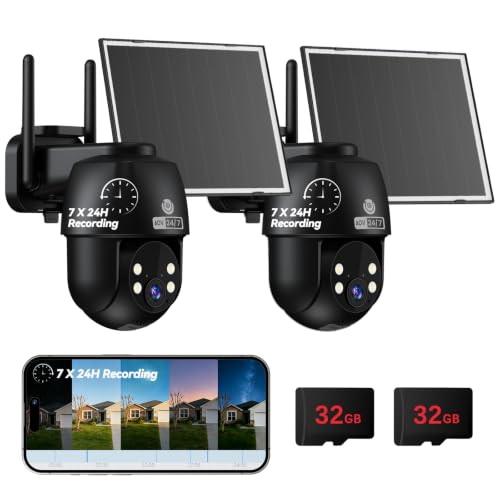
Pros
- Continuous 24/7 recording with included 32GB microSD card
- Heated 9000mAh battery charges below 32 degrees Fahrenheit
- Full 360-degree pan and 100-degree tilt auto-tracking
- Long-range alerts detect movement up to 98 feet
Cons
- Requires 2.4GHz Wi-Fi, unsupported on 5GHz networks
- Narrow 80-degree fixed horizontal field of view
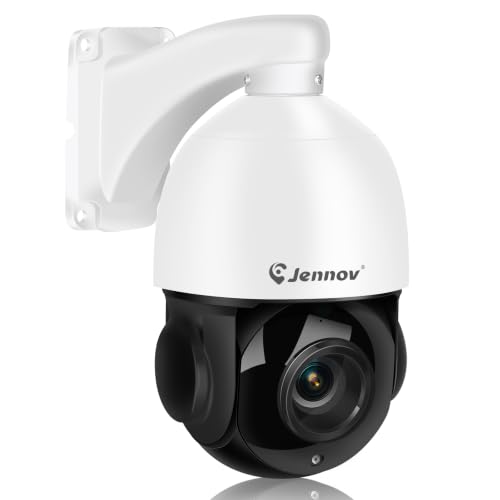
Pros
- 4K 8MP video with 20X optical zoom
- Auto tracking with adjustable human detection
- 320-foot IR night vision
- PoE connection uses one Ethernet cable
Cons
- Works only with Onvif PoE NVRs
- Tracks only one target at a time
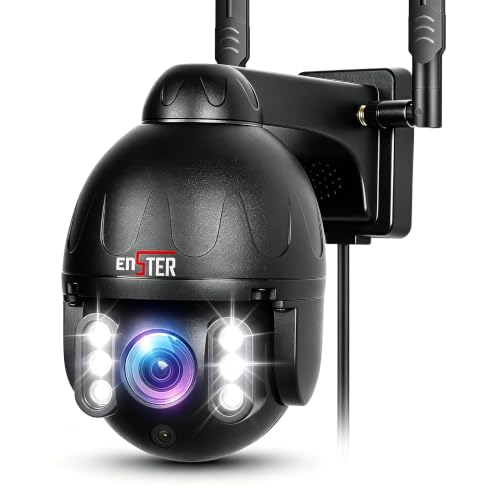
Pros
- 150-foot full-color night vision via 6 LEDs
- Dual-band 2.4G and 5G Wi-Fi transmission
- All-metal IP66 weatherproof exterior casing
- 355-degree pan and 90-degree tilt with 4X zoom
Cons
- App controls restricted to the CamHiPro platform
- Local storage requires buying a separate micro SD card

Pros
- 20X optical zoom captures distant details clearly
- True 4K 8MP sensor for crisp target identification
- Motorized 360-degree pan and 90-degree tilt coverage
- AI auto-tracking follows detected human movement
Cons
- Wired installation requires PoE or 12V DC cabling
- Large 12.2-inch housing requires substantial mounting clearance
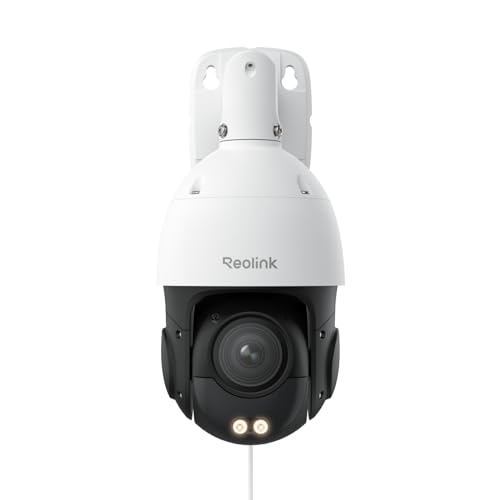
Pros
- 16X optical zoom with 3D target centering
- 4K UHD resolution with spotlight color night vision
- 360-degree endless pan with auto tracking
- Smart detection for people, vehicles, and animals
Cons
- Requires an IEEE802.3at PoE network switch
- Large 14.6-inch body demands sturdy exterior mounting

Pros
- Includes 15 4K bullets and 20X optical PTZ
- Smart AI human, vehicle, and face recognition
- Full-time color night vision with active deterrence
- Pre-installed 4TB drive expandable up to 20TB
- NDAA compliant with US-based technical support
Cons
- Requires routing cables to sixteen separate locations
- Included 4TB drive fills quickly across sixteen feeds
Optical Zoom Versus Digital Cropping
Long driveways and deep yards demand genuine optical zoom rather than digital enlargement. A motorized varifocal lens physically shifts glass elements to narrow the field of view, keeping every pixel of image resolution intact at distance. Digital zoom only enlarges existing sensor data, which produces blocky artifacts when identifying a distant visitor.
High-magnification lenses also require stable mounting surfaces. Heavy dome enclosures generate mechanical vibration when the internal motor pans rapidly across preset positions. Mounting to a flimsy vinyl soffit introduces severe image blur, especially during high-wind events or while tracking moving subjects.
Mounting Stability Trap: Fast motor movement shakes lightweight gutter or soffit brackets, distorting video during active auto-tracking. Always anchor motorized PTZ hardware directly into solid masonry or structural wood framing.
Power Delivery and Network Bandwidth
Continuous mechanical motion and infrared illumination consume significantly more power than static bullet cameras. Power over Ethernet delivers operational current and video through a single network cable, avoiding voltage drops. Knowing what is an NVR and how is it different from a DVR helps clarify why dedicated POE switches matter for motorized domes.
| Power Type | Ideal Range | Best Surface |
|---|---|---|
| PoE Wired | Over 200 feet | Masonry or studs |
| Solar Battery | Under 100 feet | Sturdy fascia |
| Dual-Band Wi-Fi | Medium yards | Solid exterior wall |
High-resolution 4K video feeds stream substantial bandwidth across local networks, particularly when encoding detailed night vision scenes. Modern compression reduces storage overhead by filtering redundant background pixels, yet continuous multi-stream recording can strain domestic Wi-Fi routers. Hardwired network connections prevent frame drops during critical pan cycles.
Expert Examined
From Ray Okafor

The mistake I see most often is setting auto-tracking sensitivity too high near roadways. The camera ends up chasing passing commuter cars all evening, leaving the driveway completely unmonitored during actual perimeter events.
Read more about Ray OkaforSmart Tracking and Night Illumination
Automated panning routines rely on onboard algorithmic processing to separate human silhouettes from background foliage. When assessing whether security cameras have facial recognition, remember that tracking motion differs from true biometric identification. Advanced domes sweep presets automatically and lock onto intruders entering predefined perimeter tripwires.
Pro Tip: Configure home preset positions that return the camera lens to your primary entry point after thirty seconds of idle tracking.
Night surveillance presents unique exposure challenges for moving camera lenses. Powerful infrared arrays illuminate targets hundreds of feet away, but switching between color spotlights and black-and-white mode requires smart calibration. Deciphering what the lights on a security camera mean ensures you verify active infrared LEDs versus white deterrent floodlights. Regulatory standards from the Federal Communications Commission govern wireless transmission limits on hybrid outdoor units.
Matching the PTZ Camera to Your Property
I would point homeowners with sprawling perimeter fencing toward the REOLINK RLC-823S2 4K 16X Optical Zoom PoE Security. Its 16X optical zoom and specialized 3D zoom target identification bring distant fence lines into sharp focus without sacrificing 4K clarity. The combination of full 360-degree endless panning and dedicated person, vehicle, and animal detection makes it an outstanding perimeter sentinel.
For locations without accessible Ethernet cabling, I would install the MUBVIEW 24/7 Continuous Recording Wireless Outdoor. It utilizes a 10W solar panel paired with a 9000mAh heated battery pack designed to accept charges below freezing temperatures. Continuous local storage onto the included 32GB microSD card delivers reliable around-the-clock monitoring without recurring cloud subscription fees.
If your priority involves watching an expansive commercial lot or private drive, I would look at the Jennov 4K 8MP Outdoor PTZ IP POE Camera with Pan. The motorized 4.7 to 94mm lens provides formidable 20X optical zoom and 320 feet of infrared night vision, backed by eight configurable cruising routes.
The Bottom Line
The biggest misstep buyers make is expecting a moving camera to guard multiple zones at the same instant. A PTZ lens focused on an auto-tracked pet leaves the rest of your property completely unmonitored unless integrated with wide-angle static sensors.
Before buying mounting hardware, map your critical property choke points and measure the distance to your power sources. Running a single dedicated network cable for a hardwired unit will eliminate dropped signals and sluggish motor controls.
FAQs
What is the difference between optical and digital zoom?
Optical zoom relies on physical motorized glass lenses to magnify distant objects without reducing pixel quality. Digital zoom merely enlarges and crops the central portion of an existing digital frame, resulting in pixelated and blurry footage.
Can a PTZ camera replace multiple fixed security cameras?
A PTZ camera covers vast acreage through panning and preset patrols, but it can only record where the lens currently points. Crucial blind spots open up while the unit tracks movement, making a hybrid setup with fixed wide-angle cameras safer.
How does cold weather affect solar powered PTZ cameras?
Standard lithium batteries refuse charging current when temperatures drop below freezing, leading to rapid winter shutdown. Specialized outdoor solar models incorporate internal battery heaters to safely absorb solar charging current in freezing climates.
Do PTZ cameras require professional network wiring?
Power over Ethernet models require running Category 6 network cable from your indoor router or POE switch out to the exterior wall. Battery and solar Wi-Fi variations avoid wiring entirely, though they depend heavily on strong wireless signal reach.
Sources
- Federal Communications Commission Equipment Authorization www.fcc.gov
- National Institute of Standards and Technology Video Analytics Guidelines www.nist.gov