
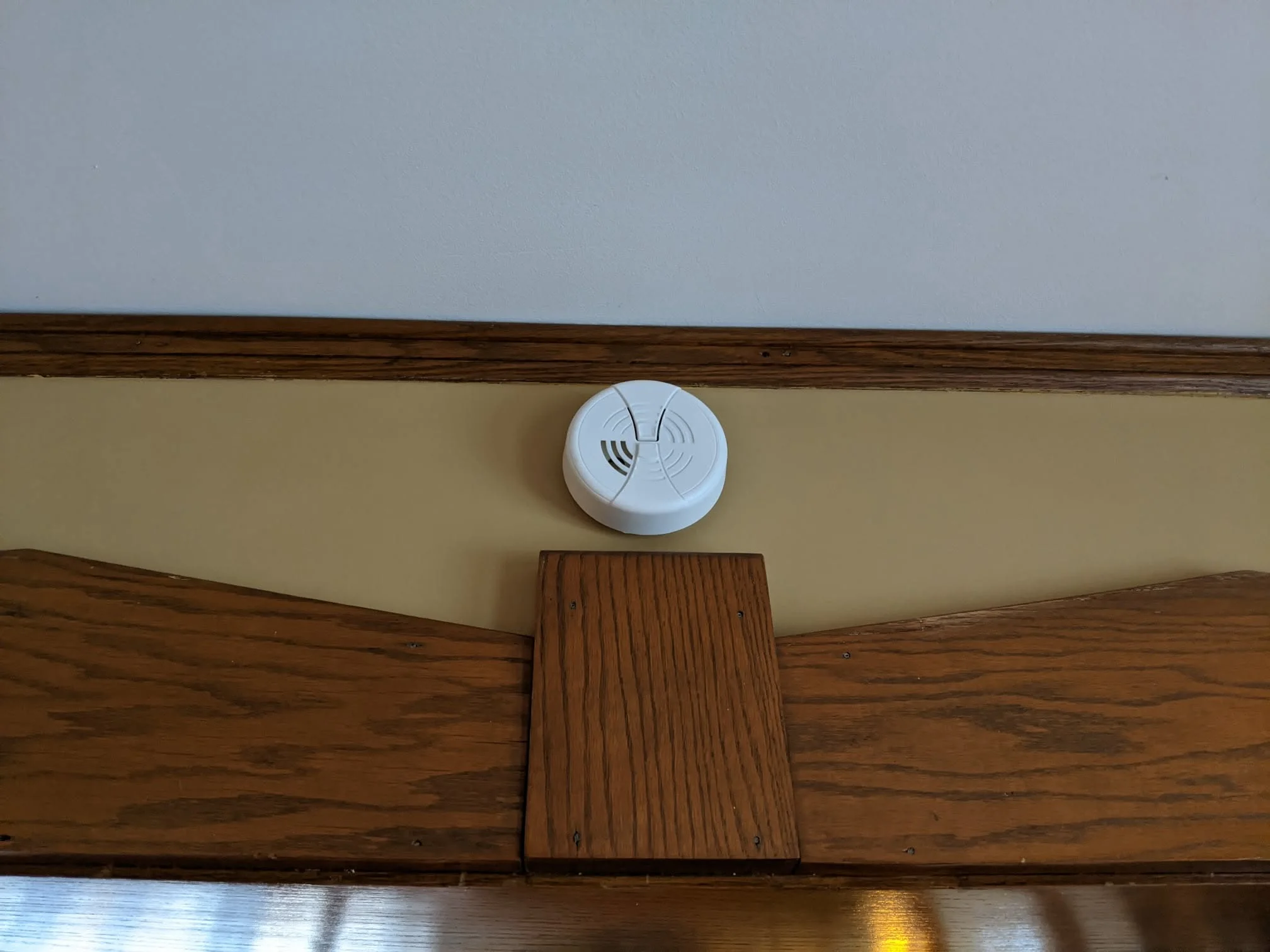
Finding the best Z-Wave smoke detectors requires choosing between replacing entire alarm fixtures or integrating an existing hardwired circuit into your hub. That split determines whether you need a dedicated battery-powered sensor or an inline signal bridge. Selecting the right hardware ensures your smart platform receives instant fire alerts without generating false alarms.

Pros
- Built-in 120 V relay controls lights or sirens
- Z-Wave Long Range support with mesh signal repeater
- Includes pigtail wires for faster wiring
- Five-year warranty available with product registration
Cons
- Restricted to analog smoke and CO detectors only
- Not certified as a life-safety system component
- Requires advanced hub setups with custom drivers

Pros
- Sealed 10-year battery eliminates low-battery chirps
- Dual detection for both smoke and carbon monoxide
- Precision Detection technology reduces nuisance cooking alarms
- Z-Wave Plus certified for Ring Alarm integration
Cons
- Remote notifications require separate Ring Alarm hardware
- Sealed battery cannot be swapped when depleted
Standalone Hardware Versus Interconnect Bridges
Upgrading a house for automated fire safety usually starts at the ceiling box. Standalone smart alarms replace traditional battery units entirely, packing detection sensors and wireless radios into one housing. They communicate directly with security hubs to alert mobile devices when smoke or carbon monoxide appears.
Bridge modules take a different approach by monitoring the interconnect signal wire between existing analog detectors. When any standard hardwired alarm sounds, the bridge transmits a digital notification to your smart controller. You can explore broader safety concepts across our Home Safety & Detection section.
Hub Compatibility and Wireless Protocols
Smart smoke hardware depends heavily on hub support. Some devices run on standard Z-Wave Plus protocols tailored for systems like the Ring Alarm ecosystem. Others employ the newer 800 Series Z-Wave Long Range standard, which offers expanded transmission distance and minimal latency across larger properties.
Advanced bridge units require updated controller software or custom drivers to recognize distinct fire and carbon monoxide signals. Platforms like Home Assistant, Hubitat, or SmartThings handle these specialized devices well, while managed home security systems prefer pre-certified combination units. The National Fire Protection Association advises maintaining compatible alarms throughout every sleeping area.
| Hardware Type | Power Source | Primary Hub |
|---|---|---|
| All-in-one unit | 10-year sealed battery | Ring Alarm Base |
| Interconnect bridge | 120V hardwired line | Home Assistant, Hubitat |
Expert Examined
From Ray Okafor

I frequently notice smart home owners pairing Z-Wave sensors without verifying hub driver support first. When building automations for sirens or lighting during a fire event, always ensure your hub processes the smoke alert locally rather than relying on cloud communication.
Read more about Ray OkaforPower Sources and Life Safety Roles
Power delivery influences long-term maintenance and emergency reliability. Units with sealed ten-year lithium power cells eliminate annual battery swaps and early morning low-voltage chirping. In contrast, hardwired line-voltage modules draw primary operating current from residential circuits while relying on analog units for physical sound output.
Building codes require strict adherence to certified life safety components. Supplemental bridge sensors provide convenience notifications to trigger automated lighting or unlock doors, but they do not replace primary audible fire alarms. Integrating safety devices alongside your best home security systems ensures continuous monitoring under various emergency conditions.
Life Safety Compliance: A signal sensor bridges notifications to your automation platform, but it is not a certified fire alarm. You must keep working analog smoke and CO units on the circuit.
Pro Tip: Check whether your existing smoke detectors share an interconnect traveler wire before ordering a DC bridge sensor.
Selecting the Right Fire Hardware
If your property already uses interconnected line-voltage alarms, I would point you to the Zooz 800 Series Z-Wave Long Range DC Signal Sensor. It wires into your junction box with included pigtails, translates analog alerts to Hubitat or Home Assistant, and features an optional 120V relay to trigger auxiliary lights or sirens. Utilizing Z-Wave Long Range and SmartStart, it integrates smoothly without forcing you to replace every existing ceiling detector.
For households needing standalone ceiling replacements without extra wiring, I recommend the First Alert 10-Year Battery Combination Smoke. It provides two-in-one smoke and carbon monoxide detection alongside Precision Detection sensing to suppress cooking nuisance alarms. Because it pairs with the Ring Alarm Base Station and carries a sealed ten-year battery, it delivers reliable off-site notifications while eliminating dead battery chirps.
Choosing between them rests on whether you want an unobtrusive network bridge for existing wiring or an all-in-one certified alarm for spot placement.
The Bottom Line
The most common mistake buyers make is assuming every smart sensor functions as an approved standalone alarm. Installing an auxiliary signal bridge without maintaining code-compliant analog smoke units leaves your living spaces without certified physical warning devices. Always verify that your primary sirens meet local residential requirements before adding automation hardware.
If you take only one initial step, pull down an existing alarm to check for a third interconnect traveler wire. Knowing whether your home has interconnected line-voltage cabling or separate battery brackets determines whether you should buy a single bridge or multiple standalone units.
FAQs
Can Z-Wave smoke detectors trigger all sirens in the home?
Dedicated Z-Wave alarms sound their built-in sirens immediately upon detecting smoke. However, triggering other wireless sirens throughout the house depends on whether your smart hub supports cross-device emergency automation rules.
Do Z-Wave smoke alarms work if the internet goes down?
Yes, local alarm sensing and sounding operate independently of your internet connection. Smart notifications sent to your smartphone will fail during an outage unless your hub features cellular backup.
What is the difference between an alarm and a signal sensor?
A smart alarm detects smoke particles directly and sounds an integrated horn. A signal sensor wires into existing alarms to detect electrical voltage changes when traditional sirens sound, passing data to a hub.
How long do Z-Wave smoke detector batteries last?
Models equipped with sealed lithium cells typically last up to ten years without replacement. Replaceable battery models usually require fresh batteries every one to two years depending on wireless signal strength.
Sources
- National Fire Protection Association www.nfpa.org
- US Consumer Product Safety Commission www.cpsc.gov