
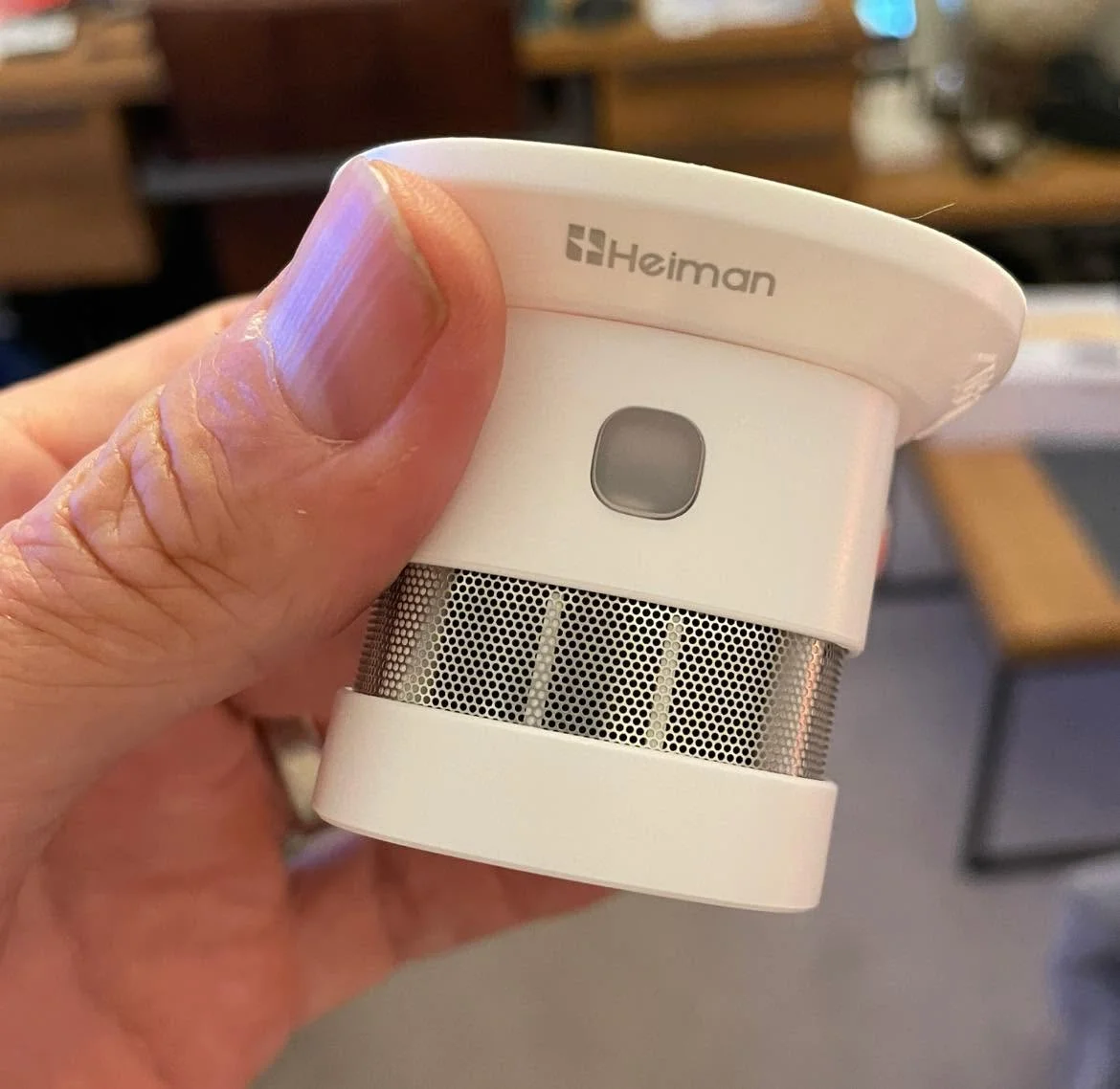
Homeowners hunting for the best Zigbee smoke detectors quickly discover that standalone certified units are scarce compared to signal bridges and long-range sensors. Deciding between retrofitting existing hardwired alarms and mounting dedicated wireless hardware determines your notification reliability. That choice hinges on whether your platform prioritizes physical relay triggers or broad property coverage.

Pros
- Built-in 120 V relay controls lights or sirens
- Z-Wave Long Range support with mesh signal repeater
- Includes pigtail wires for faster wiring
- Five-year warranty available with product registration
Cons
- Restricted to analog smoke and CO detectors only
- Not certified as a life-safety system component
- Requires advanced hub setups with custom drivers

Pros
- UL 217 10th Edition certified photoelectric sensor
- Open-air interlink range reaching up to 2,034 feet
- Local device-to-device alerts continue during Wi-Fi outages
- Monitors rapid temperature shifts within two minutes
- App-based scheduling for remote self-tests and silence
Cons
- YoLink Hub required separately for app connectivity
- Battery life limited to five years maximum
- Compatible accessories and sirens sold separately
Bridging Interconnected Alarms Versus Adding Wireless Units
Existing residential codes often mandate interconnected smoke and carbon monoxide detectors, where triggering one unit sounds every alarm in the house. Integrating an interconnect listener or DC signal relay allows you to monitor the entire circuit without replacing certified hardware. Readers exploring a broader home safety and detection setup can keep their code-compliant wiring intact.
Standalone wireless detectors operate independently, using internal batteries to communicate across rooms. These models suit properties without interconnect traveler wires, such as older structures or outbuildings. However, standalone battery units require routine maintenance and sensor replacements as mandated by UL 217.
Life Safety Compliance: A signal bridge or relay is not a certified life-safety device on its own. Never remove your primary code-compliant alarms to install an uncertified smart relay, and verify your local electrical codes before altering alarm wiring.
Protocol Range and Signal Penetration Challenges
Mesh protocols like Zigbee and Z-Wave rely on mains-powered repeaters to route messages through walls and floors. When battery-powered sensors sit far from a repeater, dropped signals can delay urgent push notifications during an emergency. For larger homes or outbuildings, sub-gigahertz frequencies provide superior penetration through dense framing materials.
Direct device-to-device communication ensures that grouped hardware continues to sound even if the main controller or internet router fails. According to standards from the National Fire Protection Association, primary alarm signals must never depend exclusively on cloud connections. Hardcoded local pairings guarantee that audible sirens activate immediately upon smoke detection.
| Integration Type | Signal Path | Ideal Location |
|---|---|---|
| DC Signal Bridge | Hardwired interconnect | Main electrical junction |
| Dedicated Wireless | Proprietary RF signal | Detached rooms and sheds |
| Hybrid Mesh Sensor | Local hub repeater | Standard residential hallways |
Expert Examined
From Ray Okafor

I frequently see homeowners assume their smart hub will sound the primary alarm during a fire, but consumer wireless hubs are prone to latency during network reboot cycles. I always advise pairing smart bridges directly to physically interconnected alarms so the siren triggers instantaneously regardless of hub status.
Read more about Ray OkaforPhotoelectric Sensors and Nuisance Trip Management
Photoelectric sensing chambers excel at detecting smoldering fires generated by upholstery or overheating wiring before open flames erupt. Modern certified alarms conform to revised standards designed to distinguish between cooking steam and actual particulate combustion. Connecting these systems alongside comprehensive home security systems gives homeowners situational awareness without nuisance alarms.
Sensors monitoring ambient rate-of-rise temperature shifts provide early warning in spaces where smoke detectors are impractical, such as unconditioned attics. Establishing high-temperature thresholds alerts your smart hub to rapid thermal spikes before smoke physically reaches hallway sensors. Setting these parameters properly prevents false alarms while maintaining swift emergency notifications.
Placement Tip: Keep smoke detectors at least ten feet away from permanent cooking appliances to minimize nuisance alarms while maintaining compliance with standard residential placement rules.
Matching the Device to Your Property Layout
If your house already has standard 120-volt interconnected alarms, I would point you to the Zooz 800 Series Z-Wave Long Range DC Signal Sensor. It wires into your existing analog smoke and CO line using included pigtail wires, converting your wired chain into smart alert triggers without replacing certified hardware. Its 120-volt relay can automatically switch on room lights when an alarm trips, and Z-Wave Long Range support ensures dependable hub communication.
For detached workshops, outbuildings, or properties lacking interconnect wiring, I recommend the YoLink Photoelectric Smoke Detector. Its LoRa protocol provides up to 2,034 feet of open-air transmission range, bridging distances standard wireless sensors cannot reach. Direct device-to-device pairing keeps the 85-decibel sounder interlinked even during network outages. It also tracks rapid temperature changes between 9 and 36 degrees Fahrenheit. Our security blog shares additional integration strategies.
The Bottom Line
The single biggest mistake buyers make is treating smart hub notifications as a substitute for certified life-safety hardware. A wireless protocol failure or delayed cloud ping should never stand between an active fire and an audible evacuation alarm.
If you only do one thing, inspect your existing ceiling alarms to confirm whether they share a hardwired interconnect traveler wire. If they are interconnected, wire in a dedicated signal sensor; if not, install certified long-range wireless detectors that sound together locally regardless of hub connectivity.
FAQs
Can smart smoke detectors function without an internet connection?
Certified smart smoke alarms always maintain local sounders and direct alarm-to-alarm interconnectivity during internet outages. While app push notifications and remote silence features require an active hub and web connection, the primary audible 85-decibel alarm will still sound locally to alert occupants.
What is the difference between photoelectric and ionization sensors?
Photoelectric sensors use an internal light beam to detect visible smoke particles from slow, smoldering fires, making them less prone to nuisance steam alarms. Ionization sensors respond faster to flaming fires with small combustion particles, but modern standards increasingly favor photoelectric technology for residential installations.
How do I connect existing hardwired alarms to my smart home?
You can connect existing interconnected alarms by installing a specialized DC signal sensor into the junction box of one smoke detector. This device monitors the third interconnect traveler wire and relays trigger signals to your hub whenever any alarm on the circuit sounds.
Where should smoke detectors be positioned for optimal safety?
Install smoke detectors inside every bedroom, outside each sleeping area, and on every level of the home, including the basement. Mount them on ceilings at least four inches away from side walls, or high on walls between four and twelve inches below the ceiling.
Sources
- National Fire Protection Association www.nfpa.org
- UL Solutions www.ul.com