
Connecting the best Alexa-enabled smoke detectors requires choosing between direct Wi-Fi connections and low-power mesh radios. Direct Wi-Fi models link straight to your router, while Thread and LoRa units keep interconnected alarms functioning during network outages. This distinction determines whether your smoke alarms trigger automations when the internet drops.

Pros
- Matter over Thread support for local smart home automations
- Dual-beam photoelectric sensor reduces cooking false alarms
- Certified to latest UL 217 10th edition fire safety standards
- Loud 85 dB audible alarm with one-touch silence
Cons
- Requires a third-party Thread border router for connectivity
- Lacks integrated carbon monoxide detection
- Uses replaceable CR123A batteries instead of a sealed cell

Pros
- UL 217 10th Edition certified photoelectric sensor
- Open-air interlink range reaching up to 2,034 feet
- Local device-to-device alerts continue during Wi-Fi outages
- Monitors rapid temperature shifts within two minutes
- App-based scheduling for remote self-tests and silence
Cons
- YoLink Hub required separately for app connectivity
- Battery life limited to five years maximum
- Compatible accessories and sirens sold separately
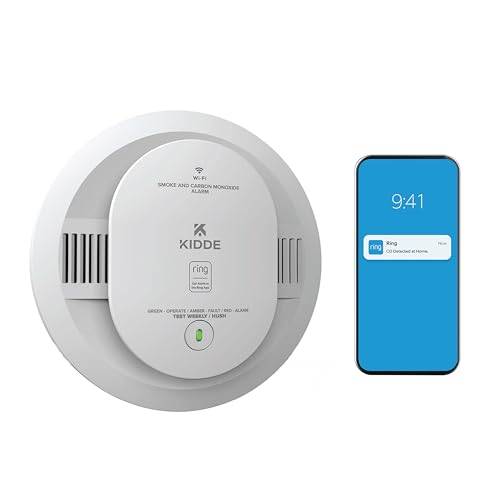
Pros
- Combined smoke and carbon monoxide detection with voice alerts
- Free mobile notifications via Ring app without subscription
- Runs on two included AA batteries with no wiring required
- Certified to UL 217 and FCC safety standards
Cons
- Alkaline AA batteries require periodic replacement over time
- Professional monitoring requires an optional paid subscription

Pros
- Detects smoke, TVOC chemicals, humidity, and mold risk
- Separate sensor flags water leaks and 37-degree freezes
- Voice alarm announces fire hazards and replacement time
- Integrates with Amazon Alexa and Google Home platforms
Cons
- Smoke detector requires hardwired electrical installation
- Lacks integrated carbon monoxide sensing

Pros
- UL 217 10th Edition certified construction
- Dual-beam photoelectric sensor limits steam false alarms
- Built-in temperature and humidity climate sensors
- Matter over Thread support for local automations
- Loud 85 dB alarm with silence button
Cons
- Requires a compatible Thread border router
- No built-in carbon monoxide detection

Pros
- UL 217 10th Edition certified dual-beam photoelectric sensor
- 10-year CR123A lithium battery eliminates annual swaps
- Wirelessly interconnects up to 24 units locally
- Includes 2.4GHz gateway for mobile app alerts
- Tool-free magnetic mounting pads included
Cons
- Gateway incompatible with 5GHz Wi-Fi bands
- Lacks built-in carbon monoxide detection
Hub Protocols and Smart Speaker Bridging
Smart fire alarms route voice broadcasts and status alerts to Amazon smart speakers through distinct wireless paths. Direct Wi-Fi models connect to your router without extra hardware, sending notifications through cloud skills. Devices using Matter over Thread communicate through a Thread border router, creating an efficient local mesh that handles automation even if internet service fails.
Proprietary protocols like LoRa use bridge units to link detectors over distances reaching thousands of feet. While this requires a dedicated gateway, it bridges detached garages and basements that Wi-Fi cannot reach. Reviewing your router coverage prevents buying hardware incompatible with your wider home security systems.
Thread Border Routers: Matter-compatible Thread smoke alarms require an Echo fourth-generation or Echo Show with a built-in Thread border router to bridge directly into your smart ecosystem.
| Protocol Type | Primary Advantage | Ideal Location |
|---|---|---|
| Matter Thread | Works locally without internet | Hallways and bedrooms |
| Direct Wi-Fi | No additional hub required | Living areas and kitchens |
| LoRa Wireless | Penetrates thick walls easily | Outbuildings and basements |
False Alarm Resistance and Modern Sensor Standards
Modern residential standards emphasize false alarm suppression without sacrificing response speed. Guidelines from UL Solutions under UL 217 10th Edition demand that detectors differentiate between polyurethane combustion and cooking steam. Dual-beam photoelectric sensors achieve this by measuring particulate light scattering, helping silence false alerts during routine cooking.
Beyond basic smoke tracking, hybrid units incorporate air quality sensors or carbon monoxide monitors. Tracking total volatile organic compounds expands your home safety and detection coverage, alerting you to poor ventilation. Voice announcements are equally valuable, as spoken hazard locations wake sleeping occupants faster than high-frequency beeps.
Kitchen Placement: Never install smoke alarms within ten feet of cooking appliances or three feet of bathrooms to avoid steam-induced false alarms.
Power Architecture and Offline Interconnect
A safety detector must stay operational during power outages, making battery selection an essential factor. Units powered by CR123A lithium cells or standard alkaline batteries operate independently of household circuits, avoiding complex wiring. Hardwired units with battery backups satisfy local building codes while maintaining continuous protection when utility power fails.
Local wireless interconnectivity ensures that an alarm triggered in a basement sounds detectors across every bedroom. According to the NFPA, interconnected alarms provide crucial evacuation time. Units relying solely on cloud notifications leave sleeping families vulnerable if home Wi-Fi disconnects during an emergency.
Expert Examined
From Ray Okafor

The mistake I see most often is relying entirely on cloud skills for fire safety without checking if units sound together when your router drops. I keep local interconnectivity verified by killing the main router power and initiating a manual check on a single detector.
Read more about Ray OkaforMatching the Detector to Your Floor Plan
For large properties, detached workshops, or multi-level layouts, I would point you to the YoLink Photoelectric Smoke Detector. Its LoRa protocol spans up to 2,034 feet in open air, and its direct device-to-device protocol keeps grouped alarms sounding at 85 decibels even during complete internet or hub failures.
If you own an Echo fourth-generation or Echo Show with an integrated Thread border router, I suggest mounting the Heiman Smart Smoke Detector. This compact unit uses a dual-beam photoelectric sensor certified to UL 217 10th Edition. It pairs directly over Matter, creating reliable local automations without cluttering your home network with extra Wi-Fi traffic.
For central hallways requiring combined combustion monitoring, I recommend the Kidde Smart Smoke & CO Detector with Ring. It combines low-level carbon monoxide tracking with rapid smoke sensing on simple AA batteries. The unit delivers spoken voice hazard announcements and wire-free interconnectivity, integrating smoothly into broader smart home security systems without requiring drywall cuts.
The Bottom Line
The single biggest mistake buyers make is assuming that any smart smoke alarm will automatically sound an alert throughout the home. Many smart units only push notifications to your smartphone unless they support local interconnectivity, leaving sleeping family members unaware of a fire starting on another floor.
If you only do one thing, verify your smart hub compatibility before purchasing to confirm whether you have an active Thread border router. Ensuring your smoke detectors communicate locally during an outage provides genuine physical safety before any app notification ever leaves your local network.
FAQs
Do Alexa-enabled smoke detectors sound an alarm if the Wi-Fi goes down?
Physical smoke alarms always sound their built-in 85-decibel sirens locally during an emergency, regardless of network connectivity. However, Alexa voice announcements and smartphone notifications will not broadcast until the internet connection is restored unless the devices share a local Thread or wireless interconnect network.
Can any smart smoke detector announce emergencies on Amazon Echo speakers?
No, the detector must offer an Alexa skill, support Matter over Thread, or connect through a compatible bridge like Ring or SmartThings. Standard battery alarms without smart radios cannot broadcast through Echo speakers without external listening accessories.
What does the UL 217 10th Edition certification mean on a smoke alarm?
UL 217 10th Edition is a rigorous safety standard requiring detectors to distinguish between real flaming or smoldering fires and harmless cooking smoke. Alarms meeting this standard dramatically cut nuisance triggers while improving response to synthetic material fires.
How often do smart smoke detector batteries need replacement?
Alarms powered by standard AA alkaline batteries generally require fresh cells every six to twelve months. Models utilizing dedicated CR123A lithium batteries or sealed power packs provide continuous monitoring for five to ten years before requiring replacement.
Sources
- National Fire Protection Association www.nfpa.org
- UL Solutions Standards www.ul.com
- US Fire Administration www.usfa.fema.gov