
Installing the best smoke detectors for 3D printers protects your workshop against sudden thermal runaway and smoldering filament fires. The critical choice lies between standalone compact units mounted inside an enclosure and interconnected alarms that alert the entire house. Hobbyists running overnight prints need early detection before toxic plastic fumes or open flames spread.

Pros
- Hardwired connection links up to 12 alarms
- Photoelectric sensor reduces cooking false alarms
- UL217 listed with 10-year product lifespan
- Ten-hour Do Not Disturb mode silences chirps
- Single button simultaneously tests all interconnected alarms
Cons
- Requires existing hardwired electrical circuits
- 9V backup battery requires periodic replacement

Pros
- UL 217 9th edition certified photoelectric sensor
- Hardwired interconnect links up to 12 alarms
- 9V battery backup maintains power during outages
- Ten-hour silence mode mutes nuisance alerts
Cons
- Requires 120V AC wiring for primary operation
- Uses standard 9V batteries instead of sealed cells
- No integrated carbon monoxide sensing

Pros
- Sealed 10-year lithium battery prevents routine replacements
- Photoelectric sensor reduces nuisance alarms from cooking
- ETL listed to the UL 217 safety standard
- Wire-free installation with mounting hardware included
Cons
- No wireless interconnection to link multiple units
- Lacks Wi-Fi connectivity and mobile app notifications

Pros
- Certified to the UL 217 10th Edition standard
- Dual-wavelength photoelectric sensing limits nuisance alarms
- Tool-free magnetic adhesive pad mounting included
- Compact frame under three inches across
Cons
- No built-in carbon monoxide detection
- Requires CR123A battery replacements over its life

Pros
- Photoelectric sensor reduces cooking nuisance alarms
- Built-in 10-year tamper-resistant lithium battery
- ETL listed and tested to UL 217 standard
- No-wire installation with included mounting screws
- Single-button manual self-test and alarm hush
Cons
- Lacks built-in carbon monoxide detection
- Sealed battery requires full replacement after ten years
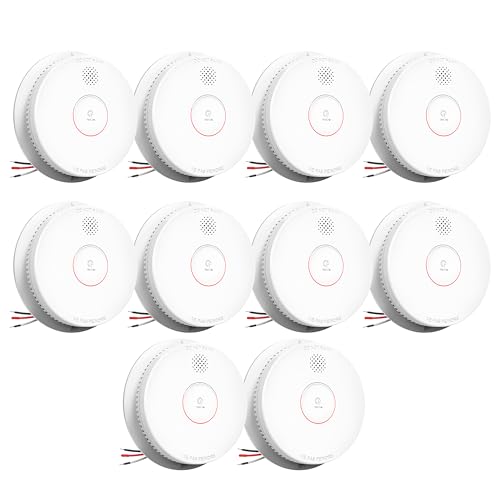
Pros
- Hardwired interconnect links up to 12 alarms
- Photoelectric sensor reduces cooking false alarms
- UL217-10th listed fire detection standard
- Ten-hour hush mode silences low-voltage chirps
Cons
- Requires existing AC electrical wiring to install
- Relies on replaceable 9V backup batteries
- Lacks integrated carbon monoxide monitoring
Photoelectric Sensing for Plastic and Electrical Fires
3D printing hazards usually start with an overheating hotend, melting wiring, or scorched plastic filament. Photoelectric sensors react far quicker to these slow, smoldering fires than traditional ionization chambers. They also avoid nuisance triggers caused by minor printing vapors.
Modern standards like UL 217 10th Edition enforce strict resistance against false alarms while improving sensitivity to smoldering polyurethane and plastics. Organizations like NFPA emphasize installing photoelectric alarms in areas containing high electrical loads.
Avoid Ionization Alarms: Ionization sensors react aggressively to harmless aerosol particles and fine volatile organic compounds generated by heated nozzles, causing constant false alarms during long print runs.
Mounting Inside Enclosures Versus Room Monitoring
Placing a detector directly inside an acrylic or tent enclosure catches an overheating mainboard in seconds. However, heat build-up inside heated chambers can exceed the operating temperature ratings of standard residential alarms.
A primary detector belongs on the ceiling directly above the workstation, spaced at least three feet away from drafts or cooling fans. Dedicated makers often combine a micro alarm near the machine with wider home safety and detection coverage across the room.
Expert Examined
From Ray Okafor

In my own workshop, I see people shove standard battery alarms right next to open print beds where draft fans blow hot air across the sensor. Moving the sensor eight inches above the printer frame completely eliminated false alerts while catching an actual melted connector instantly.
Read more about Ray Okafor| Alarm Type | Mounting Area | Primary Strength |
|---|---|---|
| Micro Battery | Inside enclosure | Fits confined printer spaces |
| Sealed Battery | Workshop ceiling | Ten years without maintenance |
| Hardwired | Across household | Sounds alarms in every room |
Audible Warnings Across the Entire Home
A loud local buzzer will not help if you run an eight-hour print job in the basement while sleeping on the second floor. Interconnected alarms bridge this gap by sounding every horn in the house when the printer sensor trips.
Integrating workshop detection into broader home security systems ensures you wake up before smoke reaches the stairwell. Hardwired lines allow multiple units to communicate instantly without relying on household internet.
Enclosure Temperature Check: Check that your alarm housing is rated for high heat, such as UL94 V-0 flame-retardant plastic, if you mount it inside an enclosure where ambient temperatures exceed forty degrees Celsius.
Selecting the Right Detector for Your Setup
For makers operating an enclosed printer where space is tight, I would point you to the Heiman Smoke Detector, Photoelectric Battery. Its micro footprint measures under three inches across, and its flame-retardant housing rated to UL94 V-0 holds up near warm enclosures. The dual-wavelength sensor also conforms to the newer UL 217 10th Edition standard to differentiate plastic smoldering from benign printer emissions.
If your printer sits on an open desk or workbench, I would choose the X-Sense Smoke Detector, 10-Year Battery. It mounts to the ceiling in minutes with no wiring, and the sealed lithium battery eliminates decade-long maintenance while guarding against everyday nuisance alerts.
For basement workshops or isolated garages where an unattended print could ignite unnoticed, I recommend the SITERWELL Smoke Detector Photoelectric Smoke Alarm. This hardwired unit links with up to twelve compatible alarms across your house, ensuring an eighty-five decibel alert sounds in your bedroom the moment trouble begins at the print station.
The Bottom Line
The biggest misstep hobbyists make is relying on an existing hallway alarm down the corridor while leaving an unattended machine running in a closed room. By the time smoke reaches an exterior hallway sensor, thermal runaway has already engulfed the build plate and nearby filament spools.
If you do only one thing today, mount a dedicated photoelectric alarm within three feet directly above your printing station. You can read more safety advice on our blog to keep your workshop secure while running long unattended jobs.
FAQs
Can 3D printer filament fumes set off a smoke detector?
Standard printing with PLA or PETG produces minimal aerosol particles that rarely trip photoelectric sensors. However, printing ABS or nylon at high temperatures without ventilation can generate concentrated ultrafine particles that might trigger older ionization detectors. Modern photoelectric units reliably ignore these mild vapors while detecting actual smoldering plastic.
Should I put a smoke alarm inside my 3D printer enclosure?
You can mount a compact smoke alarm inside an enclosure provided the ambient interior temperature stays within the operating limits of the device. Choose a micro detector with fire-resistant housing and ensure it sits clear of direct heat bed radiation and cooling fan airflow.
Why are photoelectric alarms preferred over ionization alarms for 3D printing?
Photoelectric detectors excel at identifying slow, smoldering fires caused by melting wire insulation, overheated mainboards, and scorching filament. Ionization alarms specialize in fast flaming fires and are far more susceptible to false alarms triggered by normal printing fumes.
What safety standard should I look for in a 3D printer smoke alarm?
Look for alarms certified to UL 217, particularly the 9th or 10th editions. These updated benchmarks require alarms to differentiate between hazardous smoldering synthetic materials and benign cooking fumes, drastically reducing nuisance alarms in workshop environments.
Sources
- National Fire Protection Association www.nfpa.org
- UL Solutions www.ul.com
- U.S. Consumer Product Safety Commission www.cpsc.gov