
Finding the best replacement smoke detectors for nest protect means parting with Google’s proprietary ecosystem and choosing between hardwired continuity or sealed battery simplicity. Homeowners who loved spoken alerts and dual-threat sensing must navigate alternative hardware without losing critical early warnings.

Pros
- Sealed 10-year lithium battery eliminates replacements
- Photoelectric smoke and electrochemical CO dual sensors
- Certified to UL 217 and UL 2034 safety standards
- Wall or ceiling mounting hardware included
Cons
- No wireless interconnection between units
- Lacks Wi-Fi and base station connectivity
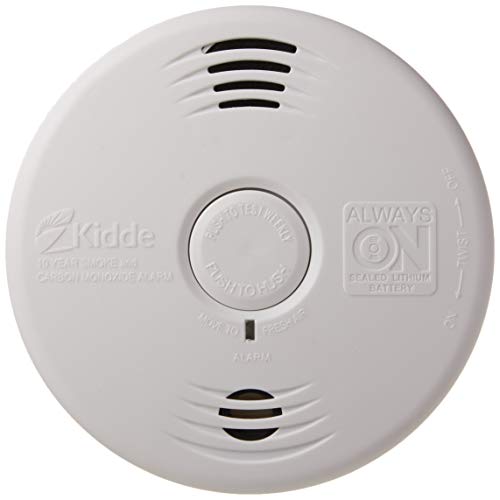
Pros
- Sealed 10-year lithium battery eliminates annual swaps
- Photoelectric smoke and electrochemical CO sensors
- Spoken voice warnings clarify the specific hazard
- Loud 85-decibel alarm with integrated Test-Hush button
Cons
- Prone to nuisance alerts from shower steam and dust
- Manufacturer warranty covers alarm unit but excludes battery

Pros
- Built-in 10-year battery eliminates annual swaps
- Photoelectric and electrochemical dual sensor setup
- Bilingual voice alerts in English and French
- Certified to UL 217 and UL 2034 standards
Cons
- Must replace entire unit when fault signal sounds
- No interconnected alarm support for whole-home sync

Pros
- Wireless interconnect links up to 18 devices
- Built-in 10-year lithium battery
- Dual-language voice alerts in English and French
- Dual-light wave sensing reduces cooking false alarms
- Ten-hour do not disturb mode silences fault chirps
Cons
- Non-replaceable battery requires complete unit disposal
- Single unit packaging requires separate purchases to link alarms

Pros
- Dual detection for smoke and carbon monoxide
- Voice alerts announce specific hazard type
- Hardwired interconnect triggers all linked Kidde alarms
- AA battery backup covers power failures
- UL Listed with 10-year limited warranty
Cons
- Requires dedicated 120V AC electrical hardwiring
- Backup AA batteries need periodic replacement

Pros
- Sealed 10-year lithium battery avoids replacements
- Photoelectric and electrochemical dual-sensor detection
- Built-in LCD screen displays real-time levels
- Certified to UL 217 and UL 2034 safety standards
Cons
- Standalone design without wireless alarm interconnection
- No Wi-Fi or base station connectivity
Evaluating Power Supplies and Wiring Compatibility
Nest Protect shipped in distinct battery and hardwired versions, making your existing ceiling junction box the main factor in any upgrade. If your home has pre-existing three-wire interconnect harnesses, running a 120-volt line unit maintains synchronized signaling across every bedroom without relying on radio frequencies.
Swapping to sealed ten-year lithium units eliminates the need to replace internal cells every year. Modern standalone alarms satisfy building codes for residential retrofits while removing the annoyance of midnight low-voltage chirps, which you can read about on our blog.
| Power Type | Interconnect Method | Best Location |
|---|---|---|
| 120V Hardwired | Physical Wire Harness | Modern Hallways |
| 10-Year Battery | Wireless RF Mesh | Retrofit Bedrooms |
| 10-Year Standalone | None Audible Only | Utility Closets |
Spoken Location Warnings Versus Standard Sirens
The primary feature that made Nest units popular was vocal announcements pinpointing smoke or carbon monoxide hazards. Waking up to an 85-decibel screech causes confusion, whereas voice alarms clearly differentiate between smoldering toast and lethal colorless gas leaks.
Dual-language voice alerts expand accessibility across diverse households by stating emergency actions in both English and French. Research by the National Fire Protection Association indicates that voice prompts wake sleeping children significantly faster than traditional high-pitch horn patterns.
Wiring Caution: Never cross-connect hardwired communication lines from different manufacturers on the same 120-volt loop, as mismatched signaling voltages can damage the internal circuit boards.
Interconnection and Nuisance Alarm Resistance
Replacing whole-home coverage requires understanding how new hardware communicates during a fire. Wireless interconnected systems link up to dozens of alarms on a shared local radio frequency, mimicking smart app alerts across multiple floors without requiring home internet connectivity.
Modern photoelectric chambers rely on dual-light wave technology to distinguish visible cooking aerosols from genuine slow-smoldering furniture fires. Integrating these updated units with broader home security systems creates overlapping layers of perimeter and life-safety detection throughout the property.
Expert Examined
From Ray Okafor

The mistake I see most often during detector swaps is ignoring the mounting plate screw pattern. If you replace a wide-base alarm with a compact chassis, keep a drywall repair ring ready so you avoid repainting ceiling patches around electrical boxes.
Read more about Ray OkaforSensor Check: Look for UL 217 eighth-edition or newer certifications on product labels, which ensure the photoelectric chamber resists routine cooking smoke nuisance triggers.
Choosing Your Next Alarm Setup
For homes built around existing ceiling wiring, I would put the Kidde Hardwired Smoke & Carbon Monoxide Detector in primary hallways and stairwells. Its 120-volt wired harness compatibility and battery backup match existing residential electrical circuits seamlessly while delivering spoken warnings during gas leaks or fires.
If your previous setup relied exclusively on battery power across several rooms, I would point you to the SITERWELL Smoke and Carbon Monoxide Detector. Its ability to link up to 18 units across a wireless mesh recreates the whole-house alerting network that made smart alarms valuable in multi-story houses. For isolated spaces like laundry rooms or detached workshops, the standalone X-Sense Smoke & Carbon Monoxide Alarm, SC06 gives you decade-long dual-hazard detection without any complicated pairing procedures, fitting naturally into our general home safety detection recommendations.
The Bottom Line
The single biggest mistake homeowners make when replacing premium smart detectors is buying basic ionization units that lack carbon monoxide sensing. Forgetting to match the dual-threat protection of your outgoing hardware leaves living spaces vulnerable to invisible heating system leaks.
Check the backplate of your current unit today to confirm whether you have active 120-volt house wiring or a standalone battery mount. Once you know your power foundation, install combined smoke and carbon monoxide units equipped with clear voice warnings.
FAQs
Can third-party alarms talk to remaining Nest Protect units?
No third-party smoke alarm can wirelessly interconnect with a Nest Protect. Google uses closed communication protocols, meaning replacements must either communicate among their own brand or operate as standalone sensors.
Do modern replacement alarms require a home Wi-Fi network?
Most reliable replacements use direct radio frequency mesh networking or physical traveler wires instead of Wi-Fi. This design ensures that all linked detectors sound together even if the home router loses power during an emergency.
Why do replacement detectors feature both smoke and CO sensors?
Building codes increasingly mandate dual detection near sleeping areas because heating appliances present both fire and poisoning risks. A combination device covers both hazards in a single ceiling mount without extra drilling.
How often do combination smoke and CO alarms require replacement?
All residential combination alarms require complete replacement ten years after their manufacturing date. The internal electrochemical sensors that detect carbon monoxide degrade over time and cannot be renewed with fresh batteries.
Sources
Sources
- National Fire Protection Association www.nfpa.org
- US Consumer Product Safety Commission www.cpsc.gov
- UL Solutions www.ul.com