
Selecting the best First Alert smoke and carbon monoxide detectors depends primarily on the electrical wiring available behind your drywall. Older homes without traveler circuits require independent sealed batteries, whereas modern residences mandate interconnected lines that trigger every siren simultaneously. Identifying your existing junction setup prevents dangerous coverage gaps across bedrooms and hallways.

Pros
- 10-year sealed battery eliminates routine replacements
- Slim one-inch profile at half standard depth
- Dual protection against smoke and carbon monoxide
- Voice alerts state danger type and location
- Precision Detection reduces cooking false alarms
Cons
- Sealed battery cannot be replaced when depleted
- No hardwired power or multi-alarm interconnect

Pros
- Dual smoke and carbon monoxide detection
- Precision Detection reduces cooking false alarms
- Quick Connect plug simplifies harness installation
- Battery backup maintains power during outages
Cons
- Hardwired setup requires existing electrical circuit boxes
- Interconnect feature requires compatible alarm hardware

Pros
- Dual smoke and carbon monoxide protection
- Precision Detection minimizes cooking false alarms
- Battery-operated for wire-free installation
- Integrated test and silence button
- Built-in end-of-life replacement warning
Cons
- No hardwired power connection
- Lacks interconnectivity with other alarms

Pros
- Voice alerts announce threat type and 11 locations
- Cross-brand interconnect with Kidde, BRK, and FireX
- Meets UL217 8th Edition and UL2034 standards
- Universal adaptors enable installation without rewiring
- Ten-year warranty with end-of-life chip indicator
Cons
- Requires 120-volt hardwired electrical installation
- Cannot operate as a battery-only detector
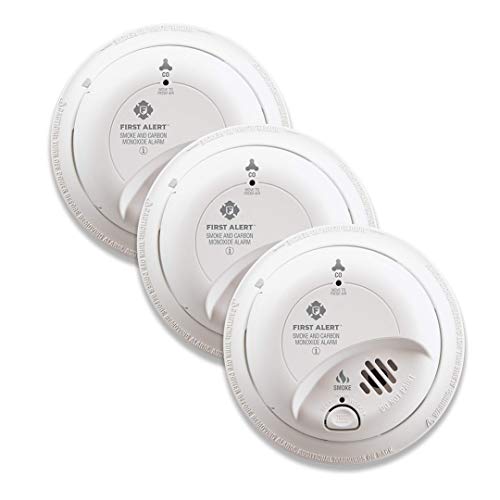
Pros
- Electrochemical sensor monitors carbon monoxide levels
- Ionization sensor detects fast-burning fire particles
- Side-load battery drawer simplifies cell changes
- Hardwired interconnect signals all compatible BRK units
Cons
- Requires existing hardwired electrical connections
- Backup batteries require periodic physical replacement

Pros
- Dual smoke and carbon monoxide sensing
- Voice alerts with location identification
- Interconnect triggers all compatible alarms
- Quick Connect plug simplifies electrical hookup
Cons
- Requires dedicated AC electrical wiring
- AA battery backup needs periodic swaps
Hardwired Interconnect Lines Versus Sealed Lithium Batteries
Homes constructed under modern building codes utilize interconnected wiring that links multiple ceiling junction boxes together. When an interconnected unit senses combustion or toxic gas, every compatible alarm on the traveler line sounds immediately to alert sleeping residents. Integrating these units requires proper line-voltage matching, which you can verify alongside our home safety detection suggestions.
| Power Source | Warning Coverage | Best Placement |
|---|---|---|
| Hardwired Interconnect | Whole home simultaneous sirens | Junction boxes with traveler lines |
| 10-Year Sealed Battery | Single room audible radius | Retrofits without ceiling wiring |
| Replaceable Battery | Single room audible radius | Temporary living and rental spaces |
Wiring Safety: Turn off the primary circuit breaker before disconnecting hardwire plugs to prevent accidental shock during installation.
Properties lacking hardwired connections rely on standalone ten-year sealed lithium models to provide continuous monitoring without routine battery swaps. These self-contained units prevent unexpected low-battery chirping at odd hours while continuing to operate through residential power outages. Choosing between power formats ultimately determines whether a single alarm or the whole structure responds when smoke gathers.
Sensor Accuracy and Managing Kitchen Nuisance Triggers
Traditional ionization sensors often struggled to separate harmless cooking moisture from genuine household blazes. First Alert incorporates Precision Detection technology to satisfy revised safety standards established by UL Solutions, minimizing nuisance alarms while rapidly sensing synthetic combustion. Coordinating sensor coverage with home security systems helps establish a reliable interior monitoring safety net.
Stove Clearance: Position combination detectors at least ten feet away from kitchen cooktops to prevent lingering steam from triggering false warnings.
Dual-hazard models pair photoelectric smoke analysis with electrochemical carbon monoxide sensors to monitor distinct threats through one ceiling fixture. Electrochemical sensors track colorless, odorless gas emitted by faulty heaters before dangerous concentrations build up. Placing combination hardware along central hallways ensures early notice before toxic gas travels toward sleeping quarters.
Voice Location Alerts and Coordinated Evacuation
Standard eighty-five decibel sirens jolt residents awake, but voice alert technology provides immediate situational context during disorienting emergencies. Programmable voice modules announce the specific emergency type along with the assigned room location. Hearing whether smoke is in the basement or the kitchen allows occupants to choose the safest evacuation pathway immediately.
Expert Examined
From Jenna Castellano

The mistake I see most often is placing combination alarms directly outside a steam-heavy bathroom door. Even advanced sensing chambers eventually flag dense humidity as combustion particulates, causing unnecessary panic.
Read more about Jenna CastellanoClear auditory warnings significantly reduce evacuation confusion for young children and deep sleepers. Research from the NFPA demonstrates that spoken hazard instructions prompt faster physical responses than monotone horn patterns. Pairing voice units with comprehensive home security systems creates an effective emergency notification web across all living levels.
Matching Alarms to Your Living Space
If your home features pre-existing line-voltage junction boxes, I would point you toward the First Alert Combination Smoke & Carbon Monoxide two-pack. This setup interconnects across standard traveler wires, sounds simultaneous alerts across compatible brands, and announces both the hazard type and room location out loud. Universal adaptors simplify wiring to existing junction plugs, while the battery backup maintains continuous coverage through utility interruptions.
For older properties or finished rooms without pre-wired ceilings, I suggest the First Alert 10-Year Battery Combination Smoke. Its slim housing mounts flush to the drywall, eliminating bulky profiles while operating on an internal lithium battery that runs for an entire decade. Spoken voice alerts identify the threatened area without requiring any electrical cable installation.
If you need simple standalone coverage with manual maintenance, I recommend the First Alert Battery Combination Smoke & Carbon. It delivers essential dual-hazard detection using modern Precision Detection sensors at a practical entry point for secondary utility rooms or workshops.
The Bottom Line
The single thing most buyers get wrong is buying replacement alarms without checking their existing ceiling mounts for hardwire plugs. Ordering hardwired units for unpowered ceiling locations stalls your project, while hanging isolated battery units where building code mandates interconnected wiring leaves distant bedrooms unprotected.
If you only do one thing today, take down one current detector to inspect the backplate wiring and verify the manufacture date stamped on the plastic. Replace any unit approaching the ten-year threshold immediately to maintain reliable sensor sensitivity across your entire living space.
FAQs
How often should First Alert combination detectors be replaced?
Combination smoke and carbon monoxide alarms must be replaced every ten years from the manufacture date stamped on the back. Sensor sensitivity degrades over time, and internal components lose accuracy regardless of whether the battery still has power. An automated end-of-life chirp notifies you when the operational decade has elapsed.
Why does my combination alarm sound a false alert during cooking?
Older ionization sensors react aggressively to microscopic steam and minor cooking grease particles. Modern Precision Detection technology reduces nuisance triggers by distinguishing between food steam and synthetic combustion, but mounting any alarm within ten feet of a stove will still increase false activation risks.
Can I mix hardwired First Alert alarms with older existing brands?
Certain First Alert models feature universal adaptors and interconnect compatibility engineered to communicate with existing Kidde, BRK, and FireX systems. However, you must confirm that the traveler wire carries matching communication protocols across all connected devices to ensure every horn sounds during an emergency.
Where should combination smoke and carbon monoxide alarms be installed?
Install combination alarms on every level of the home, inside every bedroom, and directly outside central sleeping areas. Because carbon monoxide mixes relatively evenly with air, ceiling mounting or high wall mounting at least four inches down from the ceiling works best for dual-sensor units.
Sources
- National Fire Protection Association Standards on Household Alarms www.nfpa.org
- Underwriters Laboratories Safety Standards Directory www.ul.com
- US Consumer Product Safety Commission Carbon Monoxide Guidelines www.cpsc.gov