
Selecting the best X-Sense smoke and carbon monoxide detectors requires matching unit capabilities to your floor plan. Single-story apartments operate effectively with basic standalone units, while multi-level houses demand wireless interconnected models to broadcast alarms everywhere. Your architectural layout decides whether isolated sensors or synchronized sirens keep everyone safe.

Pros
- Built-in 10-year lithium battery eliminates replacements
- Photoelectric sensor cuts down on cooking false alarms
- Electrochemical sensor provides dedicated carbon monoxide detection
- Meets UL 217 and UL 2034 safety certification standards
Cons
- No wireless interconnection to alert other rooms
- Lacks Wi-Fi or base station connection support

Pros
- Sealed 10-year lithium battery eliminates routine swaps
- Interlinks wirelessly with up to 18 compatible alarms
- Independently certified to UL 217 and UL 2034
- Single button tests or silences all connected units
Cons
- Lacks Wi-Fi or base station connectivity
- Battery-only design cannot tie into household electrical wiring

Pros
- Sealed 10-year battery eliminates annual swaps
- Photoelectric smoke and electrochemical CO sensors
- Wireless interconnection covers up to 820 feet
- Certified to UL 217 and UL 2034 standards
Cons
- Lacks Wi-Fi connectivity for phone notifications
- Battery operation only with no hardwired option

Pros
- Sealed 10-year lithium battery prevents replacements
- Dual photoelectric and electrochemical sensors
- LCD displays real-time CO PPM and battery level
- Certified to UL 217 and UL 2034 standards
Cons
- No wireless interconnection between alarms
- Lacks Wi-Fi and base station compatibility
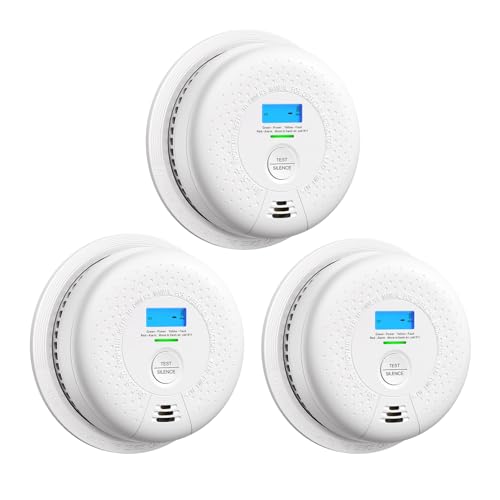
Pros
- 10-year sealed lithium battery, no rewiring
- Photoelectric and electrochemical combo sensing
- Real-time CO and battery LCD display
- Certified to UL 217 and UL 2034 safety standards
Cons
- No wireless interconnection between units
- No Wi-Fi support or base station pairing

Pros
- Sealed 10-year lithium battery with no maintenance
- Photoelectric smoke and electrochemical CO sensors
- Wireless interconnection triggers all linked units together
- Certified to both UL 217 and UL 2034 standards
- Integrated LCD display for visual readings
Cons
- No Wi-Fi support, lacks smartphone app alerts
- Battery-only operation, not compatible with hardwired setups
Standalone Hardware Versus Wireless Interconnection
The X-Sense catalog splits on whether alarms communicate. Standalone units sound off independently, keeping hardware simple for single-floor residences. Multi-level homes require interconnected setups where one unit triggers the rest across a wireless link reaching up to 820 feet.
Interconnection Limits: Standalone models like the SC06 and SC01 never communicate with neighboring hardware. If a fire starts in a basement, an isolated alarm cannot wake residents sleeping behind closed bedroom doors on upper floors.
Neither wireless system relies on home Wi-Fi to function. These alarms utilize radio frequencies to activate every siren in the group within seconds. Homeowners seeking reliable home safety detection can link up to 18 Link+ devices without running physical traveler wires.
Pairing interconnected units happens before ceiling mounting. Pressing the silence button links devices into an isolated wireless mesh. For broader residential protection, many owners pair these alarms alongside full home security systems.
Dual-Sensor Detection and Digital Displays
Every combo unit in this lineup pairs a photoelectric smoke sensor with an electrochemical carbon monoxide sensor. Photoelectric sensors detect smoldering fires quickly while reducing steam disruptions. According to the National Fire Protection Association, dual detection on every floor remains the baseline standard for residential safety.
| Alarm Setup | Sensor Tech | Ideal Placement |
|---|---|---|
| Standalone Unit | Smoke and CO | Single-floor rental |
| Linked Wireless | Smoke and CO | Multi-level residence |
| Screen Linked | Smoke, CO, LCD | Near bedroom hallways |
Choosing between a plain casing and an LCD screen alters how you evaluate emergencies. Models like the SC01 feature a digital screen showing carbon monoxide levels in parts per million. This visual readout allows you to identify minor gas buildups before sirens sound.
LCD Screen Purpose: A digital display shows low carbon monoxide levels before they become critical. It helps residents spot subtle heating system malfunctions before gas reaches lethal concentrations.
Units without displays utilize standard status lights to signal danger. While basic shells look discreet on ceilings, a numeric readout near fuel-burning appliances offers critical clarity during an incident.
Mounting Placement and Sealed Power Systems
Proper placement ensures dual sensors respond swiftly to threats. The Consumer Product Safety Commission recommends installing carbon monoxide alarms outside sleeping areas and on every level. Ceiling mounts should sit at least four inches from walls to avoid dead air pockets.
Expert Examined
From Dana Whitfield

I frequently find combo units installed directly beside bathroom doors or within three feet of kitchen stoves, which causes nuisance alerts. Positioning detectors at least ten feet away from cooking appliances eliminates false alarms while preserving rapid response.
Read more about Dana WhitfieldEvery featured model uses a sealed lithium battery engineered for ten years of continuous power. This design eliminates midnight battery chirps and ladder climbs. At the end of ten years, an internal timer sounds an end-of-life notice signaling that the unit requires replacement.
Matching the Detector to Your Floor Plan
If you live in a multi-story house, I would point you to the X-Sense 3-Pack Interconnected Smoke and CO. Its wireless interconnection links alerts across separate levels, ensuring an electrical fire in the basement immediately sounds alarms for family members sleeping upstairs without requiring home Wi-Fi. It provides dependable whole-home safety coverage for standard multi-floor layouts.
For smaller residences, such as single-story rentals or detached studios, I suggest the standalone X-Sense Smoke & Carbon Monoxide Alarm, SC06. It delivers the exact same UL 217 and UL 2034 dual-sensor protection as interconnected models without the extra wireless networking hardware you do not need in tight spaces.
If you manage fuel-burning appliances or an older furnace, I would choose the X-Sense Interconnected Smoke and CO Detector. The integrated LCD screen supplies real-time parts-per-million data, helping you identify gradual gas leaks before they turn lethal. You can find additional placement guidance on our safety blog as you update your home detectors.
The Bottom Line
The most common error buyers make with these combo alarms is choosing standalone hardware for multi-story homes. An isolated alarm sounding in a laundry room or basement rarely penetrates heavy flooring or closed doors, destroying critical evacuation time during a rapid incident.
Map your layout before ordering hardware, counting every bedroom and floor level. If your floor plan spans multiple stories, invest strictly in interconnected units and link them together on a table before mounting them to your ceilings.
FAQs
Do X-Sense interconnected smoke and CO detectors require home Wi-Fi?
No, X-Sense interconnected alarms communicate using an autonomous radio frequency mesh rather than home Wi-Fi. This means the alarms will still trigger each other across your residence even if your home internet goes down or an electrical outage strikes.
Can I replace the battery in a 10-year X-Sense combination alarm?
No, these units contain sealed lithium power cells that cannot be removed or replaced. Once the ten-year lifespan concludes, the device alerts you that sensor sensitivity has degraded and the complete alarm unit must be replaced.
Where should I mount an X-Sense smoke and carbon monoxide detector?
Mount detectors on ceilings at least four inches from walls, or on walls four to twelve inches below ceilings. Place one inside each bedroom hallway, on every level of the house, and at least ten feet away from cooking appliances.
What do the UL 217 and UL 2034 certifications indicate?
UL 217 certifies that the device meets independent safety criteria for smoke detection, while UL 2034 validates carbon monoxide sensing response times. These certifications confirm that the detector complies with residential building codes throughout the United States.
Sources
- National Fire Protection Association Standard 72 www.nfpa.org
- Consumer Product Safety Commission Carbon Monoxide Guidelines www.cpsc.gov