
Choosing the best smart home smoke detectors depends on whether your ceiling features interconnected 120-volt wiring or relies purely on battery power. Adding connected hardware ensures your phone receives immediate emergency alerts while you are away. Modern devices now bridge legacy analog alarm loops directly into unified wireless smart platforms.

Pros
- Matter over Thread support for local smart home automations
- Dual-beam photoelectric sensor reduces cooking false alarms
- Certified to latest UL 217 10th edition fire safety standards
- Loud 85 dB audible alarm with one-touch silence
Cons
- Requires a third-party Thread border router for connectivity
- Lacks integrated carbon monoxide detection
- Uses replaceable CR123A batteries instead of a sealed cell

Pros
- Built-in 120 V relay controls lights or sirens
- Z-Wave Long Range support with mesh signal repeater
- Includes pigtail wires for faster wiring
- Five-year warranty available with product registration
Cons
- Restricted to analog smoke and CO detectors only
- Not certified as a life-safety system component
- Requires advanced hub setups with custom drivers
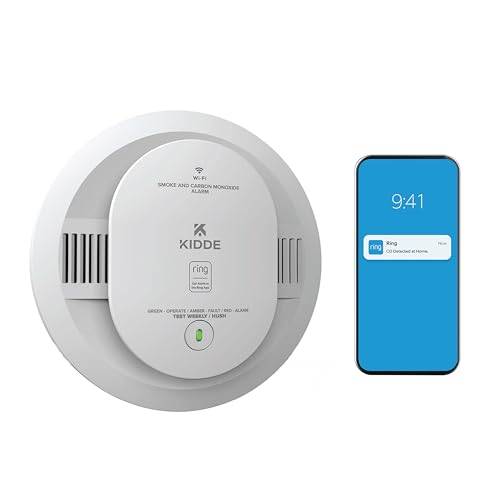
Pros
- Combined smoke and carbon monoxide detection with voice alerts
- Free mobile notifications via Ring app without subscription
- Runs on two included AA batteries with no wiring required
- Certified to UL 217 and FCC safety standards
Cons
- Alkaline AA batteries require periodic replacement over time
- Professional monitoring requires an optional paid subscription

Pros
- Detects smoke, TVOC chemicals, humidity, and mold risk
- Separate sensor flags water leaks and 37-degree freezes
- Voice alarm announces fire hazards and replacement time
- Integrates with Amazon Alexa and Google Home platforms
Cons
- Smoke detector requires hardwired electrical installation
- Lacks integrated carbon monoxide sensing

Pros
- Replaceable ten-year lithium battery included
- Tool-free 3M magnetic adhesive ceiling mounting
- Dual sensors detect ambient gas molecules and ions
- Six-pack bundle outfits multiple rooms easily
Cons
- No wireless interconnect between individual units
- Lacks hardwired connection for existing home circuits

Pros
- Whole-home smart alerts from one hardwired unit
- Silence nuisance alarms directly from your phone
- Certified to UL 217 8th and 9th editions
- Includes AA backup battery for power outages
Cons
- Hardwired circuit required, cannot run on battery alone
- Requires a 2.4 GHz Wi-Fi network for setup
- Does not include carbon monoxide detection
Wireless Protocols and Smart Hub Integration
Selecting the proper communication protocol determines how reliably your devices relay emergency broadcasts across a living space. Hardware running on Matter and Thread creates a self-healing mesh that executes local automations even if home internet drops. This allows connected lighting to illuminate escape paths instantly without relying on remote cloud servers.
Z-Wave and proprietary Wi-Fi detectors suit different household setups. A dedicated wireless bridge allows smoke sensors to trigger external sirens tied to broader monitored home security systems. Standalone Wi-Fi models skip separate hubs entirely, though frequent wireless communication drains replaceable batteries faster.
Life Safety Compliance: A signal sensor bridges legacy alarms to smart hubs but is not a certified life-safety notification device on its own. Never replace a required primary smoke detector with a secondary relay module.
Hardwired Interconnects and Battery Mounting
Modern building codes require hardwired interconnect lines so that smoke detected in a basement sounds alarms on every level. Matching existing 120-volt connections maintains this physical traveler-wire redundancy during unexpected power cuts. Battery-operated units solve critical placement hurdles in older homes where pulling wiring through finished drywall is impractical.
Upgrading a multi-room setup does not always demand replacing every ceiling unit at once. Adding a single smart hardwired detector to an existing analog loop can push notifications for the entire interconnected network. For homes without wiring, wireless interconnect protocols ensure that battery-powered units sound alarms simultaneously across different floors.
| Power Type | Trigger Method | Ideal Location |
|---|---|---|
| 120V Hardwired | Physical traveler wire | Hallways and bedrooms |
| Lithium Battery | Thread or RF mesh | Retrofit older ceilings |
| Bridge Relay | Interconnect signal loop | Existing alarm junction box |
Expert Examined
From Ray Okafor

I keep seeing homeowners mount standard alarms right outside bathroom doors, which triggers constant nuisance sirens from shower steam. Replacing hallway units with dual-beam photoelectric sensors cuts those false triggers while maintaining rapid detection for smoldering bedding or furniture.
Read more about Ray OkaforPhotoelectric Sensors and Modern Safety Standards
Photoelectric sensing mechanisms have largely replaced older ionization chambers in residential detectors. Dual-beam photoelectric sensors analyze light refraction patterns to separate harmless cooking steam from smoldering polyurethane foam. This design aligns with updated standards from the National Fire Protection Association created to stop nuisance alarm disconnections.
Detectors meeting recent UL 217 revisions pass rigorous evaluations against synthetic home furnishings. You can review complementary safety hardware across our home safety detection equipment resources to balance environmental monitors with dedicated fire units. Many hybrid models now track volatile organic compounds alongside standard smoke particles.
Placement Distance: Maintain at least ten feet of distance between cooking appliances and any smoke detector to minimize false triggers during routine meal preparation.
Matching the Alarm to Your Home Layout
If you already have a functional network of hardwired 120-volt analog alarms, I would point you to the Zooz 800 Series Z-Wave Long Range DC Signal Sensor. Instead of replacing several working alarms, wiring this single relay into your existing loop sends mobile alerts through your Z-Wave controller whenever any connected detector triggers.
For smart homes running Apple Home or Home Assistant, I recommend the Heiman Smart Smoke Detector. Its Thread connectivity provides fast local automations without Wi-Fi congestion. The dual-beam photoelectric sensor meets strict UL 217 tenth-edition criteria, preventing steam false alarms while powered by a replaceable CR123A battery.
If your property relies on a Ring security setup, I would put the Kidde Smart Smoke & CO Detector with Ring in primary hallways. It combines smoke and carbon monoxide detection into one battery-powered unit, providing voice hazard alerts and optional dispatch through your best home security systems.
The Bottom Line
The most common misstep is purchasing smart alarms that cannot communicate with your existing ceiling wiring. Installing battery-only smart alarms in a home wired for 120-volt interconnected safety severs the simultaneous sounding between rooms, leaving distant bedrooms unwarned if a fire starts downstairs.
Before purchasing replacement hardware, remove an existing ceiling alarm to verify whether you have a three-wire hardwired setup or standalone mounting brackets. Once you confirm your wiring layout, consult our home safety blog to select hardware matching your preferred smart hub.
FAQs
What is the difference between photoelectric and ionization smoke detectors?
Photoelectric alarms use a light beam to detect smoldering, smoky fires and resist false triggers from kitchen steam. Ionization models use radioactive material to detect rapid flaming fires, but they trigger frequently near kitchens and are being phased out in modern standards.
Do smart smoke detectors still sound an alarm without Wi-Fi?
Yes, all certified smart smoke alarms function as standard audible sirens even if your internet connection fails. Local wireless protocols like Thread or physical interconnect wires continue sounding across the house, but mobile push notifications will pause until connectivity returns.
Where should smart smoke alarms be placed in a home?
Install smoke alarms inside every bedroom, outside each sleeping area, and on every level of the home including basements. Mount them on the ceiling at least four inches away from side walls, keeping units at least ten feet away from cooking appliances.
Can one smart smoke detector trigger older interconnected alarms?
A hardwired smart detector compatible with your alarm brand can trigger the existing traveler wire to sound analog units across the house. Alternatively, a signal bridge installed in the junction box can detect the loop trigger and broadcast phone alerts for all connected legacy units.
Sources
- National Fire Protection Association www.nfpa.org
- U.S. Consumer Product Safety Commission www.cpsc.gov
- UL Solutions Standards www.ul.com