
Outfitting your property with the best smoke and carbon monoxide detectors for home safety hinges on whether you have existing junction boxes or need standalone battery units. Multi-story houses require coordinated alerts across hallways, while compact rentals benefit from sealed ten-year power cells. Choosing the correct sensor setup prevents nuisance alarms while keeping living quarters protected.

Pros
- Dual detection for smoke and carbon monoxide
- Precision Detection cuts down on cooking false alarms
- Battery-operated setup eliminates electrical wiring
- Built-in end-of-life replacement warning
Cons
- Requires periodic battery replacements
- Lacks wireless or hardwired interconnect capability

Pros
- Dual smoke and carbon monoxide detection
- Precision Detection curbs cooking false alarms
- Interconnect links up to 18 compatible devices
- 9V battery backup protects during power outages
- Visual indicator marks the initiating alarm unit
Cons
- Hardwired setup requires existing home electrical wiring
- 9V backup battery requires periodic replacement

Pros
- Dual-beam photoelectric sensor minimizes nuisance cooking alarms
- Certified to UL 217 10th and UL 2034 5th standards
- Sealed 10-year lithium battery eliminates annual swaps
- Combines photoelectric smoke and carbon monoxide detection
Cons
- No wireless interconnection between separate units
- Sealed battery cannot be replaced after expiration

Pros
- Wireless whole-home interconnect without running new wires
- Sealed 10-year battery eliminates annual replacements
- Dual photoelectric smoke and electrochemical CO sensors
- Certified to both UL 217 and UL 2034 standards
- Integrated LCD screen displays detected CO levels
Cons
- Lacks Wi-Fi connectivity for smartphone alerts
- Cannot integrate into existing hardwired systems
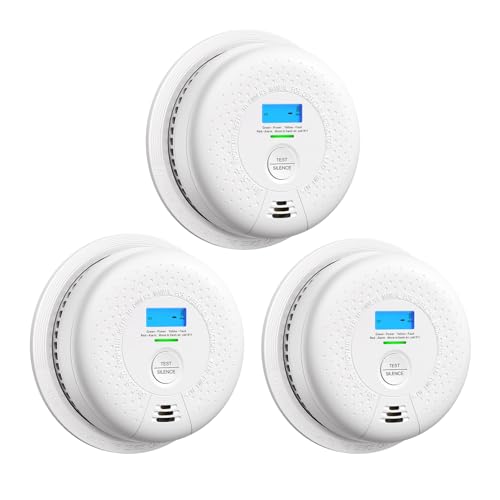
Pros
- 10-year sealed lithium battery, no rewiring
- Photoelectric and electrochemical combo sensing
- Real-time CO and battery LCD display
- Certified to UL 217 and UL 2034 safety standards
Cons
- No wireless interconnection between units
- No Wi-Fi support or base station pairing

Pros
- Dual-LED photoelectric chamber reduces cooking alarms
- Certified to UL 217 10th and UL 2034 5th
- Sealed 10-year battery with end-of-life alert
- Electrochemical sensor monitors CO to 1 ppm resolution
Cons
- Battery power only, no hardwire interconnect
- Needs 10-foot minimum distance from cooking appliances
Hardwired Versus Sealed Ten-Year Power
Existing wiring dictates your hardware choices when updating residential alarms. If ceilings feature pre-wired electrical junction boxes, installing AC-powered units ensures continuous operation supported by backup batteries during unexpected outages. You can browse complementary hardware in our home safety detection overview to see how primary wiring connects with hazard monitors.
Wiring Precaution: Never mix incompatible interconnect protocols on the same circuit, as cross-brand signalling can damage internal relays or silence alerts during an actual fire.
Homes without alarm wiring benefit from long-life lithium battery systems. Sealed ten-year batteries remove the chore of annual replacements and permanently eliminate late-night low battery chirps. Once activated, these closed cells run continuously until an automated warning signals that the hardware requires replacement.
Coordinating Alarms Across Multiple Levels
Detectors operating in isolation cannot provide adequate warning if an emergency starts on another floor. Interconnected alarms bridge this gap by sounding every horn across the property the instant any sensor detects smoke or carbon monoxide. The U.S. Consumer Product Safety Commission advises interconnected detection so sleeping occupants receive immediate notice.
Expert Examined
From Jenna Castellano

The most frequent failure I encounter in older residences is people placing standalone units in isolated basements. If a furnace leaks carbon monoxide at night, occupants upstairs will not hear an unlinked detector until dangerous gas levels spread throughout the entire building.
Read more about Jenna Castellano| Power Type | Signal Method | Best Placement |
|---|---|---|
| Hardwired AC | Interconnect wire | Modern homes with pre-wiring |
| Wireless battery | Radio frequency mesh | Multi-story retrofits without wiring |
| Standalone battery | Local horn only | Compact single-floor living spaces |
Wireless radio frequency systems deliver interconnected protection without opening drywall. Battery-powered units link into a localized mesh network where one triggered alarm commands all paired units to sound simultaneously. This setup offers whole-home coverage while sparing homeowners the cost of rewiring.
Modern Sensor Standards and Kitchen Placements
Older detection units often relied on basic ionization chambers that triggered whenever someone toasted bread. Contemporary dual-sensor devices combine photoelectric smoke sensors with electrochemical carbon monoxide detectors, meeting newer UL 217 standards designed to resist cooking nuisance alerts. Integrating reliable hardware alongside modern home security systems creates a solid safety barrier.
Placement Buffer: Keep alarms at least ten feet away from cooking appliances and three feet from bathroom doors to prevent steam and ambient grease from triggering false warnings.
Photoelectric sensors excel at recognizing slow, smoldering fires generated by synthetic materials before flames erupt. Meanwhile, electrochemical sensors measure toxic carbon monoxide gas in parts per million, tracking cumulative exposure before air reaches dangerous concentrations. Proper mounting requires placing units at least ten feet away from kitchen ranges.
Matching the Alarm to Your Floor Plan
If your home already has interconnected ceiling cables, I would point you directly to the BRK First Alert SMICO100-AC Interconnect Hardwire. This model ties directly into standard alternating-current household circuits, features nine-volt battery backup power during blackouts, and connects with up to twelve other compatible detectors to sound synchronized alerts across every room. A visual indicator on the unit identifies exactly which alarm triggered first.
For multi-level properties lacking internal communication wires, I recommend installing the X-Sense Interconnected Smoke and CO Detector across separate living areas. Its wireless radio-frequency link ensures an alarm triggered in a basement sounds on the top floor, while the sealed ten-year lithium battery eliminates ladder climbing for battery replacements. If you are outfitting a compact single-level apartment or rental unit, the standalone X-Sense Smoke Detector and Carbon Monoxide delivers clear digital parts-per-million readouts without complex networking. You can also explore our broader advice on home security systems to maintain total awareness across your entire residence.
The Bottom Line
The single biggest mistake homeowners make is installing standalone alarms in separate rooms and assuming sound will penetrate closed doors. When hazardous carbon monoxide gas or smoldering smoke accumulates in an isolated utility room, an unlinked detector upstairs will stay quiet until toxic air has already compromised primary escape paths.
Your first move should be auditing your ceiling locations to determine whether pre-existing hardwired interconnect cables are present. Once you know your wiring status, acquire enough matched dual-sensor units to place one device on every level and outside each designated sleeping quarter.
FAQs
Where should combination smoke and carbon monoxide alarms be installed?
Mount units on ceiling surfaces outside every separate sleeping area and on every level of the home, including basements. Living spaces with fuel-burning appliances need dedicated coverage, positioned at least ten feet away from cooking ranges to reduce nuisance alarms.
How often do combination smoke and carbon monoxide detectors need replacement?
Most combination detectors require complete replacement every ten years from their manufacture date. Sensors degrade over time, and internal electrochemical elements lose sensitivity to toxic carbon monoxide gas. When the end-of-life signal sounds, replace the entire device promptly.
What is the difference between wireless interconnect and standalone alarms?
Standalone alarms sound only where smoke or gas is physically present, meaning an alert in a basement might not wake someone upstairs. Wireless interconnected alarms transmit radio signals across a mesh network, triggering every horn in the home simultaneously when one unit detects danger.
Why does a combination detector chirp intermittently?
Intermittent chirping usually indicates a low battery, an accumulation of dust inside the sensing chamber, or that the unit has reached its ten-year expiration. Check the manufacturer date on the back of the housing to determine if the hardware requires replacement.
Sources
- National Fire Protection Association www.nfpa.org
- U.S. Consumer Product Safety Commission www.cpsc.gov
- U.S. Fire Administration www.usfa.fema.gov