
Selecting the best smoke and gas detectors requires knowing that one unit cannot monitor ceiling fire hazards and heavy fuel vapors together. Homes burning natural gas or propane face different physical dispersion patterns. Early warning depends on matching detection hardware to your specific fuel infrastructure.

Pros
- Detects both propane and natural gas
- Extended 10-year operational lifespan
- Includes 6.5-foot power extension cable
- Audible 85 dB alarm with light alert
- Supports emergency power bank operation
Cons
- No internal backup battery included
- Lacks carbon monoxide detection

Pros
- Detects methane, propane, butane, and coal gas
- Loud 85dB speaker with voice alerts
- Real-time digital LED concentration readout
- Direct wall outlet plug-in design
Cons
- Cannot detect carbon monoxide leaks
- 180-second warm-up delay before active monitoring

Pros
- Rapid 0.5-second gas detection response time
- Measures 1% to 10% LEL methane concentration
- Visual LCD bar graph and audible alarm
- Compact clip design with included AAA batteries
Cons
- Mandatory 30-second warm-up before each use
- Detection range capped at 10% LEL
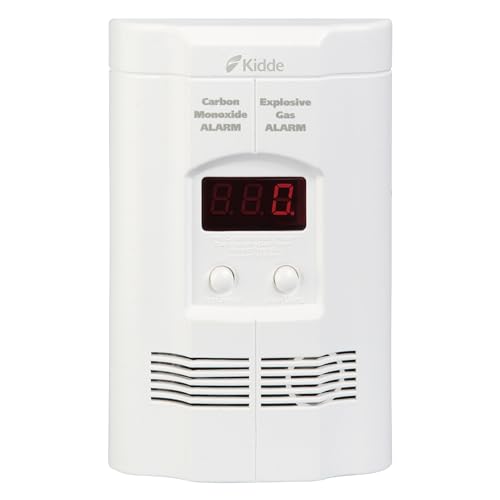
Pros
- Digital LED display shows CO levels and gas alerts
- Detects carbon monoxide, natural gas, and propane
- Standard 120V plug-in installation
- Peak level memory logs recent detection events
- 9-volt battery backup during power outages
Cons
- Requires periodic 9-volt battery replacements
- Ties up a standard 120V wall outlet
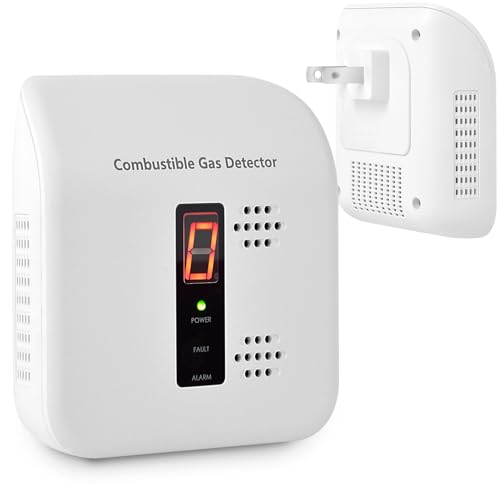
Pros
- Detects natural gas, propane, and LPG
- Front display provides numerical gas readings
- Standard plug-in design requires no wiring
- Compact mini footprint under four inches
Cons
- No carbon monoxide sensing capability
- Lacks wireless interconnect for multi-room alerts

Pros
- 17-inch bendable gooseneck reaches tight pipe runs
- Fast 0.5-second light and sound alarm response
- Backlit LCD screen shows real-time gas concentration
- Dual high and low sensitivity detection modes
- Includes protective carrying case and three AAA batteries
Cons
- Requires 20-second sensor warm-up before operation
- 10-minute auto shut-off prevents continuous 24/7 monitoring
Fuel Density Dictates Alarm Placement
Combustible gases behave differently based on molecular weight. Natural gas consists of methane, which is lighter than air and rises toward ceilings. Propane and butane are heavier than air, pooling along floors before spreading across living spaces.
Mounting a fuel monitor at the wrong height causes severe warning delays during a leak. In any effective Home Safety & Detection setup, install natural gas alarms high and propane alarms low. Smoke alarms belong overhead, following standards from the NFPA.
Corded detectors with extension cables resolve this placement issue easily. Plugging a propane unit into a counter socket leaves low-lying vapors unnoticed until dangerous amounts collect. Wall placement must match the specific fuel supplying your appliances.
| Hazard Type | Sensor Height | Key Physical Trait |
|---|---|---|
| Natural Gas | Near ceiling | Lighter than air |
| Propane & LPG | Near floor | Heavier than air |
| Smoke & Fire | Ceiling level | Rises with heat |
Continuous Plug-In Alarms Versus Handheld Sniffers
Stationary plug-in monitors provide continuous surveillance for living areas and furnace rooms. These devices draw power directly from wall outlets to alert sleeping residents when fuel concentrations cross safe thresholds. Handheld sniffers serve a diagnostic role, locating the source of leaks along pipe threads.
Safety Warning: Never use a handheld sniffer as a substitute for an always-on alarm in living quarters.
A portable detector with a flexible probe inspects tight joints that fixed units cannot reach. Handheld tools do not replace permanent monitoring because batteries drain during routine checks. Adding stationary alarms alongside Home Security Systems ensures your home stays protected.
Sensor warm-up cycles take twenty seconds to three minutes before detection begins. During this interval, internal components stabilize to prevent false readings. Checking pipe connections before the display shows ready can lead to missed leaks.
Expert Examined
From Jenna Castellano

The mistake I see most often is people plugging a propane sensor into an outlet right behind an appliance where dead air prevents circulation. I keep these units at least three feet away from drafts and corners so moving air actually carries leaking gas directly across the sensor face.
Read more about Jenna CastellanoPower Outages and Out-of-Service Protection
Severe storms that cause grid outages often coincide with furnace trouble or generator operation. Plug-in monitors without battery backups shut down during blackouts. Alarms equipped with a nine-volt battery backup maintain active gas and toxin monitoring through electrical failures.
Battery Maintenance: Check the battery backup quarterly and replace disposable cells annually to prevent dropouts during winter power outages.
Safety resources on our Blog help families prepare for winter freezes when heating systems run constantly. Digital displays show exact concentration levels, helping you distinguish between an immediate emergency and a minor pilot light issue.
Matching the Alarm to Your Living Space
For living areas connected to municipal utilities, I would point you to the Kidde Carbon Monoxide + Explosive Gas. Its combination of explosive fuel monitoring and carbon monoxide tracking works exceptionally well in utility rooms. The nine-volt battery backup maintains protection during outages, while the digital display clearly states peak levels to gauge hazard severity.
In garages or recreational vehicles running bottled fuel, I would put the Propane & Natural Gas Detector for RV Home into service. Its 6.5-foot extension cable allows proper floor-level mounting for heavy propane, and its ten-year lifespan offers long-term reliability. The 85-decibel alarm provides loud warnings, and it can run from power banks in emergencies.
If you regularly inspect appliance connections, I would suggest the Aicevoos Natural Gas Detector with Gas. Its seventeen-inch flexible gooseneck probe maneuvers into confined spaces behind water heaters, while the backlit screen and dual sensitivity settings help isolate minor fuel leaks quickly.
The Bottom Line
The most common mistake homeowners make is assuming standard smoke alarms detect combustible gas leaks. Smoke detectors only identify airborne particulate from combustion, remaining silent during a methane or propane leak. Dedicated fuel sensors are required to recognize volatile hydrocarbons before an ignition source triggers an explosion.
Identify the specific fuel powering your household before purchasing detection hardware. Once you know whether your appliances burn propane or natural gas, install an appropriate stationary detector at the correct height to protect your living space.
FAQs
Standard smoke alarms only identify airborne particles from combustion or smoldering materials. Combustible fuel leaks require specialized sensors utilizing catalytic beads or metal-oxide semiconductors to recognize unburned methane or propane vapors before fire starts. Installation height depends entirely on fuel type. Natural gas is lighter than air and rises, requiring placement within twelve inches of the ceiling. Propane is heavier than air and sinks, necessitating placement within twelve inches of the floor. Gas sensors rely on an internal heating element that must reach a stable operating temperature before registering readings. This stabilization sequence takes twenty seconds to three minutes, preventing false alarms and ensuring the circuit accurately measures vapor concentrations. Most residential fuel gas alarms have an operational lifespan between five and ten years based on manufacturer specifications. Sensing components degrade over time from environmental dust and chemical exposure, requiring timely replacement to maintain reliable detection. Only dual-function combination monitors detect both carbon monoxide and combustible fuels. Standard explosive gas units look exclusively for flammable hydrocarbons like methane and propane, while basic carbon monoxide detectors track incomplete combustion byproducts.Do smoke detectors also detect natural gas or propane?
Where should an explosive gas detector be installed?
Why does a gas detector require a warm-up period after plugging in?
How often should plug-in gas alarms be replaced?
Can a gas detector sense carbon monoxide?
Sources
- National Fire Protection Association www.nfpa.org
- U.S. Consumer Product Safety Commission www.cpsc.gov
- UL Solutions www.ul.com